RECOM Adds Two 720W IP67 Supplies for Decentralised Industrial Power
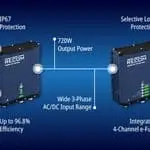
RECOM’s new 720W RACPRO1 supplies bring conversion closer to industrial loads; one model adds four isolated, individually protected outputs.
Latest stories
RECOM’s new 720W RACPRO1 supplies bring conversion closer to industrial loads; one model adds four isolated, individually protected outputs.

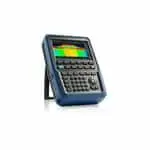
The R&S FNH puts spectrum, real-time, two-port VNA and power measurements in a handheld platform, with options covering up to 26.5 GHz.
Comexp’s 4.2 MB vision platform combines three image tasks and reports inference times of 20.4 ms on Raspberry Pi 5 and 34.7 ms on Pi 4.
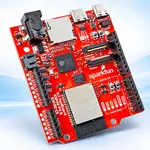
SparkFun’s $49.95 RedBoard pairs a 400 MHz ESP32-P4 with an ESP32-C5, MIPI connectors and open KiCad files for embedded and HMI projects.
Nuvoton and Qt pair Gerda’s integrated resources with compressed graphics to support animated interfaces while reducing memory and component requirements.
Hikrobot’s CI Series combines 640 × 512 thermal imaging, GigE connectivity and multiple lens options for production line inspection.
Renesas’ RZ/T2N pairs application and real-time cores with motor-control and Ethernet hardware for robots, servo systems and PLCs.
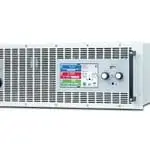
Tektronix’s EA-ELR 21000 simulates fast-changing loads on 800 V DC systems and returns up to 95% of test energy to the grid.
Arduino’s Nano XL Link pairs a 120MHz Cortex-M33 with CAN FD, RS485 and Ethernet; a carrier adds screw terminals, RJ45 and DIN-rail mounting.
Parrot OS brings privacy, forensics and network analysis tools to Raspberry Pi, with Core, Home and Security editions for different workloads.
Install MagicMirror on Raspberry Pi, configure its display and widgets, enable remote access and automatic startup, and add community modules.
Ubuntu Desktop runs on Raspberry Pi 5, 500, 4 and 400 boards with at least 4 GB of RAM. Here’s how to install it and get started.
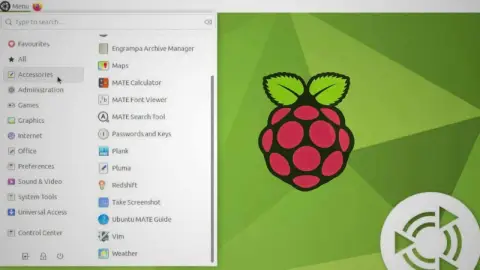
Install MATE on a Raspberry Pi using Ubuntu Server, then weigh its desktop tools and app catalog against long setup time and modest performance.
MIT researchers tested 3 mm implanted magnets that measure muscle length and speed, creating control signals for future robotic ankle-foot prostheses.
Ben-Gurion University’s SAWbot combines eel-like wave propulsion with treaded wheels, reaching 34 cm/s in swimming tests without reconfiguring its mechanism.
Simulation-trained control lets a LEAP robot hand reposition objects between its fingers; a motion safeguard reduces drops while slightly lowering task success.
A 4 Ah lithium-ion pouch cell uses modified electrolyte chemistry to charge rapidly; its 200-cycle result still needs longer-term validation.
Fraunhofer IDMT’s solar panel sensors estimated light rain with a 1.88 mm/h mean absolute deviation; performance in heavy rain remains untested.
Xanadu and HyperLight demonstrated a TFLN switch with 7 mdB insertion loss, down from 20 mdB in their 2025 demonstration.
KIMM’s helmet monitors scalp contact across 32 EEG channels and mechanically repositions electrodes to improve signal collection.