Hikrobot CI Series Adds LWIR Thermal Imaging to Machine Vision Inspection
Hikrobot’s CI Series combines 640 × 512 thermal imaging, GigE connectivity and multiple lens options for production line inspection.
Thermal inspection can reveal temperature patterns that a visible-light camera won’t capture. Hikrobot’s CI Series long-wave infrared cameras bring that capability into machine vision setups, where manufacturers can monitor component temperatures and flag unusual heating during production.

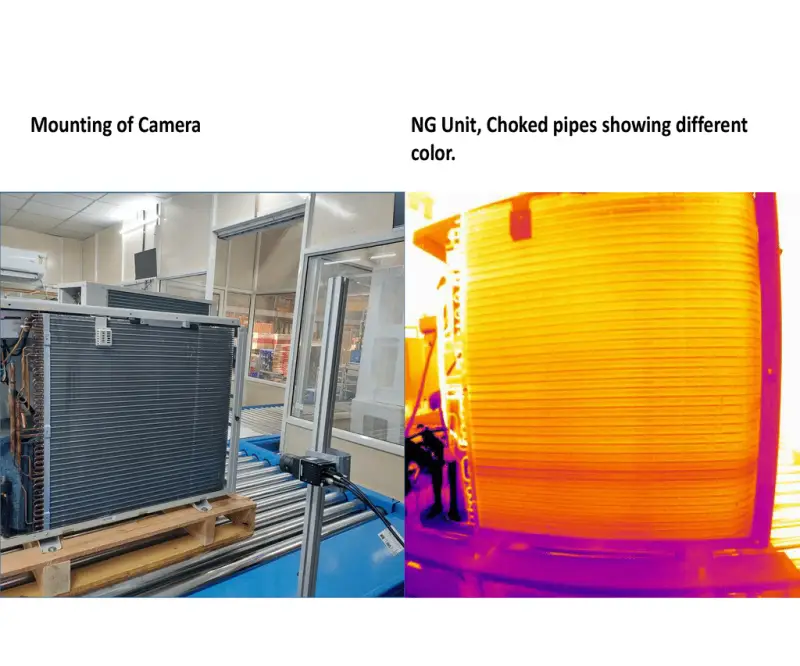
The cameras are aimed at inspection in battery manufacturing, automotive parts production, electronics and semiconductor processes. In those settings, a thermal image can help locate a hot region or show that temperatures differ across a component. Such patterns can prompt further investigation, though they don’t by themselves identify the cause of a defect.

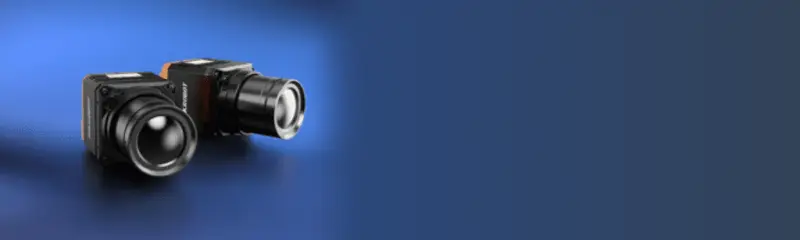
Infrared sensing for production inspection
Visible-light cameras form images from reflected light. The CI Series instead uses an uncooled vanadium oxide (VOx) detector to sense infrared radiation in the 8–14μm wavelength band. The resulting image displays temperature differences across the viewed object, and the system can measure thermal characteristics.

That distinction changes what an inspection station can observe. A conventional camera can inspect shape, surface appearance or printed features under suitable lighting. Thermal imaging adds a temperature view, which may expose local heating that is not apparent in visible wavelengths. It can therefore add another signal to an inspection process, particularly when heat is relevant to the component or production step.

The baseline models provide 640 x 512 pixel thermal resolution and operate at up to 50 frames per second. Selected versions are specified for automatic temperature measurement accuracy of ±2 degree centigrade or ±2 percent of the reading. Those figures are model dependent; the available specifications don’t state which measurement conditions apply, so teams will need to check the relevant model details when assessing a particular inspection task.
Interfaces and mechanical integration
For factory integration, the cameras use GigE to transmit data over distances of up to 100 metres without an external relay. They support GigE Vision 2.0 and GenICam, protocols intended to ease connection to third-party machine vision software. Multiple trigger modes and event outputs give integrators options for coordinating image capture with line timing or other inspection events.

The series also offers different imaging palettes and grayscale detection. Those options affect how the temperature image is presented or processed in an inspection system; the source specifications don’t describe particular algorithms for classifying defects. The cameras’ compact housings have mounting holes on four sides, giving machine builders more than one mounting orientation when laying out an inspection station.

Lens choice shapes the inspected area
Hikrobot lists focal lengths of 6.3mm, 15mm, 25mm and 35mm. The 6.3mm version has an 88.5 x 73.2 degrees field of view, while the 25mm version has a narrower 24.6 x 18.5 degrees field of view. That spread gives system designers options for viewing a wider area or concentrating on a smaller region, depending on camera placement and the part being inspected.
A separate model, MV-CI003-GL-T6, is specified for inspection and automated temperature calibration. The available information doesn’t give further calibration details or describe the operating range, so those specifications matter when matching the camera to a measurement task.
What the specifications mean for a line
For production engineers, the series combines thermal sensing with familiar machine vision interfaces and a choice of optics. The 640 x 512 resolution and up to 50 frames per second provide the stated imaging and capture limits; whether those are suitable depends on the size of the temperature feature, the part’s speed through the station and the required field of view. The listed measurement accuracy applies only to selected models, so model selection and validation against the intended process remain central.
Hikrobot positions the CI Series for new-energy manufacturing, automotive components, electronics and semiconductor inspection. Its practical contribution is an additional temperature measurement channel that can be integrated into a production vision system. The key design questions are how precisely the thermal feature must be resolved, which lens covers the required inspection area, and whether the selected camera’s measurement specification fits the process.
 AMD Venice Uses 2.5D Packaging to Feed More Bandwidth Into EPYC Zen 6
 CNC Controller Board Design: Interfaces, PCB Specs and Assembly Testing
 Xometry Q3 2026 Revenue Reaches $252.4 Million as Marketplace Margins Rise