TI India’s 40-Year Shift From Engineering Hub to Global Product Design
TI India’s teams contribute across chip design and product development, with edge AI and system engineering shaping the company’s next opportunities.

India’s role in semiconductor engineering is expanding from supplying design talent to shaping products intended for use around the world. That’s the direction Texas Instruments India managing director and president Santhosh Kumar described as TI marked 40 years in the country: local teams now contribute across product development, while the next opportunity lies in combining chip design with software and system engineering to solve practical problems.

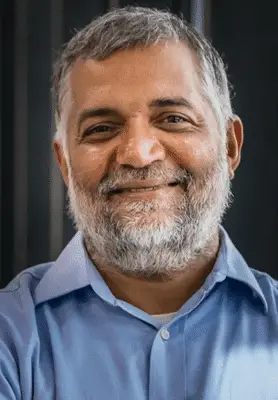
Speaking at electronica India 2026, Kumar described TI’s Indian operation as an engineering and design hub connected to the company’s broader work in analogue and embedded technologies. TI has close to 80,000 products, he said, and its teams in India contribute across the development cycle. The company designs and manufactures products, then works with customers as they integrate the technology into their systems.
That approach reflects a shift in how India fits into the company’s work. Kumar presented the country as both a growing market and a place to develop products with global relevance. Local engineering teams have contributed to products including the MSPM0C1104 microcontroller, which Kumar described as the world’s smallest, C2000 real-time microcontrollers and TI’s TinyEngine neural processing unit (NPU). He pointed to those examples as evidence that India’s contribution can reach beyond customer support or application work into product innovation.
Chips built around system problems
The value of that engineering work becomes clearer at the system level. In Indian two-wheelers, electronics are increasingly involved in functions such as charging and control, with microcontrollers among the technologies used in those applications. Medical electronics offers another example. An ultrasound probe can contain hundreds of channels that transmit and receive signals, process the resulting data and produce an image. TI has worked on solutions that move much of that processing into the probe, rather than depending on a connected device to do the work.

The same system-first reasoning applies to energy. As power networks handle energy from sources such as solar, electronics can help manage conversion and storage, coordinate consumption across homes, factories and offices, and enable energy to flow back into the system when needed. Kumar also identified electric vehicles, appliances and smart energy among the areas where TI works. The common thread is a physical engineering challenge that calls for sensing, processing or power control.
For product teams, this has a practical implication: choosing a semiconductor starts with understanding what the complete system must do. A chip may be one piece of the answer, but the solution can also include reference designs and other system-level guidance that helps a customer develop a product. Kumar described TI’s customer work as an engineering collaboration, with teams engaging on requirements and helping carry ideas from concept toward implementation.
Edge AI puts decisions near the sensor
Kumar sees AI in three parts of TI’s work. The first is processing at the edge: products that combine digital signal processors (DSPs), processors or AI engines can run intelligence close to where data is generated. For cameras, radar, speech and other sensing applications, local processing can support faster decisions when response time matters.
The engineering trade-off is straightforward. Sending data to a remote server means it must travel before a system can act, and that path depends on connectivity and adds latency. Processing locally can allow a device to respond in real time without sending every input to a cloud service. Kumar gave speakers, microphones, cameras, radar and washing machines that need to assess their load as examples of systems that could benefit from local intelligence.
TI’s other two uses of AI are within its own operations. Kumar said the company applies AI in its supply chain to help optimize operations and improve its ability to deliver products. He also described the use of AI and automation in factories to improve manufacturing operations. In this account, AI’s role extends from embedded products to the processes used to produce and supply them.
Indian engineers have contributed to TI products across design, development, architecture, testing and manufacturing, Kumar said. That breadth matters for edge systems, where decisions about computation, sensors and product constraints have to work together. Local processing is useful when an application needs timely action, but the product still has to meet its own power, connectivity and system requirements.
Design capability needs system designers
For Kumar, design-led innovation begins with the customer’s problem. The team asks what the system needs to achieve and what design would create value, then works backward to determine which technologies are required. In an ultrasound probe or two-wheeler, that process may lead to a semiconductor product, a reference design or a broader system solution.
He sees room for India to build more expertise in electronic system design: the work of developing, testing and refining designs that put components together into functioning products. GaN-based power solutions are one area he cited for exploration in new applications. The opportunity, in his view, is to add system-level design capability alongside semiconductor design, so engineers can develop reference designs, experiment and optimize complete systems.
The path from engineering graduate to semiconductor designer, Kumar suggested, depends on the environment around early-career engineers as much as on their initial training. TI hires from campuses and runs its Women in Semiconductors and Hardware (WiSH) program to encourage more women students to pursue semiconductor careers. Young engineers bring curiosity and fresh thinking; experienced engineers contribute knowledge gained from working through complex problems. Mentorship and opportunities to apply what graduates have learned help connect those strengths.

Semiconductor engineering also demands continuous learning. The methods and problems engineers work on change over time, Kumar said, so professional development doesn’t end with a first role or a particular level of experience. That point is especially relevant as teams work across disciplines such as analogue design, embedded processing, AI and power electronics.
From chip design to products in use
Kumar framed India’s next step in global semiconductor work around two capabilities: design and deployment. Designing a chip is part of the process; embedding it in a product or system that addresses a real need is where its wider value becomes apparent. He cited possible applications such as using connected sensors to estimate a field’s water needs, improving air quality, increasing solar-power efficiency and extending a two-wheeler’s battery life.
Those examples point to the combination of hardware, software and system engineering required to turn semiconductor capability into usable products. They also help explain why Kumar emphasized collaboration with India’s broader engineering ecosystem. The work crosses component selection, sensing, computation and the design of the final application.
TI’s collaboration with the Indian Space Research Organisation (ISRO) illustrates the company’s engineering-level customer relationships. Kumar said TI has supported Chandrayaan-3, Mangalyaan and the NASA-ISRO Synthetic Aperture Radar (NISAR) mission, with the aim of helping engineers address difficult technology challenges. He presented this work as part of a wider pattern: teams engage with customers around the problem they are trying to solve, rather than simply handing over a component.
Looking ahead, Kumar named appliances, smarter grids, smart power and electric mobility as areas with opportunities for India. He singled out the electrification of two-wheelers as a source of demand for more sensing, processing and power-management technology. With TI’s broad product range, he declined to name a single sector as the defining opportunity. His wider point is that India’s engineering talent, growing market and product-development ecosystem can support work on applications for both domestic and global use.
The 40-year milestone, in Kumar’s framing, marks an established base for the next stage: deeper participation in the design of complete products. For engineers, the opportunity will depend on connecting semiconductor development with the system-level skills that bring chips into devices, infrastructure and services.
 Addivate Adds ROBOZE ARGO 1000 HYPERMELT for Larger Polymer Parts
 AXT and Stärke-AMG Plan Adelaide SAF 3D Printing Capacity
 Fluke ii1050 and ii1030 Acoustic Imagers Add 202 Microphones for Industrial Inspections