Addivate Adds ROBOZE ARGO 1000 HYPERMELT for Larger Polymer Parts
After filling four ARGO 500 HYPERSPEED machines, Addivate is adding pellet extrusion to make larger polymer and composite components.

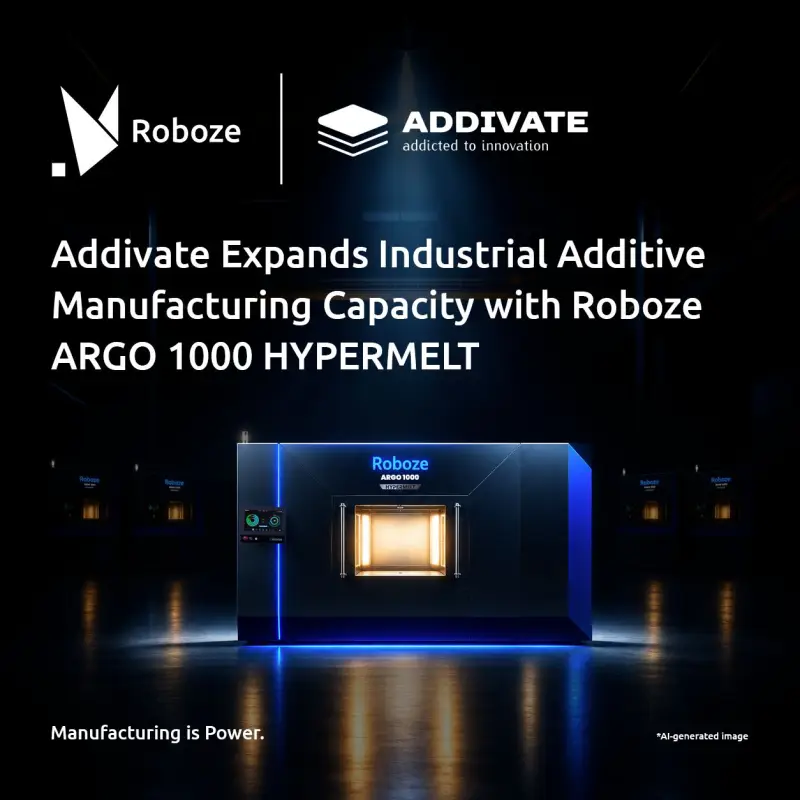
Addivate has filled the production capacity of its four ROBOZE ARGO 500 HYPERSPEED machines. Its next step is to add a ROBOZE ARGO 1000 HYPERMELT, a pellet-extrusion platform intended to extend the Italian manufacturer’s work into larger polymer and composite components.

The move expands both the available production capacity and the size range Addivate can address. The Padua-based company makes functional, end-use parts for motorsport, aerospace and advanced manufacturing. It plans to use the new machine for larger applications, while its existing systems continue making precise components.
Two extrusion methods for different production needs
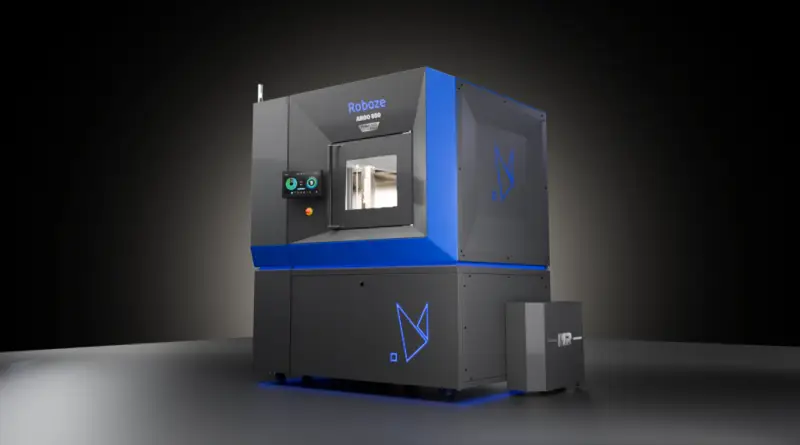
Addivate’s equipment fleet will combine its four ARGO 500 HYPERSPEED machines with the ARGO 1000 HYPERMELT. The existing fleet uses filament-based extrusion for precise end-use polymer parts. The added platform uses pellets, extending the operation toward larger components.
That distinction gives the company another way to match a production job to the equipment. A manufacturer weighing these approaches has to consider the component’s dimensions and the requirements of the finished part, alongside the demands the job places on production capacity. Addivate’s stated plan is to use the pellet system for larger parts, while continuing to use its existing machines for their established role.
The announcement doesn’t specify build volume, material grades, throughput, tolerances or production costs for either platform. Those details would be needed to compare the machines quantitatively or judge how a particular part would fit the new production route. What’s clear is the operational change: four fully utilized filament systems are being joined by a pellet-based machine to broaden the range of parts Addivate can produce.
Full utilization sets the expansion trigger
Addivate CEO and co-founder Enrico Solinas said the company’s four ARGO 500 HYPERSPEED systems had reached full capacity. He described that level of use as evidence of growing customer demand and said the ARGO 1000 HYPERMELT would let the company increase output and take on larger applications.
For production teams, full utilization is a practical constraint: when existing machines are fully booked, additional work may require more equipment or a change in how jobs are assigned. Adding a different extrusion platform also creates a choice about where each part belongs in the production operation. Addivate’s stated approach is to retain its current fleet and add a platform aimed at larger components.
Solinas said Addivate wants additive manufacturing to function as a production technology. The purchase supports that aim by adding equipment after the original four systems reached full utilization. The company hasn’t shared a commissioning schedule, planned output, or details about how it will qualify parts made on the new machine, so the effects on delivery times and production volumes remain unspecified.
A broader equipment base, with details still to come
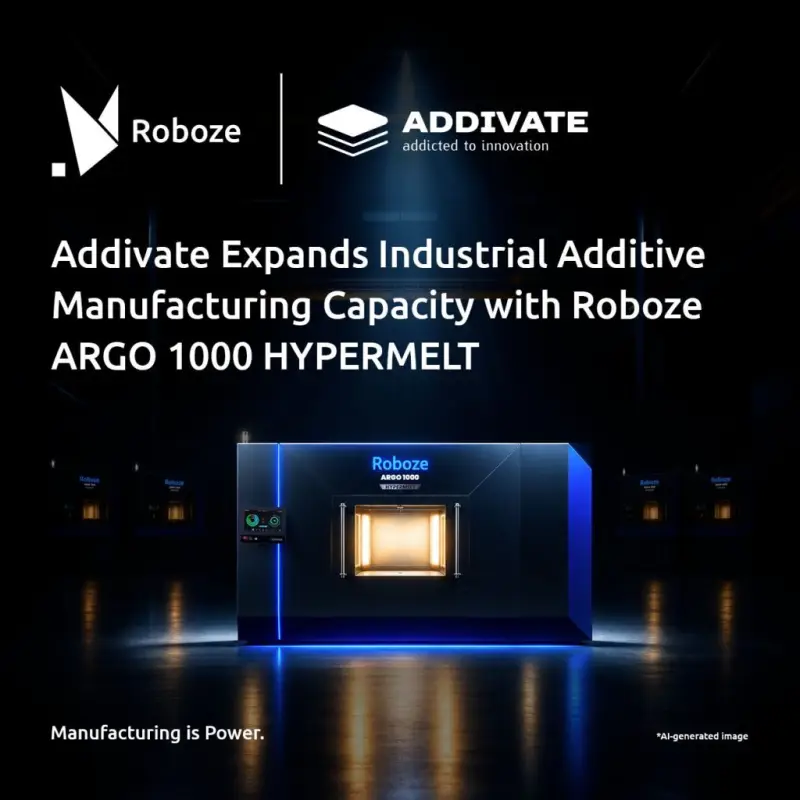
ROBOZE supplies both the HYPERSPEED systems already used by Addivate and the newly acquired HYPERMELT platform. ROBOZE founder and CEO Alessio Lorusso characterized the addition as a way for Addivate to expand production as demand grows, with different equipment serving different production requirements.
Addivate works with high-performance polymers and composites on functional parts. For those applications, the useful measure of an equipment addition will be how well it supports the intended part range and production work. The company has identified larger components as the reason for adding pellet extrusion, but has not named specific parts, materials or production targets.
The immediate takeaway is a change in production options: Addivate has reached full utilization across four filament-based machines and is adding pellet extrusion to serve larger applications. The next useful details will be the materials and part sizes it runs on the ARGO 1000 HYPERMELT, and how the new platform fits into its production schedule alongside the existing fleet.
 AXT and Stärke-AMG Plan Adelaide SAF 3D Printing Capacity
 Fluke ii1050 and ii1030 Acoustic Imagers Add 202 Microphones for Industrial Inspections
 KIMM LED System Changes Object Colours While Keeping Room Lighting White