Custom 4×6 Defender Downdraft Table Build Shows Its Modular Design and Filtration Options
A factory tour follows a custom 4×6 Defender table from welded steel sections to assembly, with a look at its filter module and HEPA option.
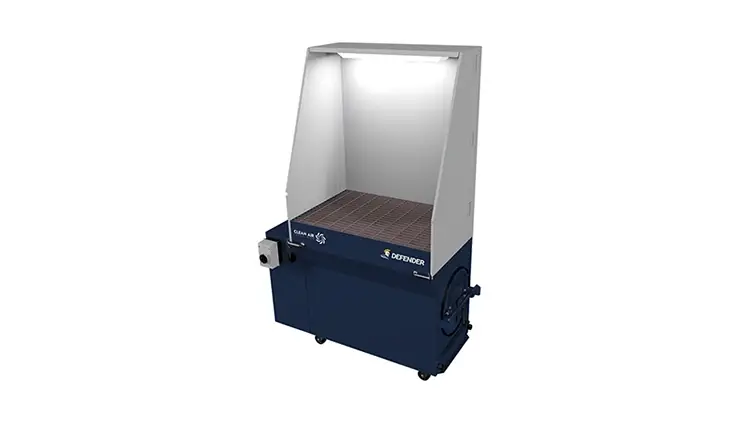
A custom 4×6 Defender downdraft table gives fabricator Nate Bowman, known as The Weld Scientist, a closer look at how a source capture system is built and configured. The project follows the table from welded steel sections through finishing and assembly at Clean Air Industries’ factory in Rome, Georgia. For shops weighing a downdraft table, the build offers a useful view of the manufacturing choices behind the equipment, including modular construction, in-house controls and optional HEPA filtration.
From temporary lab to a custom table
Bowman is working out of a container lab while he plans a permanent facility. After meeting Clean Air Industries during distributor training, he decided a downdraft table suited the lab’s needs and arranged to visit the factory to see the production process. The table is intended to capture welding fume and particulate at the work surface, where contaminants are generated.
The visit covers the factory from fabrication through assembly. Bowman tours the operation with Josh, watches a section of a Defender table being welded, and gets hands-on time with a lower section. He says he has used several downdraft tables and brands, and describes the Defender as a substantial piece of equipment. A factory representative says the company makes its products from 10-gauge steel.
That construction detail matters to the intended use: the table is presented as industrial equipment for fabrication work, rather than a lightweight welding booth. The footage also shows the manufacturing process as part of the product story, giving viewers a look at how its major sections are made before they are assembled.
Manufacturing and service choices
Clean Air Industries describes its role as covering the filtration system as a whole, including filters, dust collectors and booths. The company’s factory tour shows several operations kept in-house. Powder coating is done on site, and the tour includes the coating booth and dust collection setup. The company representative points to powder being drawn into the collector during the process.
The table uses Baldor motors, which the representative says the company has used for several years. Bowman notes that these motors are familiar in the industry; the representative says they last a long time and that motor replacement visits are uncommon. The transcript doesn’t provide motor model numbers, power ratings or operating data, so it offers no basis for comparing those motors by specification.
Control panels are also built in-house. The stated reason is control over lead times: keeping panel production within the company gives it more say in when equipment can be completed. That’s a practical manufacturing consideration for a configured machine, where the table, filtration and controls need to come together as a system.
Modular filtration and the HEPA option
The Defender’s modular design is a central feature of the build. The factory tour describes a shared filter module used across the 4×3, 4×6 and 4×9 table sizes. The filters are made by Clean Air Industries and shown in blue. A common module across different table footprints may simplify the product family’s construction, though the footage doesn’t specify filter dimensions, replacement intervals or filtration efficiency.
Bowman’s custom configuration includes a HEPA filtration option. The tour presents this as an option for work such as stainless steel welding, with the aim of capturing fumes before they leave the system. The transcript doesn’t give the HEPA filter’s rating, efficiency, airflow under load or the conditions required for a particular material. Those details would be needed to assess performance for a specific process or shop.
Configuration is part of the appeal for Bowman, who jokes about selecting extra options for his table. The video follows him assembling the equipment and checking its height. He says the finished unit is nearly 10 feet tall and has a 4×6 work surface, making it a prominent installation in the lab. No airflow figure is given for this custom build.
Choosing a table around the application
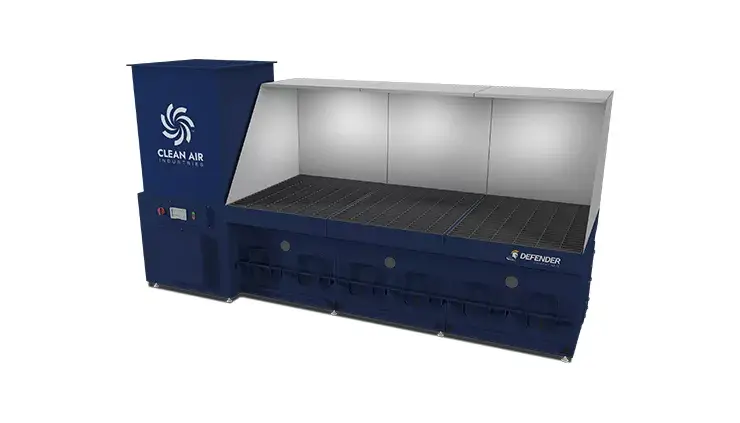
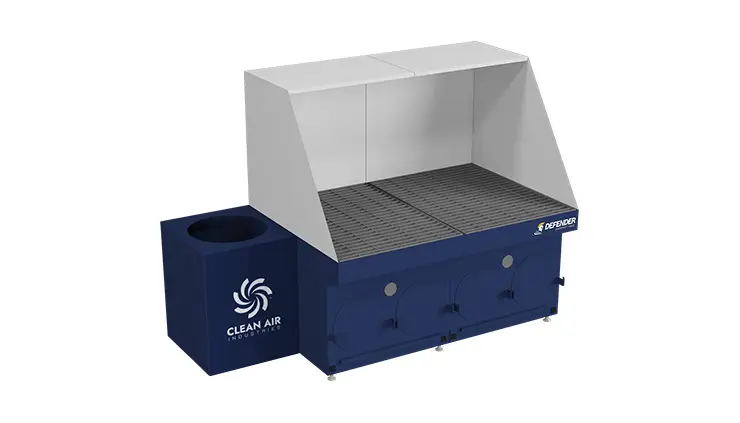
The product information distinguishes the industrial Defender tables from portable and ducted versions. The portable 2×3 model is listed at 1,200 CFM. Industrial tables are offered in 4×3, 4×6 and 4×9 configurations, with airflow of up to 9,000 CFM. A ducted version is designed to connect with a dust collector system and is described as an option for facilities that need multiple tables.
Those figures describe product ranges, not the performance of Bowman’s custom table. Selecting among configurations depends on the work, the required capture area and the filtration setup; the available information doesn’t state a recommended airflow for his lab. The build’s clearest takeaway is that size, filter arrangement and options can be brought together in a modular system. For shops evaluating a similar installation, the next useful step is to match the table and filtration details to the specific materials and processes being captured.
 AMD Venice Uses 2.5D Packaging to Feed More Bandwidth Into EPYC Zen 6
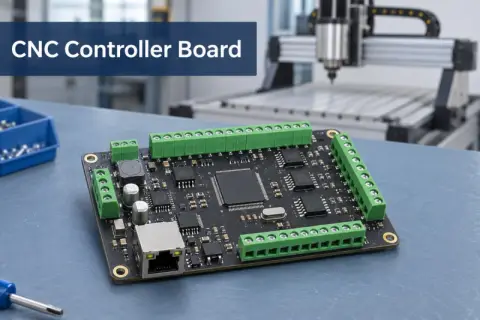 CNC Controller Board Design: Interfaces, PCB Specs and Assembly Testing
 Stratasys and Nano Dimension End $42.5 Million Markforged Sale Agreement