Stud Welding on Galvanized Steel: Choosing a Process and Maintaining Weld Quality
Zinc coating affects heat, electrical contact and fume generation. Process selection, surface preparation and production checks help control weld consistency.
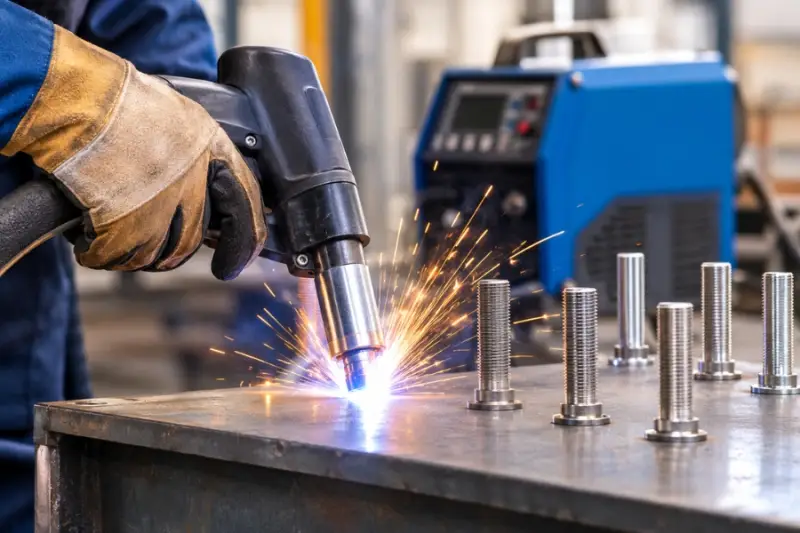
Zinc protects steel from corrosion, but it changes the conditions at the weld. During stud welding, heat can vaporize or disturb the coating, affecting electrical contact and producing fumes, spatter or porosity. Reliable production depends on matching the process to the coating, base material, stud and application, then checking that the chosen setup produces sound connections.
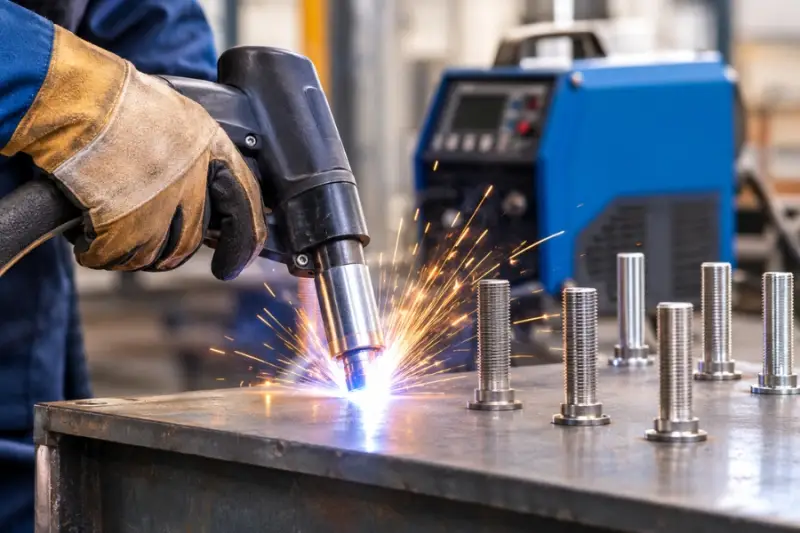
Start with the coating and application
Before selecting equipment, assess the material thickness, zinc coating condition, stud diameter and required fastening strength. These factors shape how the coating interacts with the welding process. A method suited to thin sheet and lower heat input may not meet the needs of a larger stud or an application requiring deeper penetration.
Surface condition matters alongside the process. Oil, dirt, moisture, debris and excessive coating buildup can interfere with contact and produce inconsistent results. Galvanized steel does not always require complete zinc removal, but the operator should determine whether the selected method needs the coating reduced around the weld location.
Ventilation and appropriate safety practices are also part of the process. Zinc vaporization can affect the welding environment, particularly when the method generates substantial heat. Follow equipment guidance and account for the material and work area when establishing production conditions.
Match the stud welding method to the job
Capacitor discharge (CD) studs suit many thin-gauge and sheet-metal applications. The process delivers energy quickly, which can limit overall heat input and help protect the surrounding material. That rapid energy delivery does not remove the need for consistent surface contact: the stud, welding tool and base material must meet as intended.
Contamination or excessive coating at the contact point can disrupt that connection. Confirm the manufacturer’s recommended settings and make test welds on the actual material before beginning a larger run. The results provide a practical check that the setup works with the coating and surface condition at hand.
Arc studs may suit heavier applications that need larger studs, deeper penetration or greater fastening capacity. Arc stud welding forms a weld pool to join the stud and base material. Because the process generates more heat, zinc vaporization needs particular attention. Establish tested parameters for the specific galvanized material, use suitable ventilation and follow the equipment guidance.
Control the conditions throughout production
Process selection is only one part of repeatability. Keep material positioning, stud placement and tool alignment consistent; changes in contact or pressure can affect the finished weld. Check the base material for contamination, coating buildup or surface damage, and confirm that the equipment is operating within its recommended parameters.
Accessories contribute to the same chain of control. Welding guns, cables, chucks, ferrules and other components should match the equipment and stud application. Inspect them regularly for wear or damage, since degraded parts can affect positioning, electrical contact or welding performance. A routine maintenance check can help catch equipment problems before they appear as recurring weld defects.
Verify welds before scaling up
Make sample welds and inspect them before committing to full production. Visual checks can reveal obvious defects; destructive or non-destructive testing can provide further confirmation when the application calls for it. The appropriate inspection depends on the required standard and the needs of the connection.
Use the test results to decide whether the process meets the application requirements. If it does not, adjust the setup and test again before production continues. This measured approach helps identify problems early, limit rework and avoid spreading an unsuitable setting across a high-volume run.
For repeatable work, document the material and coating characteristics alongside the selected stud, equipment and parameters. Applying the same controlled sequence—assessment, setup, sample welds and inspection—gives operators a sound basis for maintaining consistency across galvanized steel applications.
Process selection in practice
The central trade-off is between the connection the application needs and the way the welding method handles the zinc coating. CD welding’s rapid energy delivery can fit thin-gauge work, while arc welding can address heavier fastening needs with greater heat input. Neither choice makes surface condition or verification irrelevant. Coating, cleanliness, alignment and equipment condition all affect the result.
For application-specific guidance, CD studs, arc studs, stud welding accessories and stud welding processes are among the product and process categories to evaluate. The practical takeaway is to validate the complete setup on the actual galvanized material before relying on it in production.
 AMD Venice Uses 2.5D Packaging to Feed More Bandwidth Into EPYC Zen 6
 CNC Controller Board Design: Interfaces, PCB Specs and Assembly Testing
 Stratasys and Nano Dimension End $42.5 Million Markforged Sale Agreement