Choosing Grounding Studs and Welding Processes for Electrical Enclosures
Grounding studs provide welded connection points for enclosure conductors. Stud size, panel material, weld process and production volume guide selection.
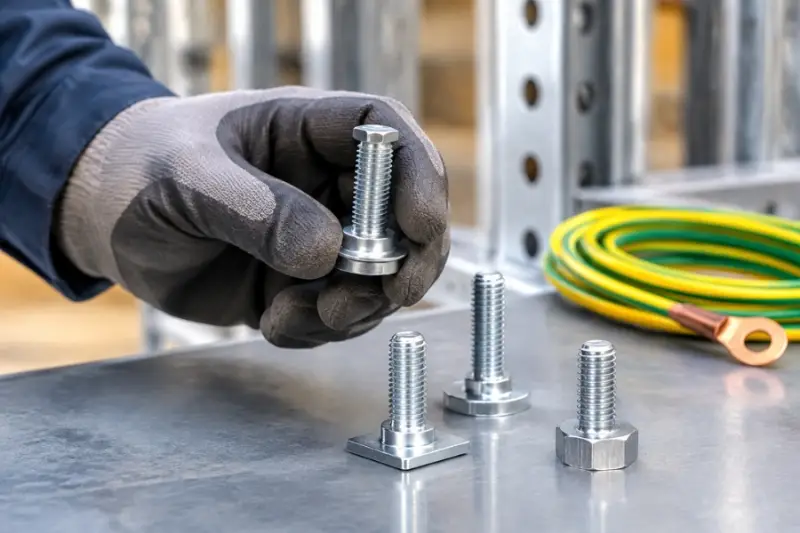
A grounding stud gives an electrical enclosure a dedicated point for attaching a grounding conductor. Its performance depends on the full assembly: the enclosure material and thickness, the stud, the welding process and the production controls used to make each joint. Getting those choices right can support repeatable connections while avoiding drilling and tapping operations.
Start with the enclosure and connection requirements
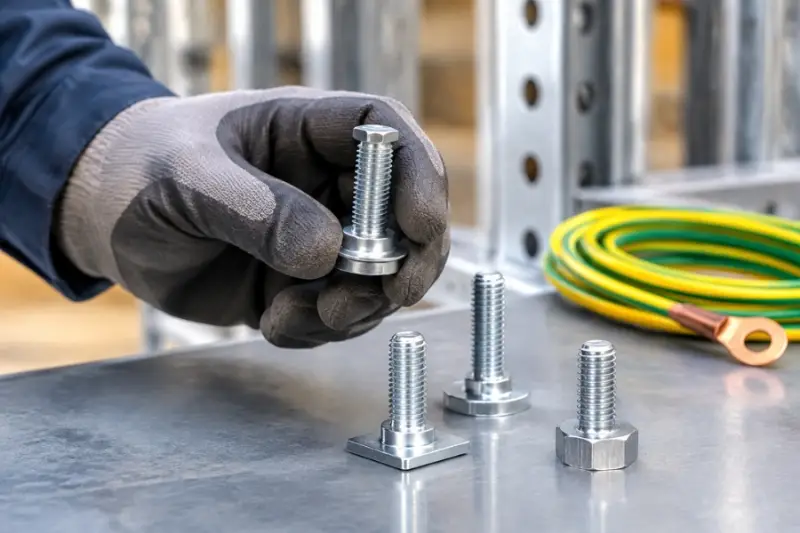
Grounding studs are used on conductive panels, cabinets, junction boxes and machinery housings to connect grounding conductors to enclosure surfaces. A properly grounded enclosure can provide a controlled path for fault current, so the welded attachment must satisfy the assembly’s electrical and mechanical requirements.
A welded stud can be useful when access to the back of a panel is limited: it creates a fastening point from one side without requiring a through-hole and a separate nut. The approach also suits repeated production, where fixed stud locations and a consistent process can reduce manual fastening and secondary fabrication.
Selection should account for more than stud diameter. Manufacturers should check the base material and panel thickness, stud material and compatibility, stud length, surface condition, required electrical continuity, mechanical loading, corrosion exposure, available welding equipment and production volume. The applicable manufacturing requirements and the finished connection’s engineering criteria also need to be verified.
Match the welding process to the panel and stud
Capacitor discharge (CD) stud welding is suited to compatible smaller studs and thinner metal panels. The process applies heat over a short interval, which can limit heat input and help reduce panel distortion. That can matter when enclosure appearance and dimensional stability are part of the production requirements. CD studs are one option for this type of application.
Arc stud welding can accommodate larger studs and heavier materials in applications that need a stronger fastening solution. The choice depends on the enclosure design and grounding requirements, along with the base material and stud dimensions. Neither process is a universal fit: manufacturers need to match the stud, weld settings, material and equipment to the specific assembly.
Process control matters in both cases. Inconsistent settings or poor compatibility between the stud and base material can produce inconsistent welds. Establishing suitable parameters and repeatable operator procedures helps maintain production quality.
Build consistency into production
A stud welder provides controlled welding across repeated cycles. Depending on the system and process, this can help standardize stud placement, improve weld repeatability, reduce manual installation steps and increase production speed. These benefits become more relevant when a facility makes many enclosures with similar grounding layouts.
Automation can extend that repeatability when installation involves frequent positioning and welding. Automated equipment can reduce manual handling and support production tracking, but the underlying process needs to work reliably first. Manufacturers should establish the correct stud, location and weld parameters before automating the operation.
Verify the installation
Before production, confirm the enclosure material and thickness, choose compatible studs and equipment, and prepare the welding area. Follow the equipment manufacturer’s recommended settings. After welding, inspect the stud’s position and weld quality, then verify the grounding connection against the assembly’s engineering and electrical requirements.
These checks apply across electrical control cabinets, metal junction boxes, industrial equipment enclosures, HVAC control systems, power distribution equipment, switchgear assemblies, control panels and machinery housings. Each application can call for different dimensions and welding parameters, so selection should reflect the complete assembly rather than appearance or size alone.
The practical takeaway is to treat the grounding stud, enclosure and welding process as one design decision. Once material compatibility, connection requirements and production settings are established, manufacturers can choose between CD and arc welding, then decide whether a controlled manual process or automation best fits their output. Northland Fastening Systems offers CD studs, arc studs, stud welders and automation options for manufacturers evaluating enclosure fastening systems.
 AMD Venice Uses 2.5D Packaging to Feed More Bandwidth Into EPYC Zen 6
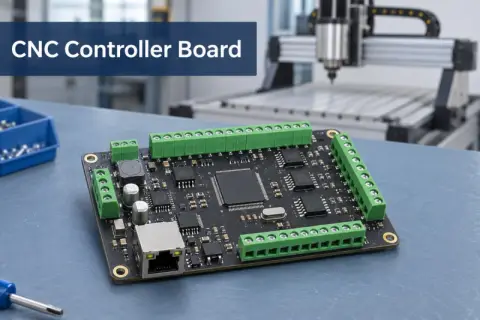 CNC Controller Board Design: Interfaces, PCB Specs and Assembly Testing
 Stratasys and Nano Dimension End $42.5 Million Markforged Sale Agreement