Protolabs Adds 50% More HP Multi Jet Fusion Capacity for Polymer Parts
Protolabs says its expanded HP 5600 capacity will support growing demand for PA-12 drone and aerospace parts, from prototypes to low-volume production.
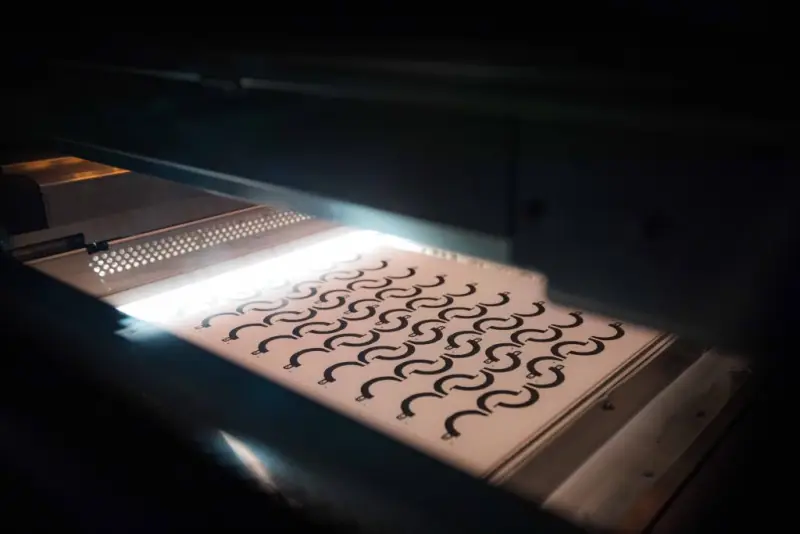
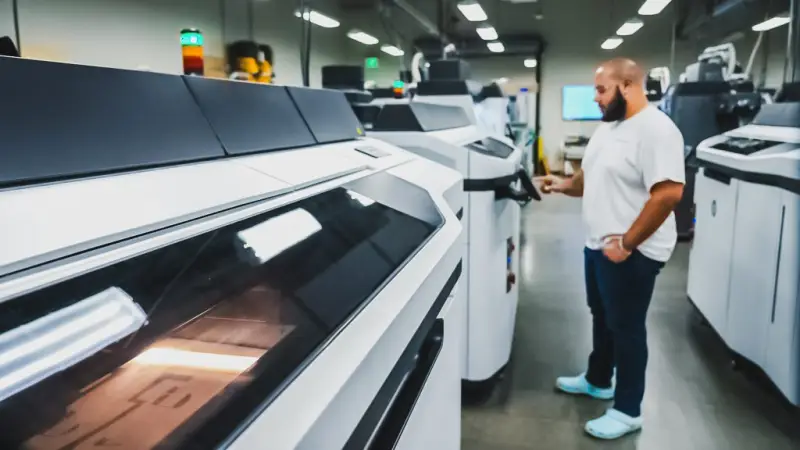
Protolabs has increased its capacity on HP Jet Fusion 5600 series systems by 50%, adding room for more polymer parts as drone and aerospace customers scale production. The Minneapolis-based digital manufacturer says demand from those customers drove the expansion. Its North Carolina factory will make the parts using Multi Jet Fusion (MJF), a process that can produce multiple components in one build without dedicated tooling.

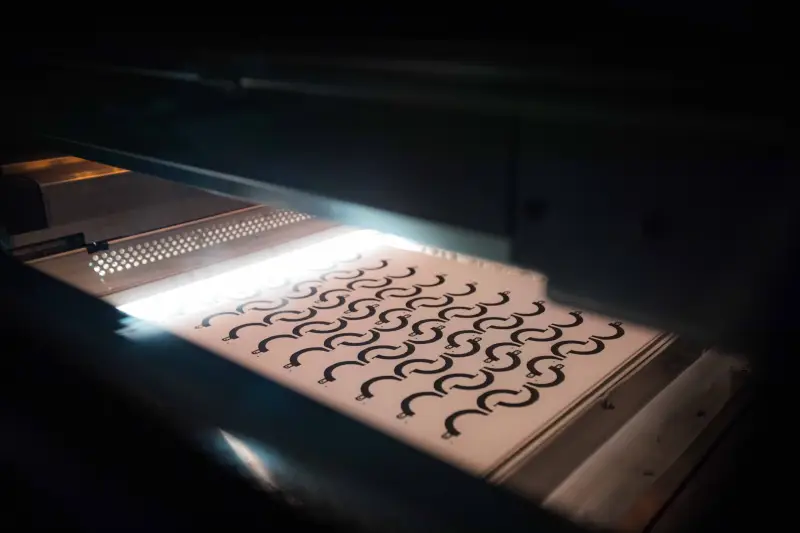
The capacity increase follows rising MJF sales at Protolabs’ U.S. factories. Through Q3 2026, MJF revenue was up more than 40% year over year. The company says it now serves more than 100 drone manufacturers; revenue from that customer segment has grown more than 90% since 2023, a compound annual growth rate of nearly 40%.
Those figures point to a shift in the work MJF suppliers are being asked to handle: beyond one-off prototypes, customers need repeatable access to parts as their designs and production volumes develop. Protolabs president and CEO Suresh Krishna said the added capacity is intended to supply lightweight, production-ready parts as drone and aerospace customers scale. The company hasn’t disclosed how many machines the 50% increase represents or identified the customers and platforms it will serve.
More parts per build with PA-12
Protolabs says the HP 5600 series offers higher build density than earlier systems. Packing more parts into a build can increase output per machine and, according to the company, shorten customer queues. That capacity benefit matters when multiple jobs compete for machine time, though the actual throughput for a particular part depends on its geometry and how the build is arranged. No build-rate or lead-time figures were provided for this expansion.
The factory will produce the parts in Nylon PA-12, which Protolabs describes as impact resistant and as having a high strength-to-weight ratio. For drone designers, reducing component mass can create room for other design priorities: the company says lighter parts can support longer flight time or greater payload. Those are potential application benefits, not quantified results for a named drone or component.
MJF’s tooling-free production also suits work in which part designs change between development and production. A revised polymer housing or duct can be built without making a new mold, which can simplify iteration on complex geometries and small batches. That doesn’t mean every design or volume is a fit: teams still need to assess the part’s requirements, material behavior and production economics.
Pairing polymer printing with CNC machining
The capacity expansion is the second drone-focused change Protolabs has described this year. In July 2026, it expanded CNC machining and MJF printing for drone manufacturing, adding quick-turn machining for metal and plastic parts alongside MJF capacity. The company said its machining service offered tighter tolerances and a wider range of functional and cosmetic finishes, while MJF was aimed at thin-walled parts such as air ducts, housings, brackets and snap-fit enclosures.
That combination gives engineering teams a way to source different kinds of parts through one supplier as designs move from prototypes toward low-volume production. MJF can make complex polymer forms without a dedicated mold; CNC machining can produce metal and plastic components where machined geometry, tolerances or finish matter. Protolabs has not given comparative cost or performance data for the two processes, so the choice remains part specific.
Drone payloads, avionics and sensors can change during development. When those interfaces shift, a team may need to revise both lightweight polymer structures and precision hardware. Having access to both processes could make those revisions easier to coordinate, although it doesn’t by itself establish how quickly any particular job will be completed. At the time of the July expansion, Krishna said Protolabs could deliver parts “in a matter of days instead of weeks.”
Production capability and open questions
Protolabs’ North Carolina 3D printing site is registered under the U.S. ITAR program and certified to AS9100D and ISO 9001:2015. Those credentials may matter to customers with domestic production requirements or aerospace quality management needs. They describe the facility’s registrations and certifications; the company hasn’t specified which programs will use the added capacity.
Other manufacturers are also positioning MJF for drone work. UK contract manufacturer AMufacture has said existing MJF capacity can take on increased demand without conventional tooling lead times. In the U.S., ADDMAN’s Forecast3D operation makes MJF-produced TPU parts for Unusual Machines’ SkyLite FPV drone, printing several components in one build to reduce assembly work. These examples show different ways suppliers are applying the process; they don’t establish that one material or production approach suits every airframe.
Some drone makers are designing around additive production from the start. Spain’s UAV Works has described a collapsible multirotor with 96% of its structure 3D printed. Firestorm uses MJF capability in twenty-foot mobile containers to produce drone components and spare parts in the field. HP’s Gino Balistreri has cited one manufacturer that reduced total platform weight by 25% using MJF; no company or test conditions were supplied alongside that figure.
For Protolabs, the key measure now will be whether added machine capacity keeps pace with customer growth and turns into dependable output for production jobs. The 50% increase signals that the company sees demand extending beyond early prototypes. Machine count, delivery performance and customer-specific applications will show how much that capacity changes what drone teams can order.
 AMD Venice Uses 2.5D Packaging to Feed More Bandwidth Into EPYC Zen 6
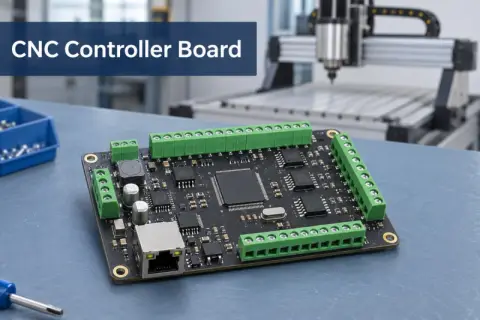 CNC Controller Board Design: Interfaces, PCB Specs and Assembly Testing
 Stratasys and Nano Dimension End $42.5 Million Markforged Sale Agreement