5 Push-to-Talk Over Cellular Radios Compared for Range, Battery Life and Team Setup
These five LTE radios extend push-to-talk beyond local radio range, with trade-offs in service costs, group setup, battery life and durability.
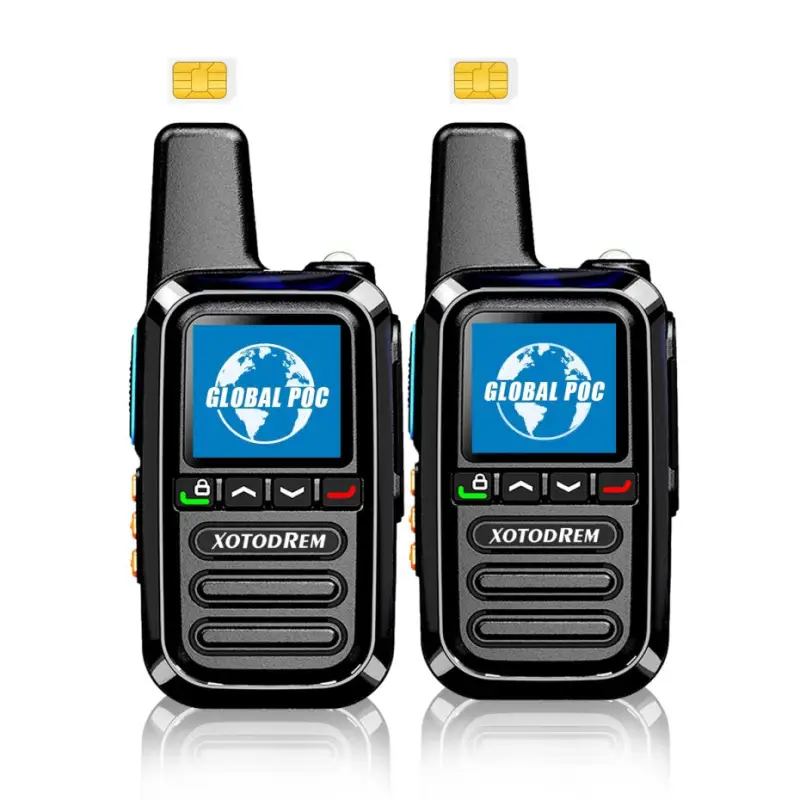
Push-to-talk over cellular (PoC) radios trade the short range of conventional walkie-talkies for communication over cellular networks. Users still press a button to speak, and others in the group hear the message without answering a call. For teams spread across job sites or travelling between locations, that can make routine coordination quicker than dialing individual phones.
The practical limit shifts from line of sight and local radio range to cellular coverage. A PoC radio can connect across a city or between states when the network supports it, but it can lose service in a dead zone. The operating cost also depends on the device: some tested models include service for a year or longer, while another requires a data plan after its first year.
Five models stand out for different reasons: two pairs emphasize included service and straightforward operation; a four-pack adds phone-app features; and the Rapid Radios G1 puts emphasis on quick group setup. Test observations below cover connection, audio, battery use and handling. The reported experiences are specific to the testing described, so teams should check local carrier coverage and service terms before outfitting a crew.
Models for long-distance communication
XOTODREM Global PTT Radios
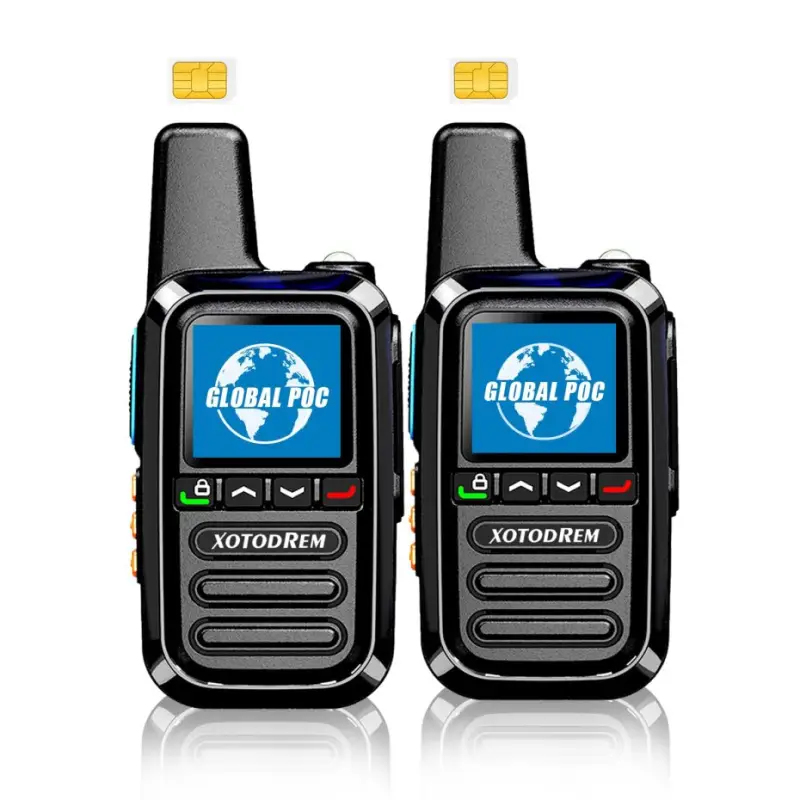
The XOTODREM pair is aimed at people who want cellular reach without a recurring bill during the first year. In a test with a coworker several states away, the connection came up quickly, and the audio remained clear without the static or delay the tester expected. Speech was also intelligible in a room with background noise.
The SIM card is preinstalled, so the reported setup involved turning the radio on and pressing the talk button; no additional app or activation steps were needed. Its 5000mAh battery lasted through a full day of intermittent use in the test. The enclosure carries an IP54 rating, and the radio continued working during a brief drizzle. That rating and observation support use around light dust or rain, not submersion.
Group provisioning is the main operational drawback. Linking several units requires sending the seller each device ID and waiting for the group to be configured. That makes the pair less convenient to expand quickly than a system with self-service pairing. The radios are also described as bulkier and heavier than a basic walkie-talkie. They suit users who value long-distance reach and included first-year service, provided they have cellular coverage where they work.
KAYOTOM Global Walkie Talkies
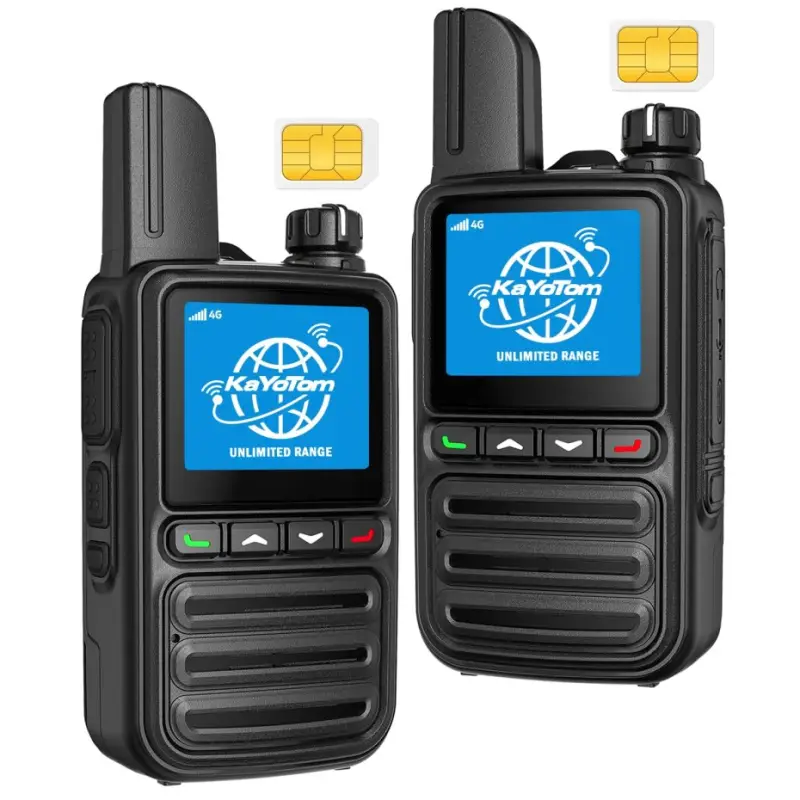
KAYOTOM’s two-radio set uses 4G LTE and includes a lifetime SIM card, with no subscription fees reported for the tested units. Over two weeks, the radios connected to a coworker several states away, well beyond the reach expected from a conventional short-range handheld. This reach still depends on network service, so it does not remove coverage gaps.
The battery lasted through a day of heavy use in the test. When it ran low, the USB-C port brought it to half charge in about 20 minutes, a useful result for a short break between work periods. Audio also held up near running equipment and outdoor traffic; the tester reported that background noise was reduced without making speech sound robotic or muffled.
As with the XOTODREM pair, adding radios to a group requires contacting support through Amazon and sharing device IDs. The reported wait was an extra day or two. The package contains two units, so larger teams need additional radios. Water resistance is limited, and the tester would not rely on the set in prolonged heavy rain. For a pair of workers, its reported battery performance and lack of subscription fees are strengths; scaling up requires planning for both additional units and group setup.
App-connected options and quick deployment
TIDRADIO TD-M15 4G LTE PoC Radio 4-Pack
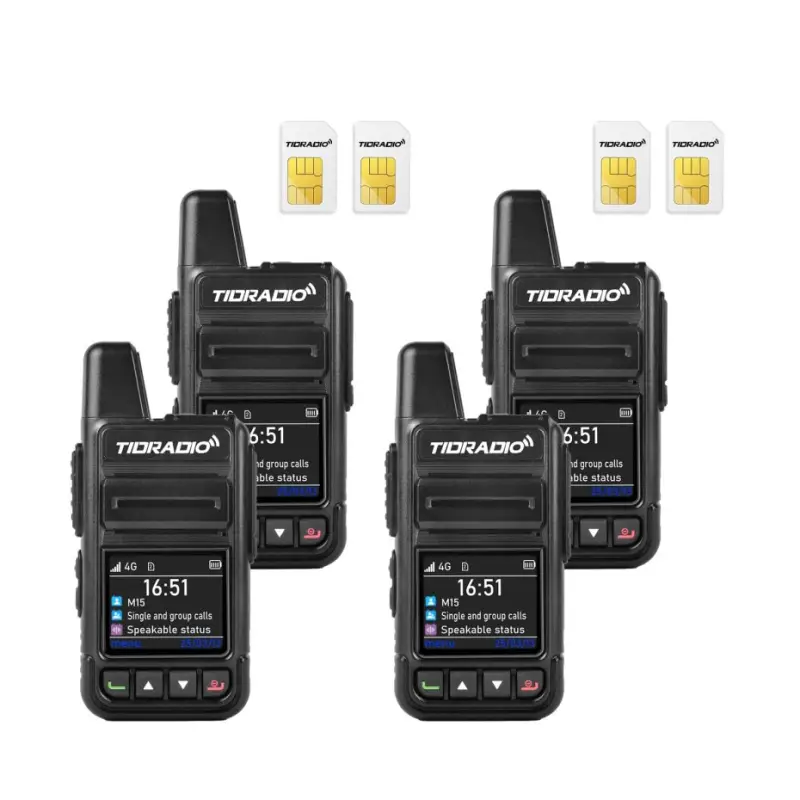
The TD-M15 four-pack combines handheld radios with the Odmaster companion app. In a test with a small group in different parts of town, calls generally came through clearly over 4G LTE. The app lets users talk from a phone as well as from a radio, which can be useful when someone steps away from the handheld. It can also record conversations for later review, and firmware updates happen automatically.
Each radio has a 3000mAh battery. The tested units lasted through a full day of regular use, and the set has an IP54 rating for dust and light water exposure. As with other cellular models, performance depends on network coverage; LTE connection does not guarantee service in remote or poorly covered areas.
The cost model changes after the first year: service is included initially, then an active data plan is required to keep the radios working. That recurring requirement matters when comparing the total cost of several units over time. The app features also require setup before the system runs smoothly. Teams already comfortable managing connected devices may find the phone access and recording useful, while buyers seeking a one-time purchase should account for the renewal requirement.
G0 Push-to-Talk Cellular Radios
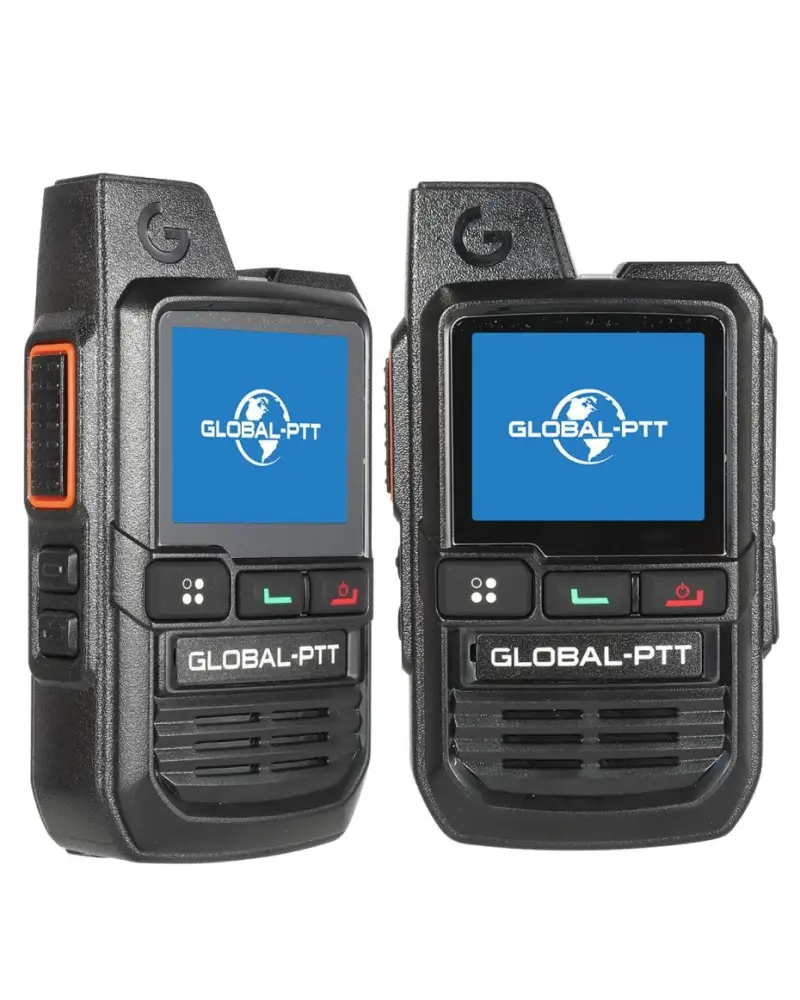
The G0 pair is designed for minimal setup. In the test, the radio joined the network after it was switched on, without app configuration or codes to enter. That can save time for users who want a handheld ready to use with little device management.
The radios connect over 4G LTE, and the tester reported clear communication over miles, without noticeable static or lag. Their SIM setup searches for the strongest signal among AT&T, Verizon and T-Mobile, rather than relying on only one carrier. This may help when travelling between areas where carrier strength differs, but cellular dead zones remain a limitation. The product description also lists built-in encryption.
Battery life was average in testing. Intermittent check-ins were expected to last a day, while users who talk frequently may need to recharge sooner. The reported review count was three, so the available account offers limited evidence about long-term reliability. Teams evaluating the G0 should weigh its easy initial setup and multi-carrier approach against uncertain endurance under heavy use and the need for cellular service.
Rapid Radios G1 Nationwide Walkie-Talkies
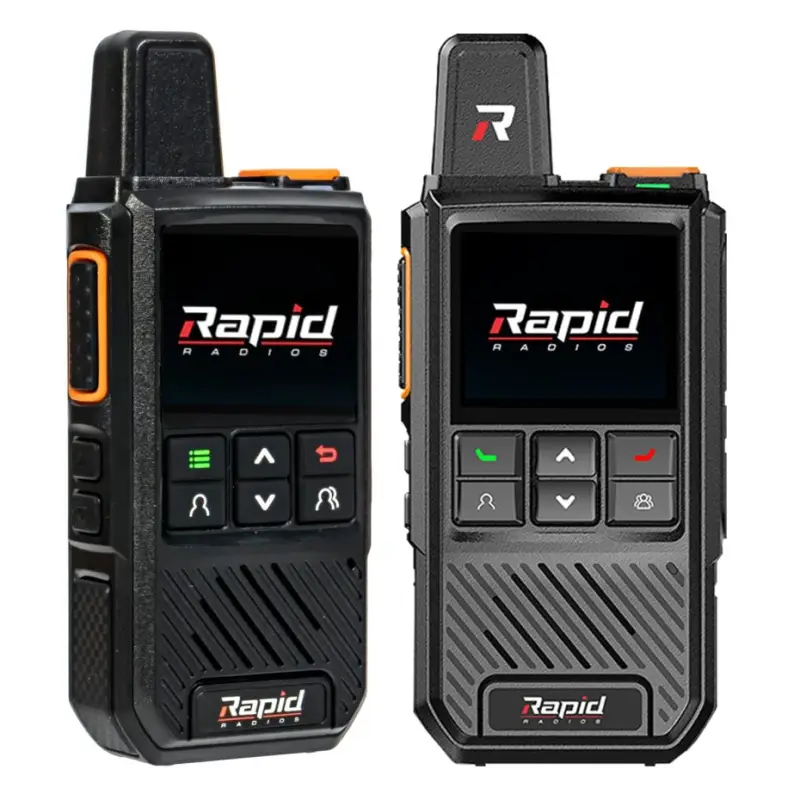
The Rapid Radios G1 performed well in a test during a camping trip, where people at separate campsites stayed in touch over distances beyond conventional walkie-talkie range. Audio remained clear near traffic and wind, and the tester found that group chats with several people could be set up in a few minutes. No noticeable delay was reported during conversation.
The radio’s battery lasted a day of intermittent use in the test. Charging is a constraint: the supplied charger is required, and using another charger may cause problems; the product terms cited in the test say damage from other chargers is not covered. The first year of service is included, with payment required to continue afterward.
Because the G1 depends on LTE, coverage will affect performance, especially in remote areas with weak service. Within that limit, its quick group setup may suit teams or event crews that need to coordinate several users without a lengthy provisioning process. The supplied charger and future service cost belong in the deployment plan.
Choosing a PoC radio for a working team
Start with coverage. These radios use cellular networks rather than local radio frequencies, so the relevant question is whether service is dependable at the places where people will use them. A claimed nationwide reach does not mean a connection is available in every location. Check the network arrangement for the model and consider the routes and work areas the team actually covers.
Compare service costs over the intended service period. The XOTODREM pair has no monthly bills or hidden fees during its first year, and KAYOTOM is described as having a lifetime SIM with no subscription fees. TIDRADIO includes its first year before requiring a data plan. Rapid Radios includes the first year, then charges to continue service. The G0 listing describes its SIM as lifetime. Confirm the applicable terms for the specific units before purchase, especially when buying enough radios for a larger group.
Match battery capacity and charging to the shift. The stated capacities are 5000mAh for XOTODREM and 3000mAh for each TIDRADIO unit. KAYOTOM’s test reported a full day of heavy use and a rise to half charge in about 20 minutes over USB-C; XOTODREM and Rapid Radios also lasted a full day of intermittent use in their tests. G0 battery life was described as average, with heavy talking likely to require an earlier charge. These results reflect different use patterns, so they are best treated as practical observations rather than directly comparable endurance measurements.
Check enclosure protection against the actual environment. XOTODREM and TIDRADIO carry IP54 ratings, with tests describing tolerance for light rain and dust. KAYOTOM has limited water resistance, and the tester advises against relying on it during prolonged heavy rain. The source gives no specific drop-test results for these models, so buyers should avoid assuming that an IP rating guarantees protection from impacts or harsh conditions.
Plan for group size and administration. XOTODREM and KAYOTOM require support-assisted linking through device IDs, which can delay deployment. Rapid Radios’ group setup was completed in minutes in the reported test. TIDRADIO offers app access and conversation recording, while G0 and the two pairs emphasize simpler radio operation. The buying guide also identifies group size limits, GPS tracking and emergency buttons as features to consider, but it gives no model-by-model specifications for those functions. Confirm capacity and feature availability for the intended system before selecting a set.
For crews that work across a wide area, the key decision is whether the added range and group communication justify cellular service and device management. A pair with included service may fit a small team, while app access or faster group setup may matter more as users multiply. In every case, coverage, renewal terms, battery demands and the process for adding radios will determine how well a PoC system fits the day’s work.
 CNC Controller Board Design: Interfaces, PCB Specs and Assembly Testing
 Stratasys and Nano Dimension End $42.5 Million Markforged Sale Agreement
 Xometry Q3 2026 Revenue Reaches $252.4 Million as Marketplace Margins Rise