Nvidia Without Jensen Huang: Succession, Supply Deals and Open-Source AI at Stake
Huang’s departure would test Nvidia’s founder-led structure, customer commitments, supply deals and role in the open AI ecosystem.
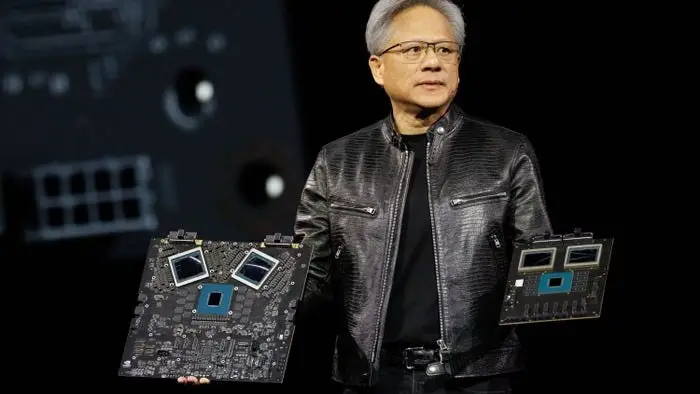
Jensen Huang’s departure would test more than Nvidia’s succession plan. The company’s operating style, its supply agreements and its influence over open AI development have all been shaped by a chief executive who has led it for 33 years. The central question is whether those systems can keep working when he is no longer the person setting direction and making the hardest calls.

The stakes reach beyond Nvidia’s own products. Cloud operators have raised money around the company’s support; suppliers have made capacity commitments amid tight component supply; and researchers have built software around Nvidia GPUs. Huang has been a major link between those groups. A successor would inherit not just a large business, but a network of relationships that depends in part on his personal judgment.
That doesn’t mean Nvidia’s capabilities disappear with its founder. It does mean the transition could expose how much decision-making and external credibility have accumulated around one person. The company has a broad technical leadership team, but the account presented here argues that its flat structure gives those executives limited practice leading in public or making decisions across the whole business.
A company organized around its founder
Nvidia’s reported management structure is unusual for a company of its size. Huang has said he has roughly 60 direct reports, doesn’t hold one-on-one meetings with them and believes a chief executive should have many direct reports because experienced leaders need little supervision.
He has also described titles and reporting lines as a poor measure of how important someone’s work is. That approach appears to have helped Nvidia stay relatively small: the company had about 42,000 employees, despite its large market value. With fewer layers of management, teams can respond quickly when priorities change, and the organization has fewer opportunities for internal status contests.
There’s a trade-off. The same structure gives Huang unusual influence over company direction. According to former employees cited in the source, executives and teams can act quickly once he has chosen a path, but major decisions tend to remain with him. The company may be nimble when its leader is present and aligned; replacing that leadership function is harder when authority has not been distributed in the same way.
Product work reflects that pace. Former employees described engineering and product development continuing close to launch so Nvidia could change course late. One former executive said the GB200 design came together closer to its product cycle than many people would have wanted. Huang has said he wants to keep the company operating like a startup.
That flexibility has an operational cost. Teams that must be prepared for late changes can face pressure near launch, while a small group of senior leaders may have little time to build broader management experience. In a founder-led system, speed and consistency can come from a single decision-maker. A successor would need to preserve the ability to adapt while establishing a decision process that works across more than 60 vice presidents and a wide range of technical and commercial groups.

The source argues that Nvidia has a thin bench of highly visible successors. Only five executives besides Huang are prominently featured on the company’s website, and two of those are finance and legal leaders. Most of Huang’s direct reports have not been trained for public leadership, and some have been discouraged from seeking the spotlight. Rene Haas, now at Arm, is cited as a rare example of an Nvidia executive going on to lead another major company.
That doesn’t mean Nvidia lacks capable people. It means the job has been shaped around Huang’s authority and reach. Several senior leaders may be deeply respected in their fields while still having limited experience directing the whole company, representing it to customers and suppliers, or making the final call when business and engineering priorities collide.
The succession question is also a job-design question
Colette Kress has been named interim chief executive, while the company looks for a permanent successor. The source points to Ian Buck and Jonah Alben as possible internal candidates with strong technical backgrounds. Buck joined Nvidia in 2004 after developing CUDA from his doctoral research at Stanford. He now leads the data center business as vice president of hyperscale and high-performance computing, and has often taken responsibility for company matters while Huang travels.
Alben has worked at Nvidia since 1997 and is senior vice president of GPU engineering, overseeing GPU design. Both are described as strong leaders. The difficulty is the breadth of the role: Nvidia’s products, manufacturing commitments, software ecosystem, customer relationships and financing arrangements are interdependent. The source questions whether either executive could take charge of every part of that system alone.
Buck’s experience is weighted toward software and data center operations, while the source doubts he could also direct hardware engineering. Alben leads GPU engineering, but does not control every major chip-related decision. Other senior leaders with responsibility for important technical and business areas also report directly to Huang. And neither candidate is known to have the same reach across the supply chain that Huang has built.
There is a second challenge: whether a successor would want the role. An executive quoted by the source said earlier this year that Buck would strongly resist succeeding Huang, while Alben was considered respected but also unlikely to want the job. That comment predates the reported change in circumstances, so it doesn’t settle what either leader might decide now. It does underline the unusual burden attached to replacing a founder who has been the company’s central figure for decades.
The next chief executive would need to turn a large group of senior leaders into a coherent team without stripping away the company’s speed. If decisions remain concentrated but no longer have Huang’s authority behind them, work could slow as executives wait for agreement. If authority is distributed more widely, Nvidia could gain resilience while also facing greater disagreement over priorities. Either path would require a deliberate shift in how the company is run.

Long-term bets need a particular kind of support
Nvidia’s history includes projects that took years to pay off. CUDA is the clearest example in the source: it lost money for years while analysts questioned the investment, but Huang continued backing it. A former employee said Huang kept the company committed to programmable shaders, CUDA and tensor cores, despite opposition to spending transistors on features with limited use at the time.
Those bets illustrate what a founder can contribute beyond technical insight. A chief executive who has the confidence of the board can keep resources behind a project through periods when its eventual value is uncertain. A successor still has to answer to directors and shareholders, and may face more pressure to show near-term returns. The source’s concern is that this could make long-range projects harder to protect.
Huang has described Omniverse and autonomous driving as “zero billion dollar bets”: projects that make no money today but that he sees as potentially important. Nvidia also developed the Shield TV entertainment device and DGX Cloud in part to understand customers and improve its products. The source says both businesses made little or no money and were ultimately set aside.
Those examples show two sides of the approach. Customer-facing projects can give a component and software supplier direct experience with the systems people build. They can also consume time and resources without becoming large businesses. Huang has been willing to back work for that learning value or for a distant opportunity. A future leader would need to decide which of those commitments still earn their place.
One of Huang’s less transferable strengths is described as “kingmaking” and dealmaking: choosing which technologies, companies and customers Nvidia will support, then building enough internal agreement to make those choices stick. The label is blunt, but the underlying issue is practical. A successor may inherit the projects and contracts without inheriting the same freedom to make large bets or the same personal credibility with the people involved.
Customers have bought into a relationship as well as a GPU
Huang has played a central role in deciding how Nvidia allocates chips among hyperscale cloud companies, smaller cloud operators and other customers. Demand for Nvidia systems exceeds what suppliers can deliver quickly, so access to capacity matters. Customers compete for Nvidia’s attention, and some deals require the company to provide substantial operational or financial support alongside the hardware.
The source describes a range of financing arrangements for neocloud operators. Nvidia can sell GPUs at full margin, support a buyer’s expected cloud revenue, guarantee a landlord or sign a lease itself. Those arrangements can help an operator without an investment-grade credit rating borrow on better terms. The package can make it possible to build a data center business without the scale of a hyperscaler, but it also ties the operator’s prospects closely to Nvidia’s continued support.

At the time described, Nvidia had reported $530 billion of gross off-balance-sheet guarantees in its fiscal second quarter, up from $184 billion the prior quarter. That figure included $36 billion of take-or-pay floors under neocloud capacity. The company also held a $99 billion equity book. These are large commitments, and the source presents them as part of a wider strategy to help customers build capacity around Nvidia systems.
Such arrangements can create a feedback loop. Nvidia gains additional customers and sells systems; operators secure the financing to install those systems; and the expected revenue from GPU capacity helps support the financing. That structure depends on demand continuing and on customers believing Nvidia will remain involved. Huang’s personal backing has been part of that confidence, according to the source. A new chief executive may be more cautious about extending it, or customers may simply put less weight on the promise.
That uncertainty could matter most for smaller operators that have raised funds partly because Huang endorsed their prospects. If the market decides his support is no longer assured, lenders, landlords and cloud customers may assess those companies differently. A contraction among neoclouds would affect their access to Nvidia systems and could alter how much capacity is available outside the largest cloud providers.
Allocation choices also have strategic consequences. Nvidia has to decide whether to prioritize hyperscalers, neoclouds or operators using its support program. A technically feasible deal may still be unattractive if it strengthens a customer that could become a competitor, or leaves an important customer short of supply. Huang has made those calls personally. The source argues that a successor will have to earn the authority to make comparable commitments.
Supply agreements are a personal asset
Nvidia’s position in AI accelerators rests partly on its ability to secure scarce components. The source describes the company as having locked in substantial supplies of logic wafers, memory and other parts. Huang’s 2025 visit to South Korea was intended to secure memory supply, according to the account, before some other executives fully recognized how constrained the market would become.
Nvidia’s supply and capacity commitments reportedly rose from $119 billion to $279 billion in one quarter, primarily because of memory. Those commitments can give Nvidia greater certainty about production, but they also require suppliers to believe the company will deliver on its side of the bargain. The source portrays Huang as the person who negotiated key agreements directly with senior leaders at major suppliers in Taiwan and South Korea.
It gives a specific example involving high-bandwidth memory. The source estimates that SK Hynix’s 2027 HBM4 pricing could range from roughly $3.0 to $3.3 per Gb for Nvidia, compared with $3.7 to $4.1 per Gb for other first-tier customers, including AMD, Broadcom, Amazon and Google. It also suggests Nvidia may give the SK Group priority access to GPU supply in return. These figures and the proposed reciprocal arrangement are presented as estimates, not confirmed contract terms.
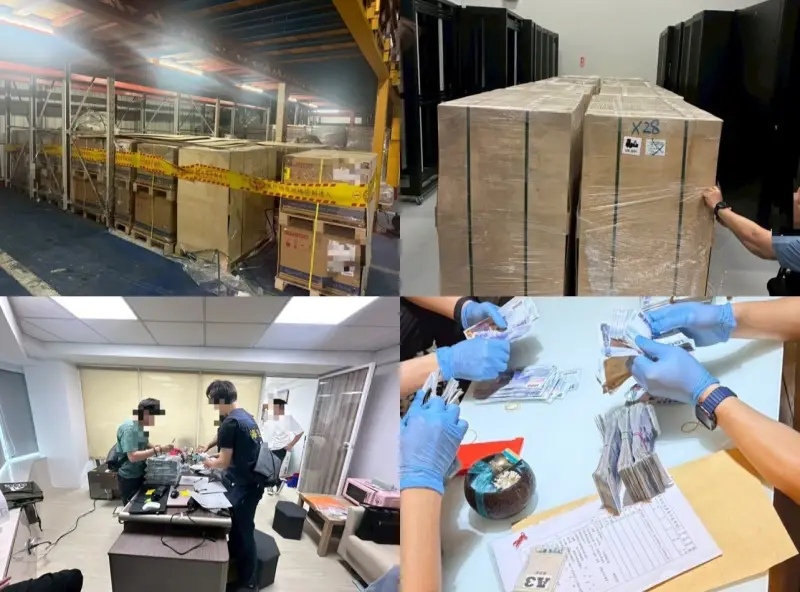
If suppliers no longer give Nvidia the same priority, competitors could have a better chance of securing memory and other constrained parts. The source forecasts that more than 70% of total accelerator capacity could be non-Nvidia in 2028. That forecast depends on how production capacity develops and how suppliers allocate it, but it captures the central risk: Nvidia’s supply advantage may be less durable if it rests on personal relationships rather than arrangements that carry forward automatically.
Huang has also pressed suppliers in Taiwan to invest in the manufacturing buildout, according to the source. The company’s capacity plans have depended on partners making ambitious commitments in both technology and logistics. Supplier confidence is built over repeated discussions and credible demand signals. A successor would inherit the relationships, but still have to prove that Nvidia’s future plans merit the same level of commitment.
For competitors, a change in supplier priorities could ease access to production and components. For Nvidia, it could mean paying more, accepting longer lead times or securing less capacity. The consequences would show up in product availability and the pace at which new systems reach customers. The important question is not simply whether suppliers will continue working with Nvidia; it is whether they will continue placing Nvidia first when several large buyers want the same scarce parts.
Open AI development feeds demand for accelerators
Nvidia has an interest in AI software becoming widely available. More models and applications give customers reasons to buy GPU capacity beyond the small group of frontier labs. That matters as large cloud companies and model developers build their own accelerator chips, which could reduce their dependence on Nvidia hardware.
The source argues that Nvidia has two major direct customers in Anthropic and OpenAI, or seven if the largest cloud companies are counted. It says all but SpaceX among that broader group are developing their own accelerator chips to reduce costs and dependence on Nvidia. In that setting, open models can broaden the market: startups, enterprises and cloud operators may need Nvidia GPUs to run a wider range of workloads even when they aren’t building frontier models themselves.
Huang has been a visible advocate for open AI, and the source says Nvidia has supported model developers including Reflection, Thinking Machines, Poolside and Hugging Face. The point is strategic as well as technical. A large ecosystem of open models and applications can help maintain demand for Nvidia’s computing platforms, while closed systems developed by a handful of large companies could concentrate that demand among customers with more ability to design their own chips.
The source also describes collaboration between Nvidia’s developer technology teams and Chinese AI labs. It says the labs use Blackwell GPUs and that Nvidia works with them to optimize models and hardware. That work has contributed to software techniques and kernel libraries, including DeepGEMM, DeepEP, MiniMax MSA and Moonshot’s FlashKDA. Systems such as SGLang and vLLM use some of these contributions, according to the source.

The practical value is that low-level software can make GPUs more useful and efficient. A kernel library packages tuned operations that model developers and inference engines can reuse. Improvements made by one team can spread through open code and help others get more performance from the same hardware. The source’s concern is that if Chinese labs stop publishing this work or keep it internal, developers elsewhere lose access to techniques built around Nvidia systems.
That would affect smaller companies in particular. Large labs can fund their own engineering teams, while startups often rely on shared libraries and public models to get products running. If important GPU software becomes less available, teams may have to spend more time rebuilding capabilities or accept less efficient workloads. The source sees that as a benefit to closed model providers that keep their methods private, and a cost to startups that depend on open tools.
Chinese labs may also have an incentive to avoid public discussion of their Nvidia hardware use. If access becomes more difficult, they could keep related software internal rather than releasing code designed for Blackwell. That would reduce the flow of knowledge across the wider machine-learning community, even if the underlying technical work continued inside individual labs.
Remote access and the limits of a hard cutoff
The source makes a case for allowing Chinese labs to rent GPU capacity remotely from trusted cloud providers, while controlling the amount of computing power they can access. It argues that this arrangement keeps revenue with American companies, gives those companies visibility into how their services are used and allows access to be withdrawn quickly if needed.
Remote access also leaves users outside China dependent on infrastructure they do not control directly. That dependence may make domestic accelerators less attractive, at least at the margin. The source further points to the number of Chinese engineers working for Nvidia and AMD, including engineers in China who contribute to hardware development and low-level software. It argues that separating those teams could make the user experience of GPU systems worse.
The business ties run in both directions. Companies including Nvidia, AMD, Broadcom, Google, Amazon, Microsoft, Meta, Supermicro and Dell depend on Chinese suppliers in parts of their supply chains, according to the source. Raw materials and board-level components are part of that network. A broad cut in technical and commercial connections could therefore affect production and software development beyond the customers directly affected.
China’s domestic accelerator ecosystem is already developing. The source points to three examples: Z.ai said in February that GLM-5 inference supported seven domestic accelerators; DeepSeek published its V4 paper in April and later released an inference megakernel for V4 Pro on Huawei Ascend NPUs; and Meituan said in June that LongCat 2.0 had been pretrained entirely on Huawei Ascend 910B NPUs.

Source: GLM-5 paper from Z.ai.
These examples suggest that domestic hardware is gaining software support. A complete cutoff from Nvidia systems could strengthen the incentive to build and optimize for local alternatives. That does not establish how quickly those alternatives can match the capabilities or availability of Nvidia GPUs, but it does show why access rules can affect more than near-term chip sales: they can shape where engineering effort goes.
The supply chain is similarly interconnected. The source notes that Chinese nationals work in frontier labs, Chinese engineers contribute to low-level chip software, and Chinese companies supply some raw materials and board components. Those links connect research, manufacturing and product development. More friction across them could slow AI progress broadly by making it harder to produce systems and share the software that helps them run.
What to watch in a transition
Nvidia’s next leader will be judged on more than quarterly execution. Customers will want to know whether allocation decisions and financial support will continue. Suppliers will look for evidence that long-term capacity commitments remain credible. Engineers and researchers will watch whether Nvidia keeps investing in open tools and in projects whose value may take years to appear.
The company’s founder-led structure has helped it move quickly, back uncertain technologies and coordinate a complex supply chain. Those strengths are real, but they are tied closely to Huang’s judgment and personal relationships. A successor could preserve them by delegating more authority and giving senior leaders clearer ownership across the business. That would be a substantial change to a company whose flat structure has depended on one central decision-maker.
For engineers and customers, the clearest signals will be practical: whether product plans remain coherent, whether GPU allocation is predictable, whether suppliers keep committing capacity, and whether Nvidia continues to support the software ecosystem around its hardware. The company can remain a major technology supplier without Huang, but the way it earns that position may change. Its transition will show whether the systems he built can operate as a company-wide capability rather than as an extension of one founder.
 AMD Venice Uses 2.5D Packaging to Feed More Bandwidth Into EPYC Zen 6
 CNC Controller Board Design: Interfaces, PCB Specs and Assembly Testing
 Stratasys and Nano Dimension End $42.5 Million Markforged Sale Agreement