SnowX SnowPod Review: Desktop SLM Printing, Powder Handling and Support Removal
SnowPod combines 316L steel powder-bed printing with cartridge handling and a nitrogen generator. Its prototype shows promise, but key performance data remain outstanding.
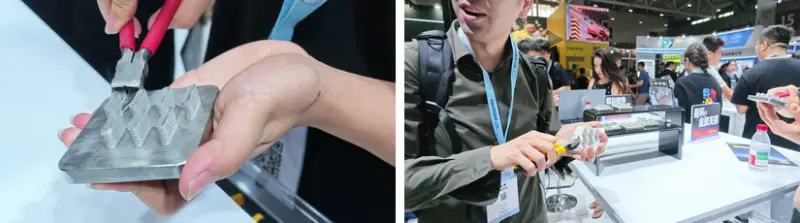
The most persuasive part of SnowX’s SnowPod demonstration wasn’t a specification or a sample on the display wall. It was removing the supports. A staff member showed me how to apply force from the side, then handed me the tools. The thin supports broke away more easily than I expected, making the finishing work feel less intimidating than the phrase “desktop metal printing” might suggest.
That hands-on moment matters because a small metal printer is a process, not just a box. SnowPod uses selective laser melting (SLM) to fuse stainless steel powder, and the powder must be loaded, recovered and handled after the print. Parts need support removal and may need finishing. SnowX’s design tries to bring several of those steps into a compact, enclosed system. The prototype I saw at TCT Shenzhen made that workflow easier to picture, though it left practical questions about performance, safety and operating costs unanswered.
What fits on the bench
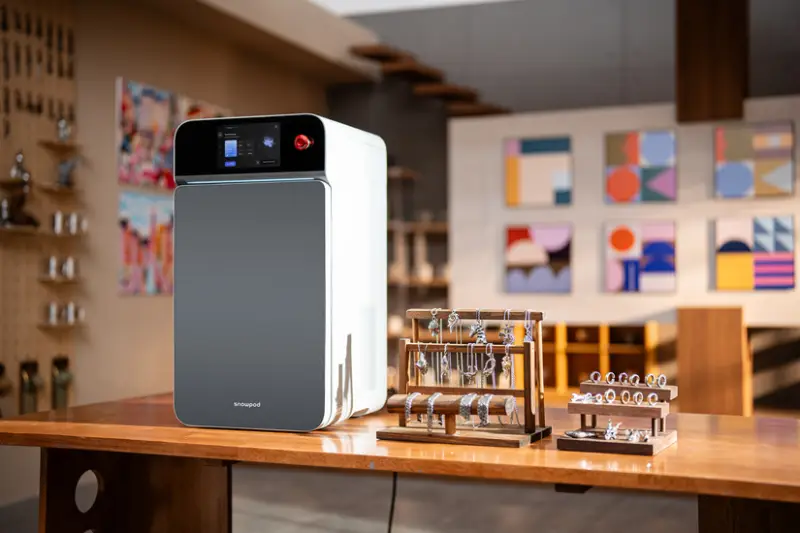
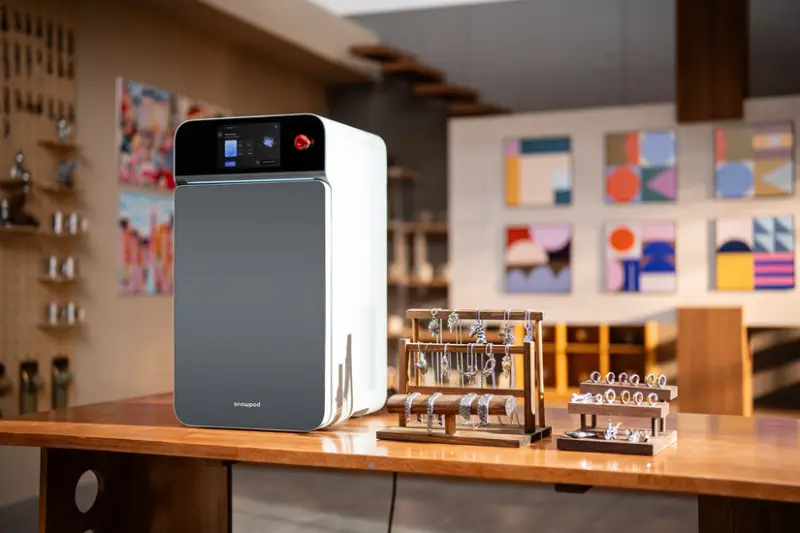
SnowPod’s published build volume is 80 × 80 × 100 mm. A 200 W fiber laser has an approximately 40 μm spot size, and the stated layer thickness is 30–60 μm. The machine measures 360 × 360 × 660 mm and weighs 40 kg. Those dimensions make the printer compact by industrial metal additive manufacturing standards, but the footprint alone doesn’t describe the space a working setup needs.
| Specification | Published value |
|---|---|
| Build volume | 80 × 80 × 100 mm |
| Laser | 200 W fiber laser |
| Laser spot size | Approximately 40 μm |
| Layer thickness | 30–60 μm |
| Dimensions and weight | 360 × 360 × 660 mm; 40 kg |
The laser spot size describes the beam, not the dimensional accuracy of a finished part. SnowX lists 0.05 mm dimensional accuracy on its website, based on its own testing, and says results depend on geometry, part size and other factors. That figure needs to be read as a manufacturer claim, not a guarantee for every geometry or build orientation. SnowX specifications
© SnowX
At the time of the demonstration, 316L stainless steel was the supported material. SnowX mentioned copper alloys as a material under consideration, but gave no timeline or processing specifications for them. The current material scope is therefore much narrower than the range of metals associated with powder-bed machines in general.
Unlike metal-filament systems that require debinding and sintering after printing, SnowPod melts powder directly. That removes the need for a separate sintering furnace or an outside sintering service. It doesn’t eliminate post-processing: the build still has supports, and the parts may need additional finishing. Raise3D Metalfuse
A bench must carry the printer’s 40 kg, with additional room to open its doors and work at the front. NitroPod, SnowX’s separate nitrogen generator, and the transfer box take up more space. A tube connects the two machines, which gives some choice in their placement, but the printer also needs clearance behind it for the tube and power cable. SnowX told me vibration can affect print quality, although the machine has some tolerance for it. The company hasn’t yet provided the detailed installation requirements I’d want before allocating workshop space.
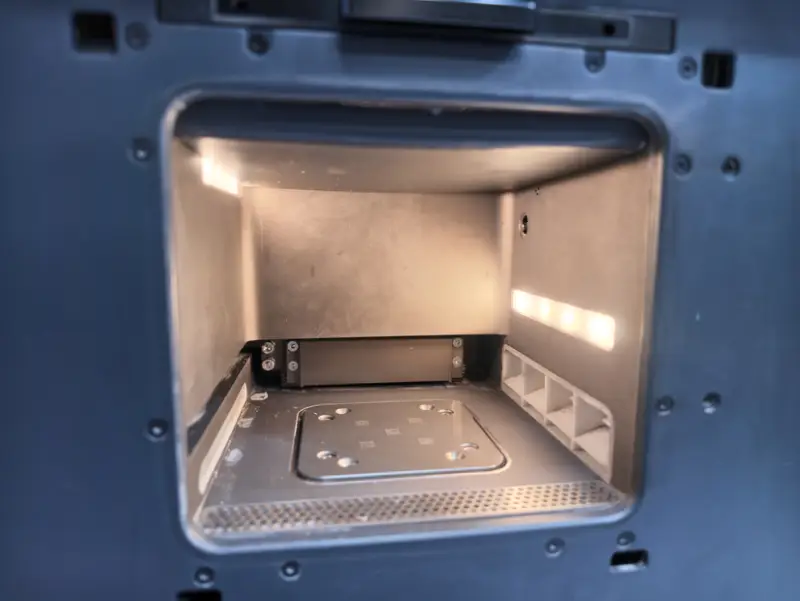
Photo: Yuto Horiuchi
Photos: Yuto Horiuchi
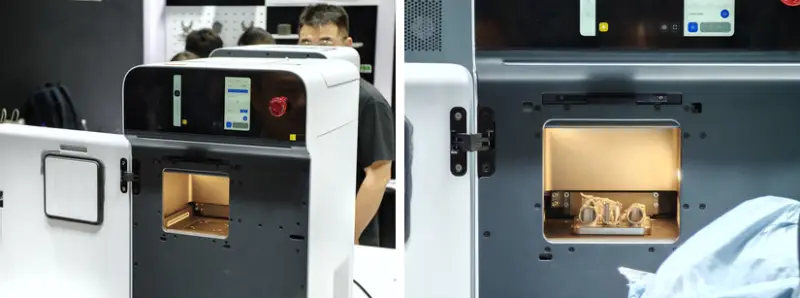
SnowX had three operable printers and one NitroPod at the booth, alongside several mock-ups. The samples gave a useful sense of the small build area; they didn’t establish repeatability, strength or dimensional performance.
Preparing a build in SnowPath
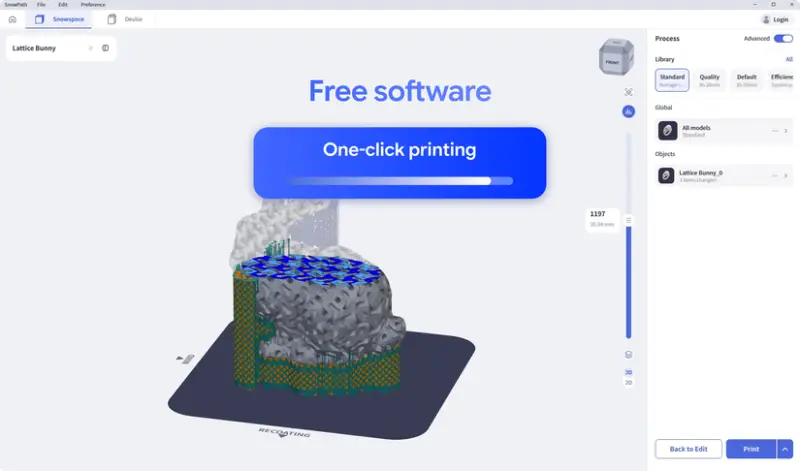
SnowPath, SnowX’s slicer, is free. The workflow shown at the booth started with selecting a preset, orienting the model and generating supports. Users can preview layers and see estimates for print time and material weight. As someone more familiar with filament and resin slicers, I found the basic sequence easy to follow.
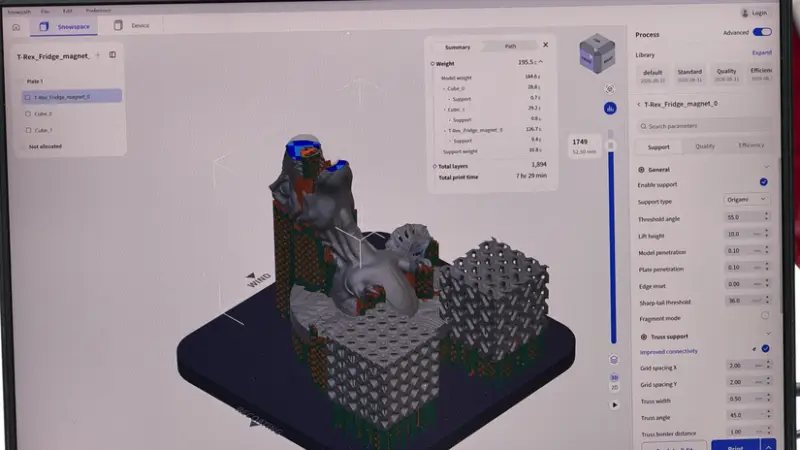
Photo: Yuto Horiuchi

Photos: Yuto Horiuchi
© SnowX
Support placement is a central design choice. The operator needs to consider which faces should remain clean and where later tool access will be possible. SnowX said it is refining the software presets to improve print success rates. That work will matter: small parts can still be awkward to finish if supports land on a visible face or in a confined feature.
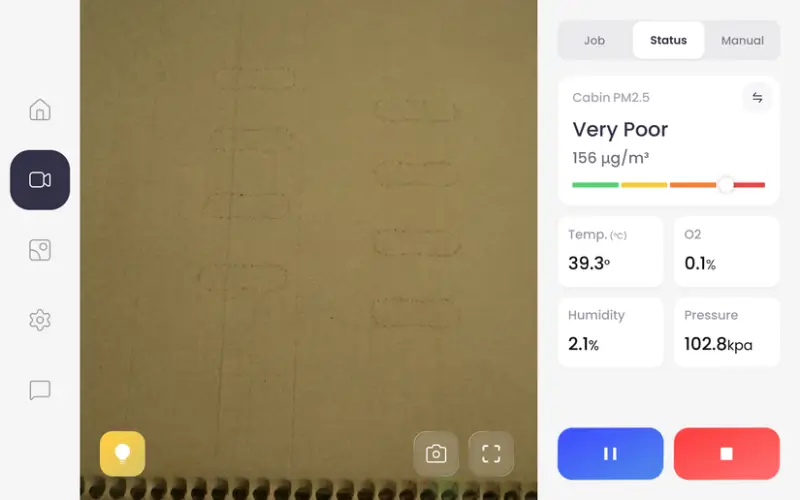
The printer and software can operate locally, according to the team. I couldn’t test a job transfer or the internal camera at the booth because SnowPath wasn’t connected to a printer. SnowX later sent a view from a working camera connection. It shows a powder-covered bed, with the support pattern just visible. In a powder-bed process, the growing part remains surrounded by loose material, so the camera view doesn’t resemble the exposed part in a filament or resin machine.
Cartridges, powder recovery and part removal
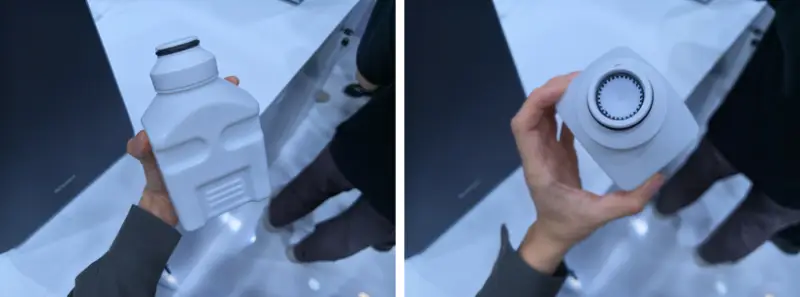
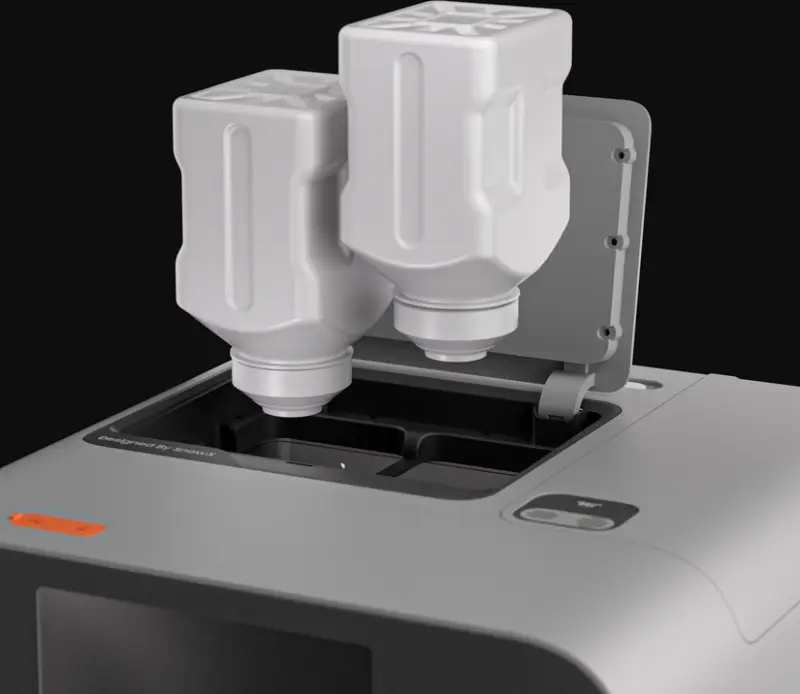
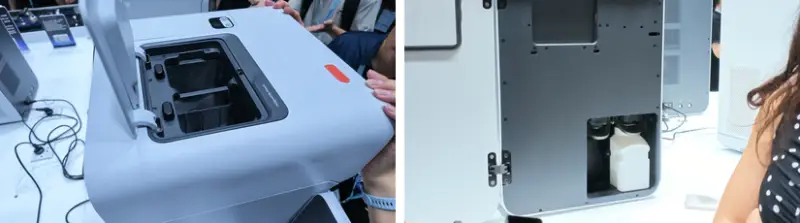
SnowPod stores powder in cartridges SnowX calls Pods. Two bays sit under the top cover, and the same cartridge format is used to supply material and recover powder after a build. The team described a cyclone-like separation system that sorts remaining powder into material for reuse and material for disposal. A container in a low front compartment collects waste powder.
Photos: Yuto Horiuchi
© SnowX
Photos: Yuto Horiuchi
Enclosed cartridges can reduce direct contact with powder, but they don’t make material handling irrelevant. When I raised the subject, CEO Fangda Xu compared the powder with toner used in a conventional 2D printer. He said the toner particles are finer and disperse more readily when airborne, while SnowPod’s stainless steel powder has greater density. Those comparisons alone don’t establish safe handling conditions; SnowX’s own FAQ recommends protective equipment during normal operation and requires it for maintenance and servicing. SnowX specifications and FAQ
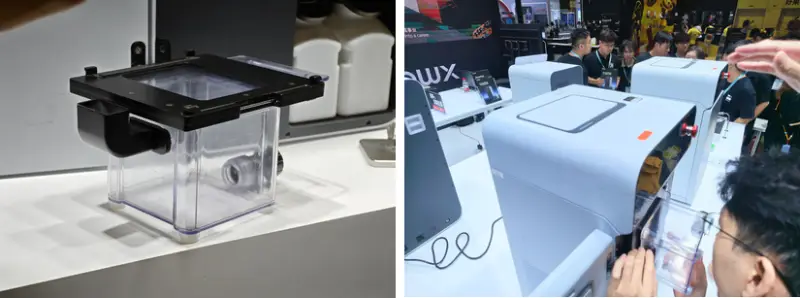
For part retrieval, a clear transfer box attaches to the printer’s front. In the demonstration, SnowPod pushed the build plate and sample parts into the box. The operator then closes a sliding door and detaches the box, keeping the powder and parts contained during removal.
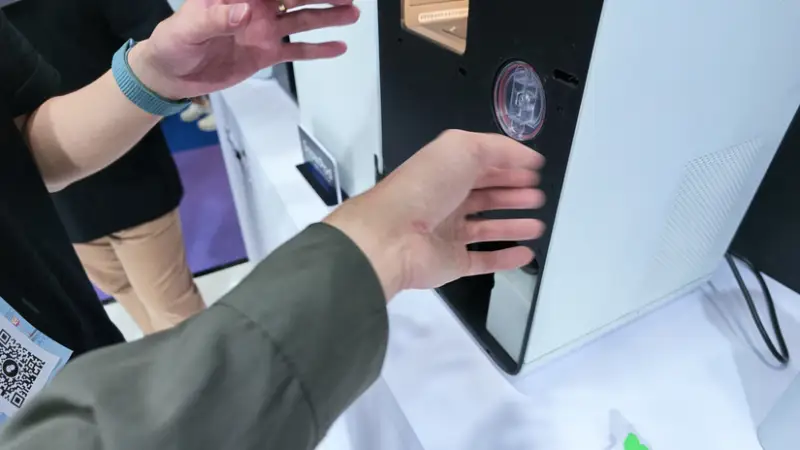
Photo: Yuto Horiuchi
Photos: Yuto Horiuchi
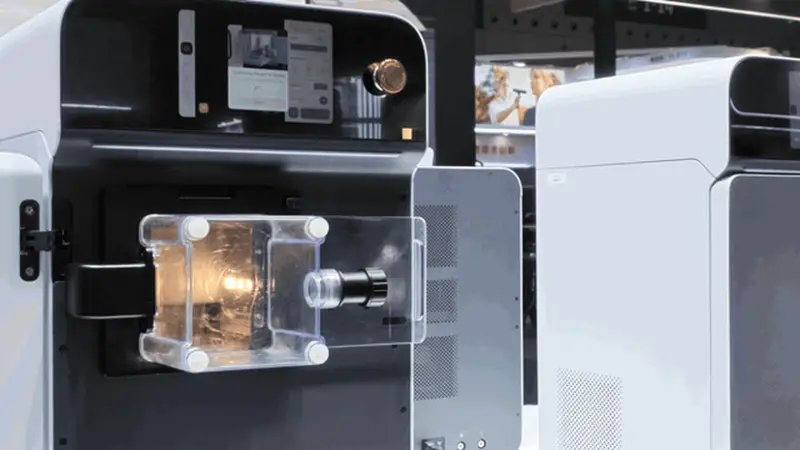
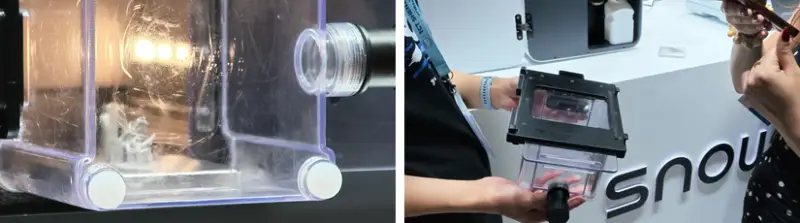
Photos: Yuto Horiuchi
SnowX described the next step as adding water to turn remaining powder into a slurry, filtering out the solids, then removing supports. I saw the box attachment and plate ejection, but not the water and filtration stages. Those steps deserve a closer look before anyone judges how much cleanup the system actually avoids.
Supports designed to break sideways
The supports use thin metal walls intended to resist vertical loads and break more readily under sideways force. The practical method is to place a tool against a support and push laterally, rather than pull upward on the printed part. The staff suggested nippers or pliers; ordinary plastic-model nippers aren’t suitable for this job.
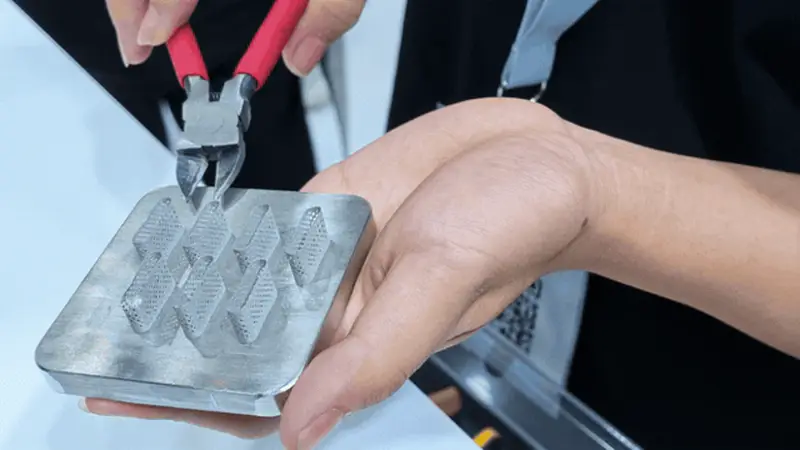
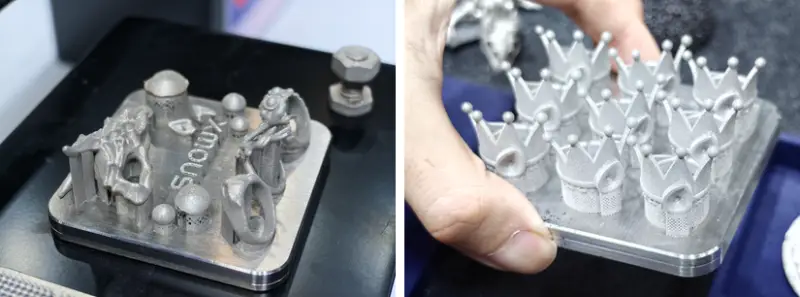
Photos: Yuto Horiuchi
Photos: Yuto Horiuchi
The supports came away cleanly enough that I could imagine reusing the plate after light sanding. But supports aren’t optional scaffolding that can always be removed from the build plan. SnowX said residual stress and shrinkage can cause a failure or warp a part enough to interrupt printing if supports are omitted. The support geometry has to hold the part during the build while still allowing practical removal afterward.
Parts printed directly onto the plate need to be cut free; SnowX’s intended approach is to raise parts on supports. The build plate is normally replaced for each print. SnowX plans to publish plate dimensions so users can buy replacements, cut their own or have them made. Plates may be reused after surface grinding or similar treatment if they remain within the machine’s compensation range.
Filtration and the nitrogen supply
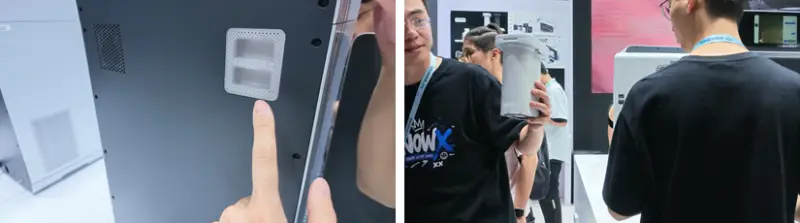
SnowX lists an internal H13 filter and an external H14 HEPA filter. The replacement unit shown at the booth had two filter layers inside a plastic housing, with the whole housing replaced as one unit. The team expects replacement every few months, but I wasn’t given a price. That recurring cost belongs in any ownership estimate alongside powder, plates and maintenance.
Photos: Yuto Horiuchi
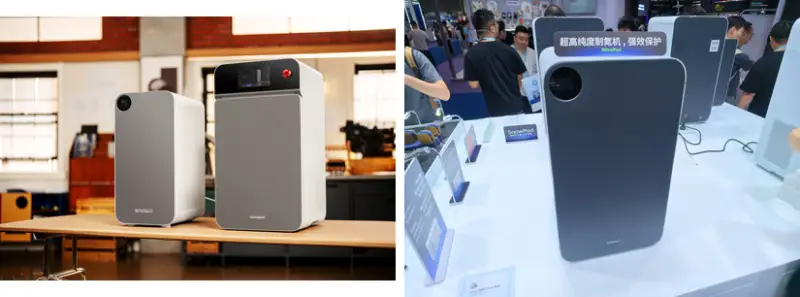
NitroPod separates nitrogen from air and supplies it to the build chamber to displace oxygen and limit oxidation. It also avoids sourcing a separate nitrogen cylinder. SnowX lists a flow rate of 3 L/min, 99.9% purity at that flow rate and maximum output pressure of 0.2 MPa.
Images: SnowX / Yuto Horiuchi
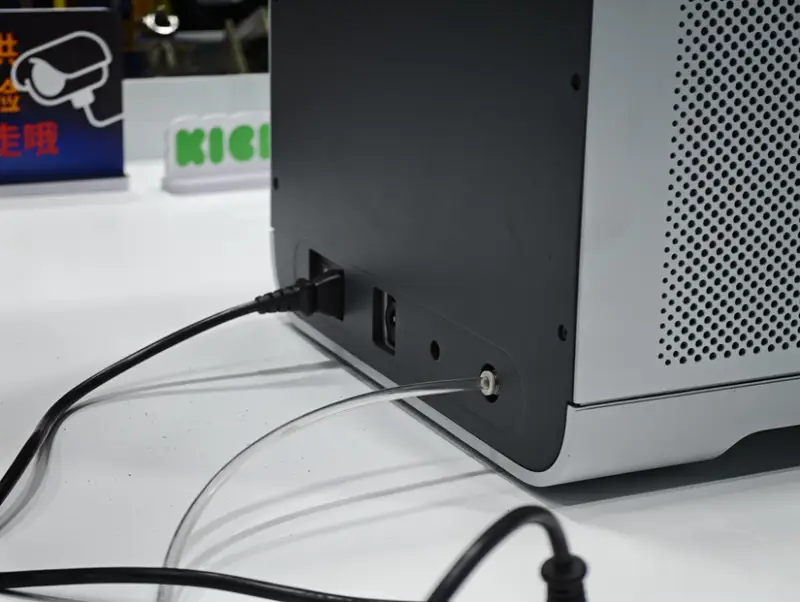
Photo: Yuto Horiuchi
SnowX said the system monitors oxygen and pressure and stops automatically if it detects an anomaly. I’d want the final documentation to show sensor locations, monitored conditions and stop thresholds. Nitrogen is not harmless simply because it is separated from air: a local buildup can displace oxygen. Airgas and the European Industrial Gases Association describe those hazards in their safety material. Airgas nitrogen safety data sheet EIGA guidance on nitrogen and oxygen generators
What the samples show—and what they don’t
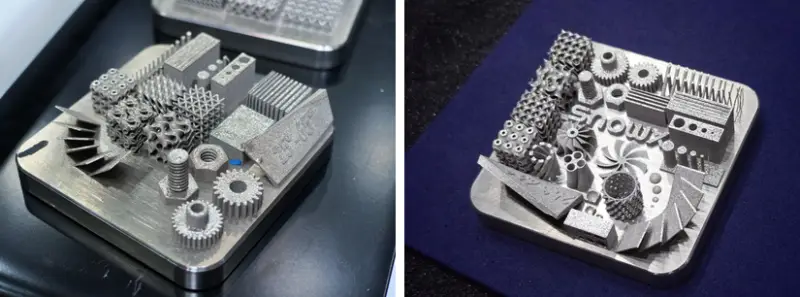
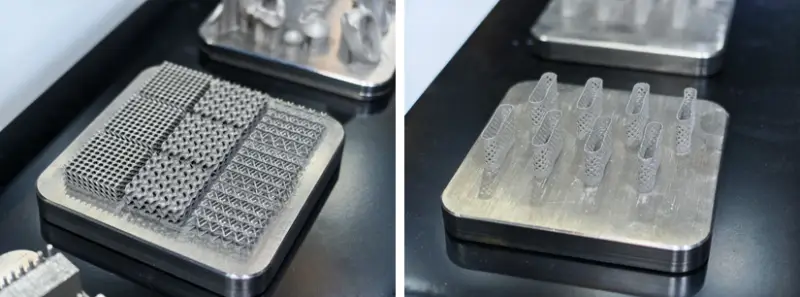
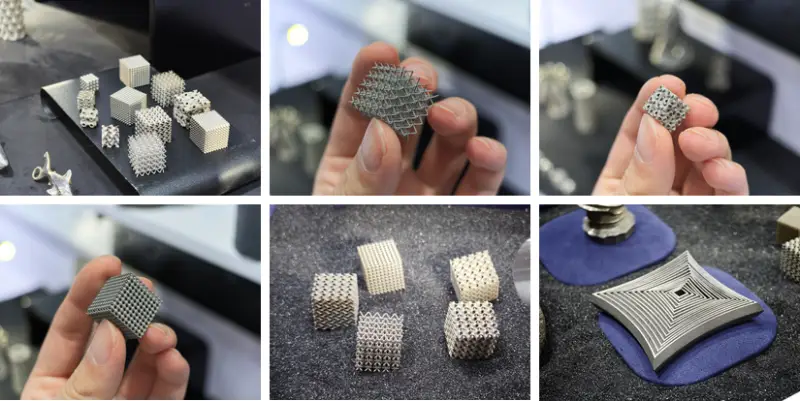
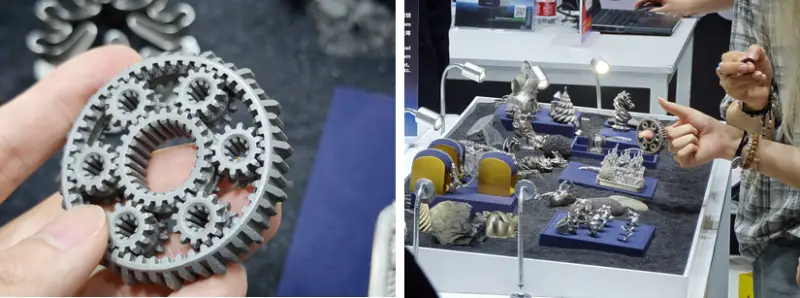
The booth’s test plate combined threads, gears, thin walls, lattices and blade-like shapes. Other samples showed repeated parts, standalone supports and different lattice patterns. They demonstrate the range of geometries SnowX chose to print; they aren’t measurements of dimensional accuracy, material strength or process repeatability.
Photos: Yuto Horiuchi
Photos: Yuto Horiuchi
Photos: Yuto Horiuchi
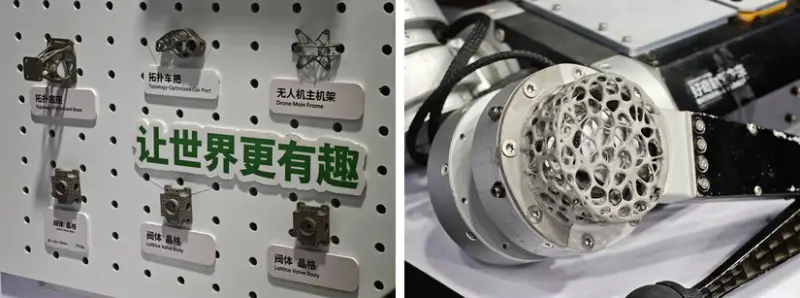
Topology-optimized forms, lattice valve bodies and a porous cover-like part mounted on a robot arm suggested applications in mechanical design. I also handled small parts with repeating openings and connected curves. SnowX said it has test reports comparing XY and Z directions, but needed more time to retrieve the data. Those results would help engineers assess directional behavior and decide whether a displayed geometry suits a load-bearing application.
Photos: Yuto Horiuchi
Photos: Yuto Horiuchi
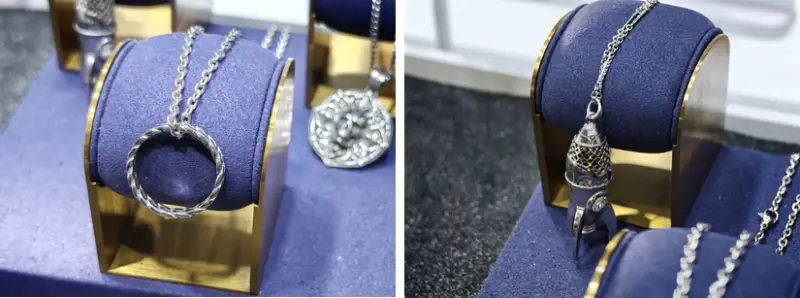
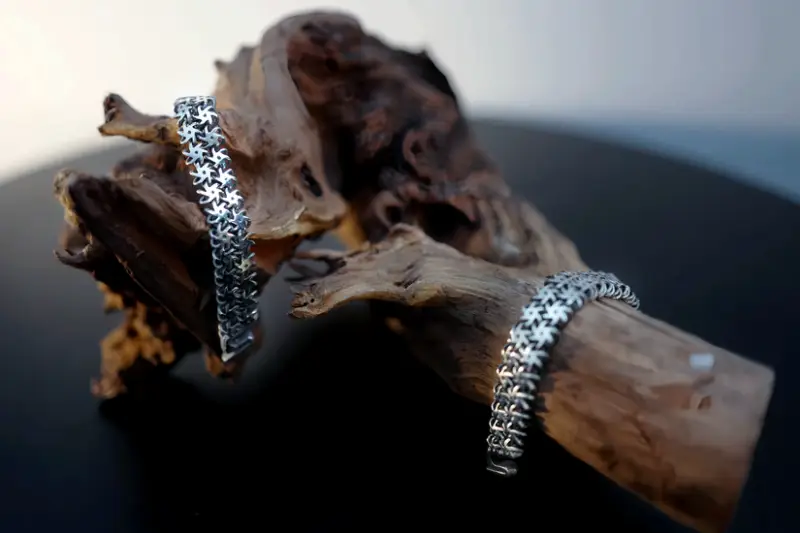
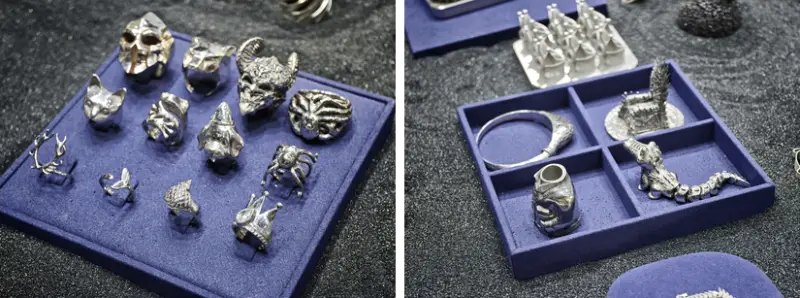
Jewelry and decorative parts made up a large share of the display. Stainless steel’s corrosion resistance comes from a thin passive surface film, and its strength and durability make it useful for objects designed to be handled or worn. Outokumpu on corrosion resistance
Photos: Yuto Horiuchi
© SnowX
Photos: Yuto Horiuchi
For jewelry worn against skin, alloy composition needs attention. SnowX confirmed that its 316L powder contains nickel and said it would provide further detail after testing. The display also included keycaps, a thin-walled vase, relief details, polished miniatures and print-in-place mechanisms. Some linked models moved smoothly; a smaller sample was stiff in places, with support material or another obstruction apparently remaining. Seeing the support strategy and finishing settings for those parts would make the examples more useful to designers.
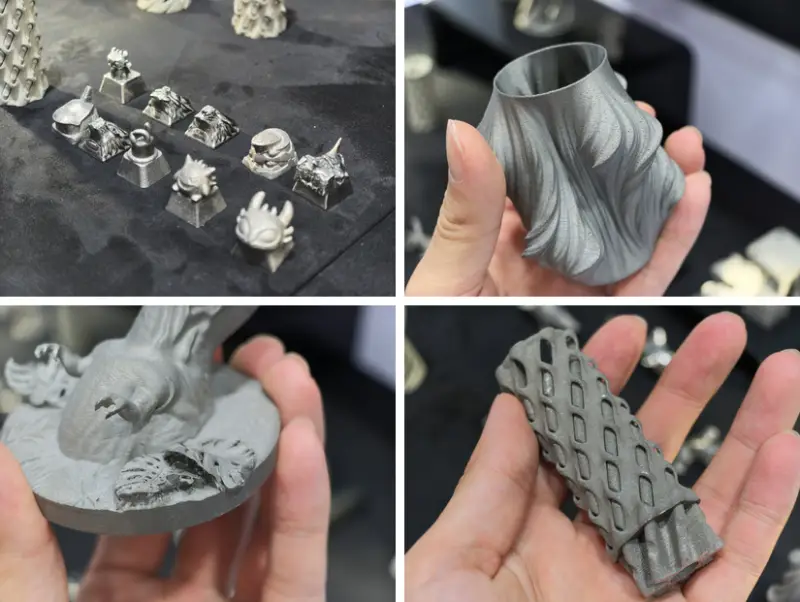
Photos: Yuto Horiuchi
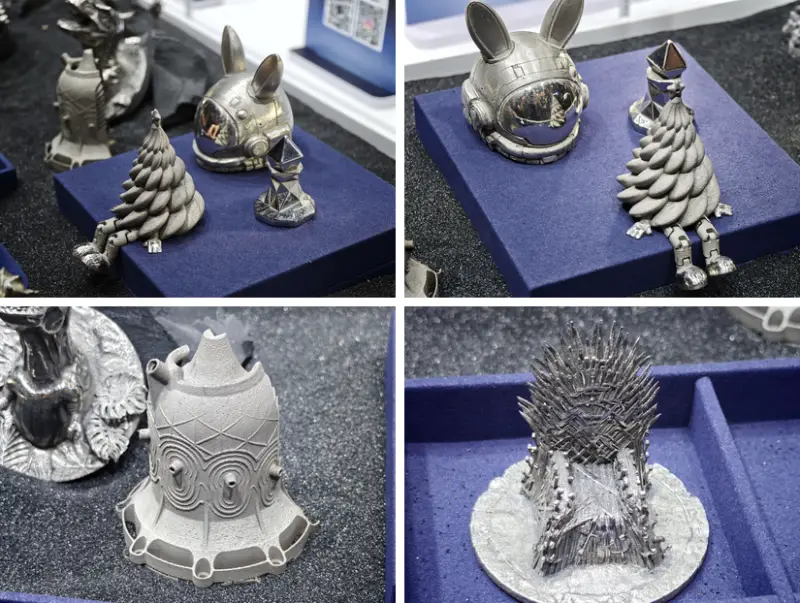
Photos: Yuto Horiuchi
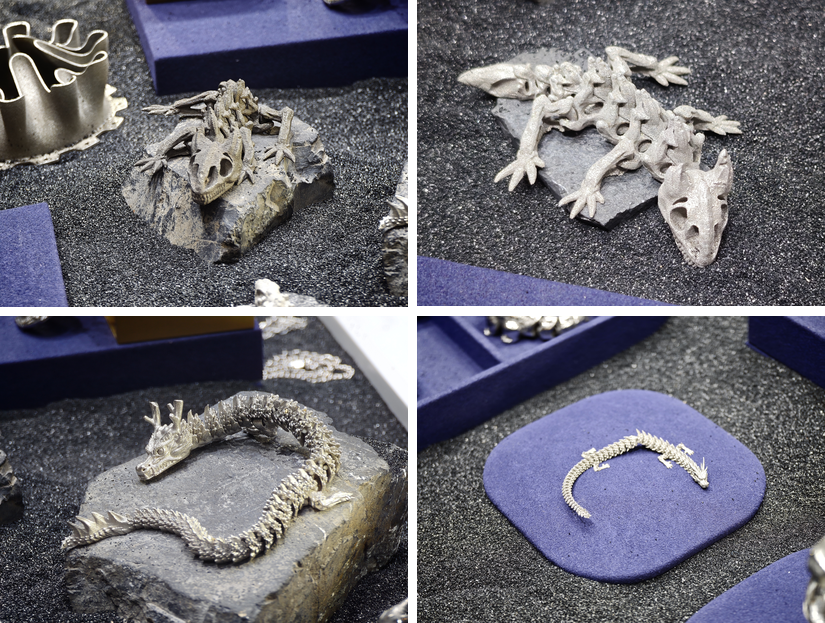
Photo: Yuto Horiuchi
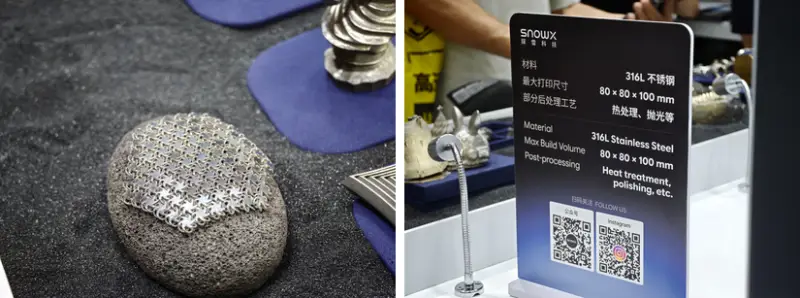
Photos: Yuto Horiuchi
Pricing, team and development status
SnowX’s planned Kickstarter prices were $5,299 for the SnowPod Printer Kit and $5,899 for SnowPod with NitroPod. The corresponding planned retail prices were $9,299 and $9,999. A separate reservation offer listed prices of $4,999 and $5,599, with a refundable $50 deposit reserving a further $300 discount. SnowX said the deposit would be returned to the original payment method and the discount applied within 14 days after the project ends; people who chose not to participate could request a refund before launch. These are announced prices ahead of production, not a record of completed sales. SnowX reservation page
The $600 difference between the two planned Kickstarter packages makes NitroPod worth considering. It combines the printer with a nitrogen source designed for it, avoiding a separate purchase and the work of checking connections and compatibility. Whether that package is good value depends on the final specifications, included equipment and operating costs.
SnowX planned to launch on Kickstarter in Q4 2026. As of October 19, 2026, its Kickstarter page remained at the pre-launch stage. The printer I handled was a prototype, and SnowX cautioned that specifications, prices, package contents, materials and shipping plans could change. SnowPod Kickstarter page
The company’s background includes industrial metal additive manufacturing. CEO Fangda Xu earned a PhD at the University of Bath in 2020, researching monitoring systems for wire arc additive manufacturing (WAAM). At Bath, he worked with Professor Stephen Newman and Vimal Dhokia on AMtwin, a digital twin for WAAM. Fangda Xu profile
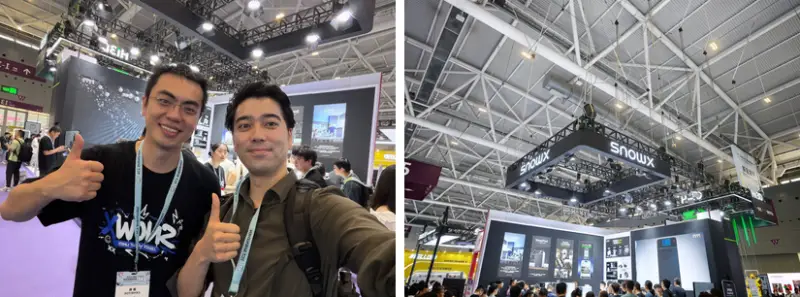
Photos: Yuto Horiuchi
RONGSU, which makes industrial metal additive manufacturing equipment using directed energy deposition (DED), introduced SnowX as its consumer brand. SnowPod brings that company into powder-bed printing at a much smaller scale than its industrial DED equipment. The shift makes the handling system and user workflow as important to assess as the laser and build volume.
I left the demonstration wanting to try SnowPod in a workshop. The cartridge approach, contained part retrieval and sideways-breaking supports make the process feel more accessible than I expected. For designers, educators and serious makers, an 80 × 80 × 100 mm volume could suit small mechanical parts, fixtures, jewelry and intricate models. For engineering use, the next useful evidence is less visual: directional material data, repeatability results, sensor details, installation guidance and the real cost of filters and consumables.
SnowPod’s prototype gives a credible glimpse of desktop SLM workflow, especially around powder and support removal. The practical case will depend on whether SnowX can publish those operating details alongside the final specifications and demonstrate consistent results across parts and builds.
 AMD Venice Uses 2.5D Packaging to Feed More Bandwidth Into EPYC Zen 6
 CNC Controller Board Design: Interfaces, PCB Specs and Assembly Testing
 Stratasys and Nano Dimension End $42.5 Million Markforged Sale Agreement