Precision Resource Plans Two U.S. Metal 3D Printing Facilities for 2027
New sites in California and Connecticut will add metal printing, heat treatment and machining capacity, with both facilities expected to open in early 2027.

Precision Resource is planning a larger U.S. production base for metal additive manufacturing, pairing new printing capacity with heat treatment and complex machining at two locations. The company expects its Huntington Beach, California, and Shelton, Connecticut, facilities to become operational in the first quarter of 2027.

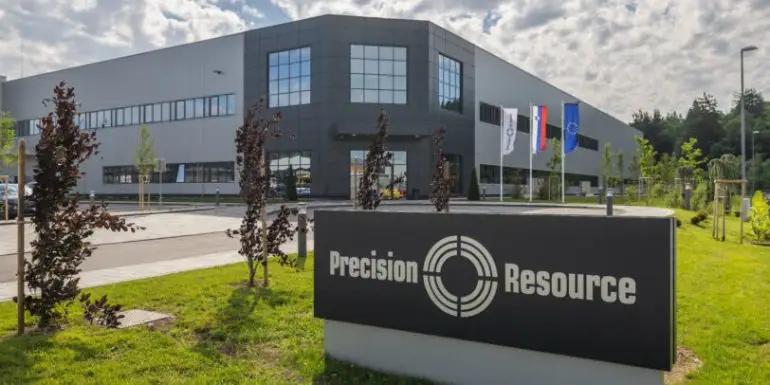
The plan is significant because the expansion covers several stages of manufacturing, not just the installation of additional printers. Bringing thermal processing and more machining work into the facilities could let Precision Resource carry more parts from printed form toward finished components within its own operations. That creates a broader production pathway around metal additive manufacturing, while the company’s two-site arrangement is intended to add capacity and geographic redundancy.
Two sites, different starting points
Huntington Beach will become Precision Resource’s second additive manufacturing facility. The company says the new operation will double the site’s existing industrial additive manufacturing capacity. Shelton, where Precision Resource is headquartered, will be the company’s first additive manufacturing location. Its layout is designed to allow further expansion as demand grows.
Precision Resource intends to run the locations as an integrated manufacturing network. The stated aims include adding production capacity, distributing work across two U.S. sites and reducing supply-chain complexity for demanding programs. The company has not specified how work or equipment will be allocated between the locations, so the practical balance of the network will become clearer as the facilities approach operation.
“This expansion is much more than adding machines. We are building something significant by connecting our Huntington Beach and Shelton operations into an integrated additive manufacturing network,” said Chris Gratton, Precision Resource’s director of additive and machine operations.
The network approach matters to production planning because additive manufacturing is only one part of a component’s route through a factory. A printed metal part may still need heat treatment and machining before it reaches its required finished condition. Adding those capabilities alongside printing is intended to bring more of that work under one operating structure. The company has not published process details, part specifications or target production volumes for the new facilities.
Printer fleet and downstream processing
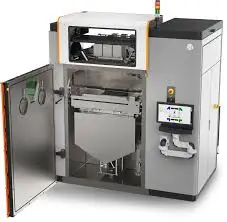
Precision Resource plans to install 3D Systems DMP Flex 350 Triple systems, adding to its existing fleet of DMP 350 metal printers. The additional systems are intended to increase throughput while supporting the part quality and repeatability needed for production components, according to the companies. No machine count, material list, build parameters or measured throughput figures were provided.
That distinction is useful for engineers assessing the announcement: more printers can expand available build capacity, but production also depends on how printed parts move through subsequent processing and inspection. Precision Resource’s planned heat treatment and expanded complex machining capabilities address two downstream stages. The company’s stated direction is to handle more of the manufacturing sequence in-house, simplifying the transition from printed parts to finished components.
The work combines Precision Resource’s manufacturing and post-processing capabilities with 3D Systems’ metal additive manufacturing equipment and application expertise. Reji Puthenveetil, 3D Systems’ executive vice president of additive solutions and chief commercial officer, said the expansion “will help accelerate the adoption of high-volume, production-grade metal additive manufacturing for critical commercial applications.”
What the timeline means
Both facilities are expected to start operating in the first quarter of 2027, which is also Precision Resource’s 80th anniversary year. That is a projected date, and the announcement does not give a commissioning schedule or milestones for equipment installation, process qualification or production ramp-up.
Those details matter because a production site’s usable capacity depends on more than installed machine capacity. The planned combination of printing, heat treatment and machining points to a broader effort to organize these operations together, but the announcement does not describe the specific process routes or qualification requirements for individual parts. Customers and engineers will need those details to assess fit for particular designs and production programs.
Founded in 1947 and headquartered in Shelton, Precision Resource makes custom-engineered metal components for automotive, heavy-duty, medical, semiconductor and commercial applications. The new Shelton operation will add additive manufacturing to the company’s home location, while the Huntington Beach project expands its existing footprint there.
For production teams, the next practical markers will be the facilities’ startup, the equipment installed at each site and the range of processes available alongside printing. If the sites operate as intended, the expansion will give Precision Resource more distributed capacity and a more integrated route from metal build to machined component. The announcement establishes the planned footprint and timing; production-level details remain to come.
 AMD Venice Uses 2.5D Packaging to Feed More Bandwidth Into EPYC Zen 6
 CNC Controller Board Design: Interfaces, PCB Specs and Assembly Testing
 Stratasys and Nano Dimension End $42.5 Million Markforged Sale Agreement