PHD-Hand Uses 3D-Printed Hinges and Steel Rods to Simplify Robotic Fingers
PHD-Hand combines printable structures, hobby servos and flexible steel rods; its prototype recorded two mechanical failures during 200 hours of testing.
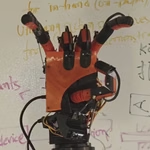
PHD-Hand’s design focuses on a practical constraint in dexterous robotics: each finger needs several controlled joints, but a large collection of small mechanical parts can make a hand harder to build and maintain. Developed by researchers from the New Jersey Institute of Technology in Newark and Union County Magnet High School in Scotch Plains, the hand uses 3D-printed structures, miniature hobby servos and steel rods to produce coordinated finger motion.

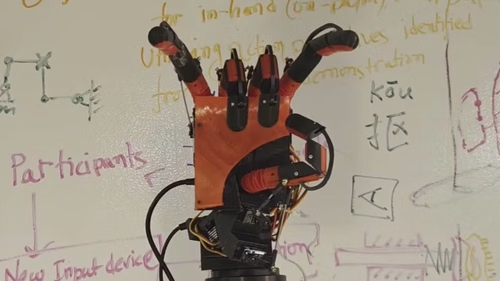
The team designed PHD-Hand to be made with a basic 3D printer and commercially available hardware. Its approach could make a multi-fingered robotic hand more accessible to builders who want to experiment with dexterous manipulation without relying on elaborate mechanical assemblies. The researchers describe it as low-cost and printable; no specific build price is given.
A flexible hinge at the finger base
The finger’s base joint takes inspiration from the flexible strain relief found where a cable meets a connector. PHD-Hand prints a similar compliant hinge at the base of each digit. The hinge lets the finger tilt in two directions while resisting rotation around its lengthwise axis. That combination gives the finger some freedom to move without allowing every movement to twist the whole structure.

A flexible stainless steel spring rod, 0.6 mm thick, runs through the centre of the hinge. It carries motion onward to the finger’s middle and upper joints. The rod’s flexibility allows it to pass through the moving hinge, while its role as a drive element connects the actuation at the base to joints farther along the digit.
Each finger has three joints: a base, a middle and an upper joint. It is driven by three miniature RC hobby servos. Two rigid drive rods operate the base joint, transmitting servo movement without deforming. A flexible steel rod controls the middle and upper joints and passes through the base hinge. The design therefore assigns different jobs to rigid and flexible elements: the rigid rods drive the base, while the spring rod routes movement through the finger.
Fewer parts, coordinated bending
PHD-Hand links the middle and upper joints so they bend together, echoing the coupled motion of those joints in a human finger. This is a mechanical simplification: instead of treating every joint as an entirely independent motion axis, the design coordinates the two distal joints through a shared drive arrangement. That can reduce the number of components and control channels needed for a finger, though the source does not report a comparison of grasp performance across different objects.
The researchers say a digit can be assembled from as few as 13 major mechanical parts, excluding motors and sensors. They contrast that count with competing robotic hands that can use 27 or more mechanical components per finger. Fewer parts may make fabrication and assembly more manageable, particularly when the structural pieces can be printed. The count alone, however, doesn’t establish how the hand compares in strength, precision, speed or service life; those performance figures aren’t provided.

The use of hobby servos and printed structures also gives the design a familiar component base for prototyping. A builder can make the structural parts on a 3D printer and source the actuation and other hardware commercially. The article does not specify printer settings, materials for the printed parts, servo models, grasp-force limits or sensor types, so those details remain open questions for anyone assessing a build.
Computer control and durability questions
The team used an AI program to help develop software for controlling the hand from a computer. The software interfaces with a Pololu Mini Maestro 18 servo controller, which can control up to 18 servo motors. That capacity provides a defined hardware interface for the project’s servo control, although the reported details don’t explain the control interface, motion-planning method or how feedback from sensors is handled.
In 200 hours of testing, the prototype experienced two mechanical failures. Both were broken spring steel drive rods. That result identifies the flexible drive elements as a specific area for further mechanical work. The reported test duration offers an early indication of prototype use, but the conditions, motion cycles, loads and repair intervals aren’t stated. It therefore can’t be treated as a service-life estimate.
The researchers plan to refine the mechanical design and prepare an open-source release. For engineers and makers, the next useful details will be the released files, the specified print materials and the design changes made to address rod breakage. Those will help show how readily PHD-Hand can move from a working prototype to a reproducible platform for experimenting with robotic grasping.
 Nuvoton MA35 Platform Adds Redfish Remote Management for Industrial Edge Devices
 TVS Diodes Target Transient Protection in High-Voltage DC Systems
 XJTAG 4.4 Adds Direct Voltage Probing and Selective PCB Tests