Nuvoton MA35 Platform Adds Redfish Remote Management for Industrial Edge Devices
Nuvoton’s Linux platform brings Redfish, OpenBMC and remote monitoring to MA35-based industrial PCs, gateways and edge computers.
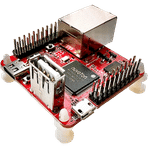
Remote access to industrial edge equipment can cover more than checking whether a device is online. Nuvoton Technology Corporation’s MA35-based management platform combines status monitoring, device control and software maintenance through Redfish APIs, SSH and a browser interface. It targets industrial PCs, smart gateways, power shelves and edge computers running Linux.

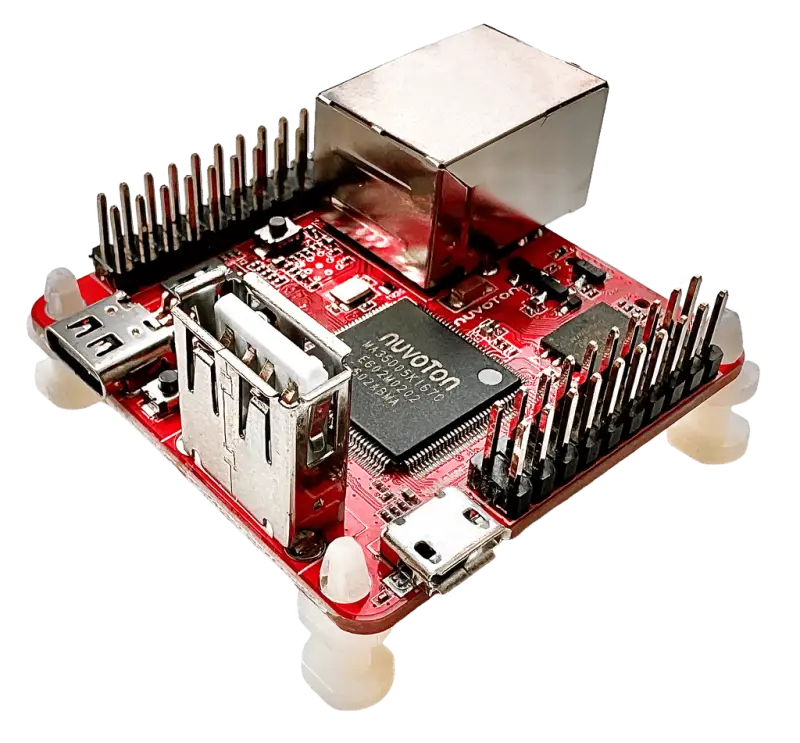
Management functions across the network
The platform lets operators power equipment on or off and reboot it remotely. It can track device resources, monitor operating conditions and temperature, and analyze sensor data. Users can also log in remotely, manage user accounts and control device access. Software upgrades and reviews of system activity and logs are available through the same management environment.
That collection of functions is relevant to equipment deployed across sites where routine checks or maintenance may otherwise require a technician to be physically present. Remote visibility can help teams assess a device’s condition and decide what work is needed. The source does not specify which operations can be performed on each supported device, however; that depends on the system’s hardware and software configuration.

Redfish, SSH and OpenBMC
Redfish APIs operating over HTTPS provide the platform’s standardized management interface. Nuvoton says this is intended to simplify integration with existing IT, data centre and cloud management systems. For engineers maintaining mixed fleets, a common interface can reduce the need to build separate management workflows around each device, provided those systems support the required Redfish functions.
SSH offers another route for remote access and maintenance, while a browser-based interface gives users a way to view device status and carry out management tasks. These access methods serve different operational needs: Redfish supports structured management integration, SSH provides a remote command-line path, and the browser offers a graphical view. The announcement does not detail authentication options, permission levels or the precise division of tasks among the interfaces.
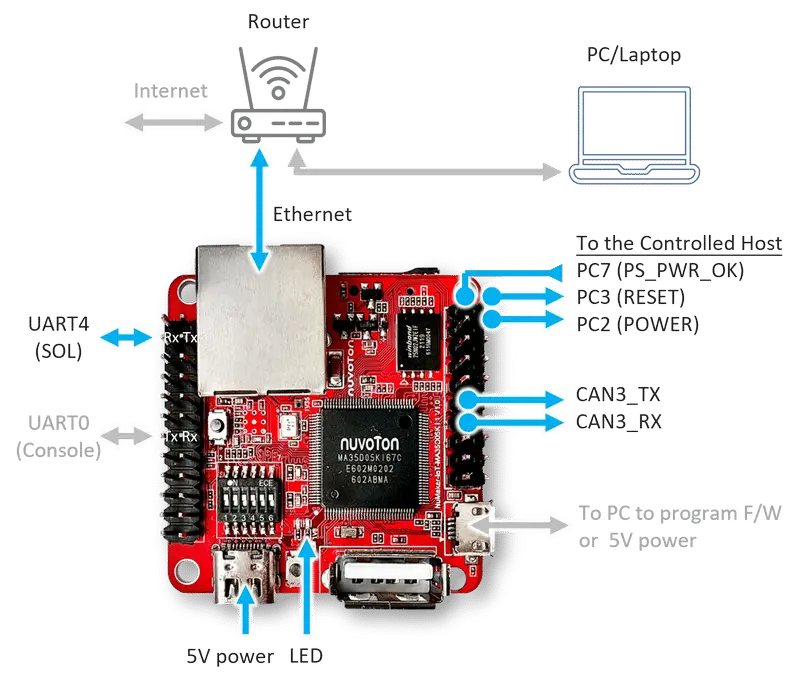
OpenBMC support allows the software to be adapted to customer-specific hardware resources. The listed interfaces include sensors, GPIO, SPI, PWM, I2C, UART and CAN FD. This matters when a management controller needs to expose board-level signals or monitor components that vary between system designs. It also means the integration work will depend on the target hardware and the way its resources are represented in the software.
Security features and system design
The MA35 family includes Arm TrustZone, Nuvoton’s Trusted Secure Island, a cryptographic accelerator, One-Time Programmable memory and a key store. These features support secure boot, key protection and trusted execution. They can form part of a device security design addressing requirements under the EU Cyber Resilience Act, but the presence of these hardware features alone does not establish that a finished product meets those requirements.

For product teams, the practical question is how the security functions fit into the complete system: firmware, credentials, update handling, access control and the operating environment all contribute to the result. Nuvoton’s announcement identifies available security building blocks but does not provide implementation details or a certification claim.
The MA35 family uses dual-core Arm Cortex-A35 processors and offers LQFP-128 package options. Multi-Chip Package technology combines the processor and DDR memory in one package, with memory capacities of 128MB, 256MB and 512MB. Integrating memory this way can reduce board area and PCB routing demands, including the complexity of high-speed signal connections. The listed capacities give designers choices, though the announcement does not specify memory bandwidth or performance differences between configurations.
Development board and target applications
Nuvoton offers the 45 × 45mm NuMaker-IoT-MA35D0-A2, also called Chili Pro, as a development board. It is based on the MA35D05KI67C and includes 256MB of DDR memory. Its interfaces are Gigabit Ethernet, USB 2.0, CAN FD, I2C, UART, SPI, PWM, GPIO and ADC.
The company positions the board for work involving smart factories, grids, buildings, cities, data centres and new energy systems. For teams evaluating the platform, the interface set provides ways to connect network, control and sensing hardware during development. The key design consideration is whether the MA35’s management features, memory options and available interfaces match the intended edge device; the announcement gives no pricing, availability schedule or measured performance figures.
Nuvoton’s approach brings standardized remote management into an embedded Linux platform built around the MA35 family. Its value will depend on how well Redfish integration, OpenBMC customization and device security fit each deployment, alongside the board-level hardware that needs monitoring and control. Nuvoton’s announcement provides further platform details.
 TVS Diodes Target Transient Protection in High-Voltage DC Systems
 XJTAG 4.4 Adds Direct Voltage Probing and Selective PCB Tests
 YINCAE UF 120HA-10 Underfill Targets Flux-Cleaning Removal in Semiconductor Packaging