Rice Researchers Turn Refinery By-Product Into Battery Graphite With a 0.2-Second Pulse
Rice’s pulsed electrical process converts petroleum coke to graphite in 0.2 seconds; lab cells retained 80% capacity after 1,000 cycles.
Turning petroleum coke into battery-grade graphite in 0.2 seconds could change the energy and heat demands of an anode material that usually requires prolonged treatment at high temperature. Rice University researchers report that a brief electrical pulse can drive the conversion, and that laboratory cells made with the resulting graphite charged at a rate equivalent to four minutes. The result is promising, but it remains a laboratory process: production yield per pulse and a path to commercial manufacture have not yet been established.

A rapid electrical treatment
Petroleum coke is a carbon-rich by-product of oil refining. The Rice team mixes it with a small amount of nickel compounds, then passes electrical pulses through the material. The pulses heat it to around 2,500°C, reorganising carbon into graphite. The conversion takes 0.2 seconds, according to the reported work.
That processing time stands apart from conventional graphite production, which relies on extended heating at extremely high temperatures. The proposed method concentrates heat in a short pulse rather than maintaining a hot process for a long period. That difference is the basis for the team’s estimate that the process could reduce energy use and greenhouse gas emissions by more than 80%. The estimate comes from the researchers’ analysis; it has not been measured in industrial production.

Nickel has a specific role in the conversion. It helps carbon atoms arrange into graphite layers and slightly increases the spacing between those layers. That spacing can make it easier for lithium ions to move through the anode material during battery operation. The process must keep the temperature within a useful range: too much heat removes nickel prematurely, while too little leaves the graphite less ordered.
Haojie Zhu, a postdoctoral associate and first author of the study, described conventional graphite formation as requiring prolonged heating at extremely high temperatures. James Tour, who led the research, said the team had identified a “Goldilocks region” for preparing the graphite, reflecting the need to balance enough heat for ordering against conditions that remove nickel too early.
What the cell results show
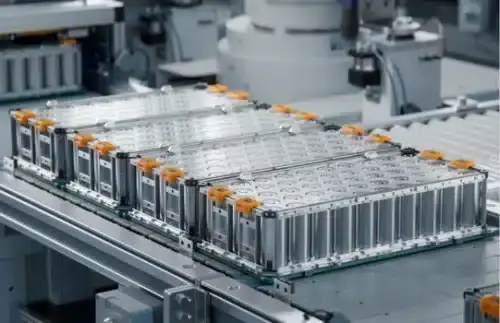
In tests, cells using the material charged faster than cells made with graphite, with the rapid-charge result described as equivalent to a four-minute charge. The source does not specify the cell format, charge protocol or starting state of charge, so that figure should be read as a laboratory comparison rather than a charging time that can be transferred directly to a commercial battery pack.
The cells retained 80 per cent of their capacity after 1,000 cycles. That gives an early indication of cycling performance alongside the charging result, though the available details do not include the test conditions needed to compare the figure directly with other cell data. Cell performance depends on more than the anode material: electrode design, electrolyte, loading, temperature and charge limits can all shape the outcome.
The team also reported that more than 99 per cent of the residual nickel was removed without harming the performance improvement. That cleanup result matters because nickel is used to assist graphite formation, while the finished anode material is intended to contain very little of it. The reported finding suggests the processing sequence can separate most of the catalyst after conversion, although the account does not give a full description of the removal method or its production requirements.
Scale-up is the next engineering question
The short pulse is the headline, but process scale will determine whether it has practical value. The amount of graphite produced per pulse has not yet been determined, and no production partner or commercialisation timeline has been announced. Those gaps leave open basic manufacturing questions: how much feedstock can be treated at once, how consistently the temperature can be controlled, and how the added nickel and subsequent removal affect throughput and material cost.

A laboratory cell result also does not establish pack-level charging performance. Moving from a small test cell to larger formats requires the anode material to perform consistently across electrode areas and production batches. The team’s report offers encouraging signals on rapid charging and cycle retention, but it does not yet provide the process yield, manufacturing rate or product specifications needed to assess factory readiness.
For battery engineers, the work is worth watching because it links a refinery by-product to a potentially lower-energy route for making graphite, while targeting ion transport through the layer spacing. The key milestones ahead are reproducible material output, quantified production scale and cell tests with clearly reported protocols. Until those are available, the 0.2-second conversion is best understood as a laboratory demonstration with notable performance results, not a production-ready anode supply route.
 Nuvoton MA35 Platform Adds Redfish Remote Management for Industrial Edge Devices
 TVS Diodes Target Transient Protection in High-Voltage DC Systems
 XJTAG 4.4 Adds Direct Voltage Probing and Selective PCB Tests