Aurora Labs Raises A$6 Million to Scale Additively Manufactured Turbojet Production
Aurora Labs plans to expand its Western Australian production lines and add metal printers as it shifts from engine development to commercial output.
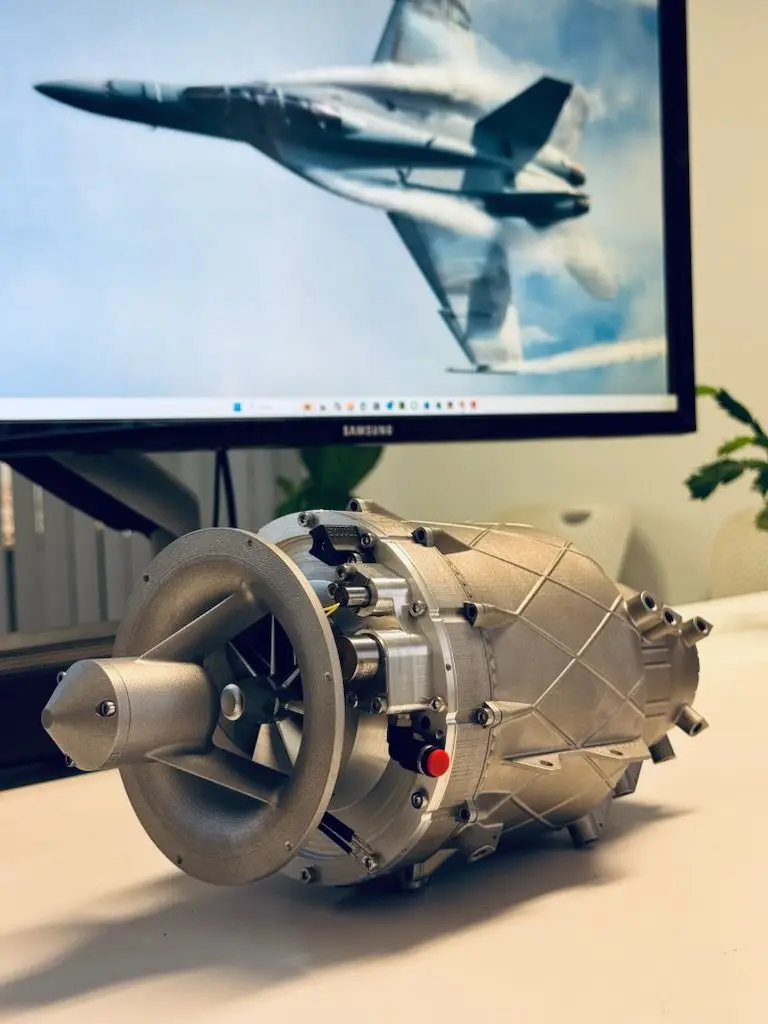
Aurora Labs has raised A$6 million to increase production of its additively manufactured turbojet engines, putting manufacturing capacity at the centre of its next phase. The company plans to expand production lines and add metal additive manufacturing equipment at its Canning Vale facility in Western Australia as it moves from development toward commercial delivery.

The placement, announced on 28 October 2026, comprises about 109.1 million new shares priced at A$0.055 each. Aurora says the funds will support higher output, complete production documentation and build the systems and staffing needed for full-rate manufacturing. The practical test now is whether the company can turn its engine designs and in-house printing capability into reliable production at scale.
Placement split across two tranches
The first tranche raises A$4,565,000 through 83,000,005 shares. Aurora will issue 30.64 million shares using its capacity under ASX Listing Rule 7.1 and 52.36 million under Listing Rule 7.1A. Settlement is scheduled for 2 November 2026, with allotment on 4 November.
A second tranche will raise A$1,435,000 by issuing 26,090,914 shares, subject to shareholder approval at a general meeting planned for mid-January 2027. Chairman David Trimboli’s A$550,000 participation also requires approval. Trimboli’s commitment gives him a direct stake in the production push, while Walkinshaw Group Holdings has taken a strategic stake in Aurora.
The placement price represents a 3.67% discount to Aurora’s 10-day volume-weighted average price and a 3.16% discount to its five-day VWAP. It is 6.77% below the A$0.059 last traded on 23 October. The new shares amount to about 20.8% of the company’s current shares on issue.
Aurora arranged the placement without a lead manager or adviser. Participating brokers are due A$213,000 in cash fees and 7.5 million options. Each option is non-transferable, exercisable at A$0.12 and expires three years after issue.
Production equipment and readiness take priority
Most of the proceeds are earmarked for manufacturing capacity: expanding existing lines for higher-volume turbojet output and purchasing commercial off-the-shelf metal additive manufacturing systems. The aim is to increase throughput and efficiency. That investment should be judged by the production capability it delivers, rather than by the number of printers acquired; equipment has to fit into a qualified process that can repeatedly produce engines to the required standard.
A second part of the spending plan addresses readiness for larger production runs. Aurora intends to finish its production data packs and invest in the systems, processes and key staff needed to support full-rate output. The remaining funds are allocated to business development and marketing, patent and intellectual property maintenance, technical and commercial data rooms, working capital, and retention of AS9100D aerospace quality certification.
AS9100D provides a quality framework for aerospace manufacturing. Keeping that certification as output grows will matter alongside adding equipment: the company’s stated goal is a vertically integrated manufacturing platform able to supply customers in Australia and overseas.
Trimboli described the placement as a step in Aurora’s shift from technology development toward commercial manufacturing and delivery. He said the funds would increase production capacity and add manufacturing infrastructure, helping the company serve existing customers and pursue its pipeline of opportunities.
Commercial milestones behind the raise
The funding follows a year of reported operating progress. Aurora gained AS9100D certification, began commercial deliveries of its AU4 propulsion system and received A$1 million through Australia’s Defence Industry Development Grant program. It also signed a strategic Teaming Agreement with European propulsion company MBDA and secured its first US propulsion system order, giving it an initial customer foothold in that market.
Aurora began as a developer of metal 3D printers and printed industrial parts. It now applies its additive manufacturing experience to propulsion systems for unmanned aircraft. The company’s case for bringing more production in-house rests on combining engine design, metal printing and an aerospace-certified manufacturing operation under one roof.
Walkinshaw Group Holdings may contribute more than capital. The Australian engineering group designs, develops and contract-manufactures products for global customers. Aurora says the investment creates scope for discussions about Walkinshaw supporting its production scale-up, while Aurora could bring metal additive manufacturing expertise to Walkinshaw’s operations. The nature and scale of any such production support have not been specified.
Scaling is the remaining test
Aurora is pursuing a broader shift in propulsion manufacturing: using additive processes to consolidate parts and build compact turbine engines for applications where supply capacity and production speed matter. Other companies are also working to scale printed turbojets and microturbines. In the UK, Alloyed has reported flight testing and serial production of a 300N-class engine; its affiliated microturbine company Argive has also flight-tested an A300 turbine on MGI Engineering’s SkyShark aircraft.
In the US, Pratt & Whitney has tested its TJ150 engine with nearly 60% additively manufactured content, consolidating more than 50 hot-section components into a handful of printed parts. Beehive Industries has reported high-altitude testing of its Frenzy engine and is moving toward production scale-up. These examples show that additive manufacturing can support flying engine designs, while leaving production consistency and volume as the harder measures.
Aurora’s A$6 million raise is aimed at that manufacturing challenge in Australia. The near-term indicators to watch are expanded line capacity, completion of production data packs and continued delivery of the AU4 system. Whether the company can meet demand will depend on turning its equipment, quality processes and staffing into repeatable output.
 AMD Venice Uses 2.5D Packaging to Feed More Bandwidth Into EPYC Zen 6
 CNC Controller Board Design: Interfaces, PCB Specs and Assembly Testing
 Stratasys and Nano Dimension End $42.5 Million Markforged Sale Agreement