HP Metal Jet and Hyperion Bring Tungsten Carbide Binder Jetting to Commercial Production
Hyperion is offering tungsten carbide parts printed on HP Metal Jet S100 systems, with customer qualification covering design, sintering and finishing.
For tungsten carbide components, additive manufacturing has moved from development work to commercial supply through a new arrangement between HP Additive Manufacturing and Hyperion Materials & Technologies. Hyperion now offers manufacturing on HP Metal Jet S100 printers, while the companies work with customers to qualify parts for production.

The practical change is an integrated route through printing, sintering and finishing. HP supplies the binder jetting platform; Hyperion brings tungsten carbide (WC) materials and downstream process expertise. That combination gives industrial customers a way to assess whether a particular part can benefit from additive manufacturing, rather than treating the printer as a stand-alone step.
From powder to finished component
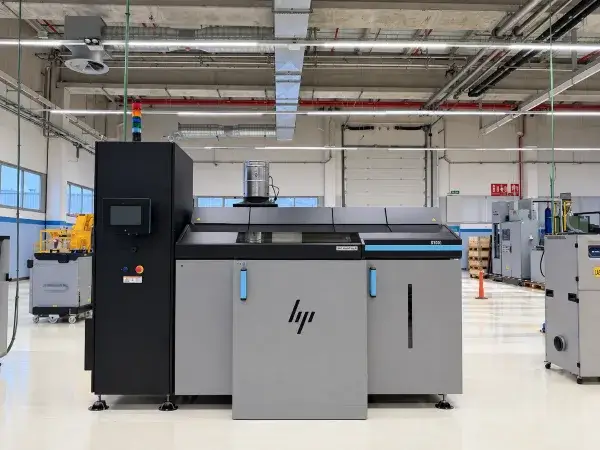
Hyperion installed an HP Metal Jet S100 at its Barcelona facility in October 2026. The system uses binder jetting, in which a printer selectively deposits a binding agent into a powder bed to form a part. The printed shape then needs downstream processing to become a usable metal component. For this offering, Hyperion combines printing with its WC sintering and finishing operations.
The powder feedstock is CarbiForm, a Hyperion line of WC powders prepared for binder jetting. Hyperion says the powders are tested for use with the Metal Jet printer alongside its sintering operations. That pairing matters because the final component depends on the coordinated behavior of the feedstock, printing process and thermal treatment. The companies haven’t provided specific part tolerances, mechanical-property figures or process parameters, so those details will need to come through application-level qualification.
Hyperion’s Chief Technology Officer, Biju Varghese, described the arrangement as a way to combine the company’s hard-materials experience with HP’s additive manufacturing platform. He said the aim is to help customers make complex WC components and take them into production. The commercial offer now gives customers a route to begin that work with Hyperion.
Where printed WC may fit
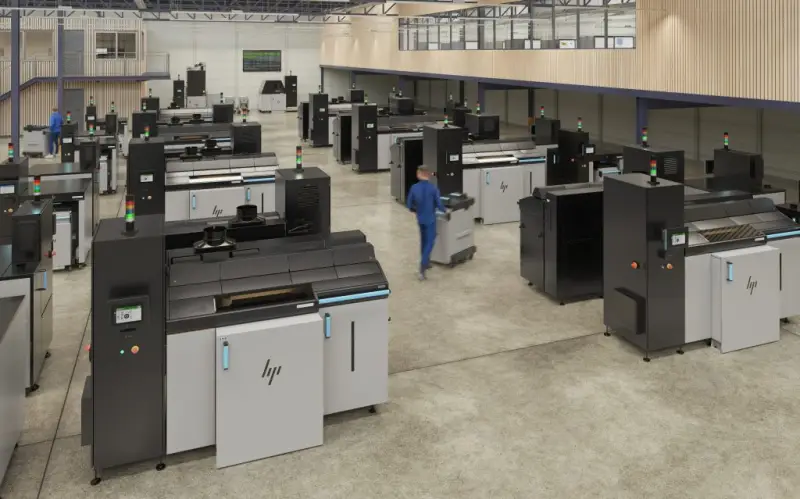
The companies point to geometries that are difficult or uneconomical to produce with conventional methods, including application-specific features, consolidated components and custom parts. Binder jetting may also shorten development cycles and improve material utilization, according to HP and Hyperion. Those are potential advantages to establish part by part; the announcement doesn’t quantify savings, cycle-time reductions or material-use improvements.
WC is used in demanding industrial environments, and the companies say printed parts are intended to retain the properties that make the material useful there. In practice, customers will need to qualify the full manufacturing route against their component requirements. Geometry, sintering behavior and finishing needs all shape whether a design is suitable for production. The joint application work is intended to identify where the process brings both technical and economic benefits.
HP’s Head of Product and Strategy for Additive Manufacturing, Arvind Rangarajan, said Hyperion’s knowledge across the WC value chain can help customers turn additive design possibilities into production-ready components. That expertise is central to the offer: customers can assess material and process choices with a manufacturer that also handles the stages after printing.
Commercial access and industry context
Hyperion is offering commercial manufacturing on Metal Jet S100 systems, and the companies will work with customers on application selection and qualification. HP planned to show the technology at Formnext in Frankfurt, Germany, from November 17 to 20, in Hall 12.1, Booth D41. Hyperion representatives were scheduled to discuss prototyping at the event. Customers can request a consultation through Hyperion’s additive manufacturing page.
The arrangement follows a broader pattern in binder jetting: printer makers work with materials and manufacturing specialists to develop a production route for specific materials. In 2019, ExOne began collaborating with Global Tungsten & Powders Corp. on tungsten powders for metal binder jetting, including cemented carbide (WC-Co) and copper-tungsten (CuW). That work likewise joined printer capability with materials expertise.
HP has also worked with Indo-MIM, a metal injection molding contract manufacturer. In 2023, Indo-MIM invested in three Metal Jet S100 printers: two for its Bangalore facility and one for Texas. The company joined HP’s digital manufacturing network, with the stated aim of scaling binder jetting to serial production. Hyperion’s WC offering applies a similar equipment-and-manufacturing approach to a hard material with its own feedstock and sintering requirements.
For engineers evaluating a WC part, the key question is now whether its geometry and production needs justify a binder jet route, and whether the finished component meets the required performance after sintering and finishing. The Barcelona installation provides a commercial starting point; application qualification will determine where printed tungsten carbide earns a place in serial production.
 AMD Venice Uses 2.5D Packaging to Feed More Bandwidth Into EPYC Zen 6
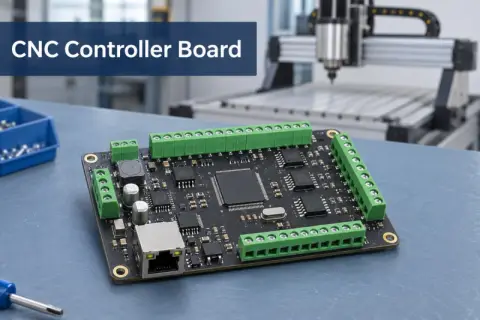 CNC Controller Board Design: Interfaces, PCB Specs and Assembly Testing
 Stratasys and Nano Dimension End $42.5 Million Markforged Sale Agreement