Why Polishing Stainless Steel CNC Parts Matters for Surface Performance
Polishing can improve cleanability, contact and finish on stainless steel CNC parts, but material removal and tolerances must be managed.
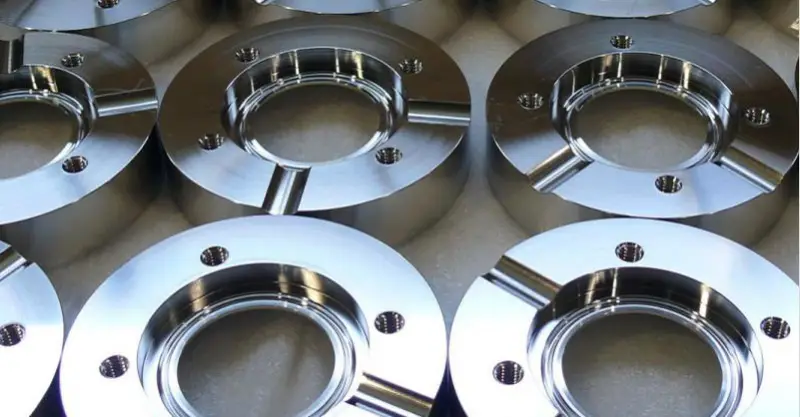
Polishing is a functional finishing choice
For stainless steel CNC parts, polishing can change how a component performs as well as how it looks. A controlled finish may reduce surface roughness, make cleaning easier, limit places where residues can lodge, and improve the consistency of contact surfaces. The right result depends on the part’s job: a bright visible finish, a low roughness value and a clean process surface are different requirements.
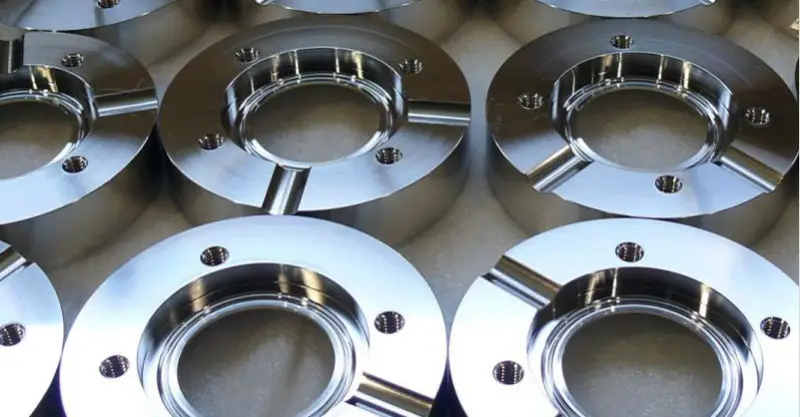
Milling, turning, drilling and grinding leave a characteristic texture. Tool paths, burrs and small surface irregularities may be acceptable for a part hidden inside an assembly, but can cause problems where cleanliness, sliding contact, sealing or appearance matters. Polishing removes some of those irregularities by taking material off the surface.
That removal makes polishing part of the manufacturing plan, especially for precision components. The specified finish needs to work alongside the part’s dimensions, geometry, stainless steel grade and operating conditions.
Two processes, different results
Mechanical polishing uses abrasives to remove surface irregularities. A typical sequence starts with a coarser abrasive to address machining marks, then moves through finer abrasives to reach the required finish. This method can be chosen to achieve a particular visual appearance or surface roughness.
Electropolishing removes material through an electrochemical process. Microscopic high points are generally removed more quickly than recessed areas, which can leave a smoother, more uniform surface and improve surface cleanliness. It may suit parts where those characteristics matter more than a mechanically produced appearance.
The methods aren’t interchangeable. The choice depends on the stainless steel grade, part shape, initial surface condition, dimensional limits, target roughness and end use. Some parts may be polished and then passivated, depending on the application and its specifications.
What a smoother surface can change
Roughness and surface control
A machined surface contains microscopic peaks and valleys. Polishing can reduce their size, helping a part meet a specified Ra value or other finish requirement. The result depends on the starting texture, material, geometry, process and process control; polishing alone doesn’t guarantee any particular roughness.
For that reason, precision parts should have their surface requirements stated clearly on the drawing or technical documentation. A roughness target is more useful than a general instruction to polish, and it should be chosen for the part’s function.
Cleanability and residue retention
Surface irregularities can provide places where particles, residues and process contaminants collect. A smoother surface is generally easier to clean because it has fewer such features. This matters for stainless steel parts in food-processing equipment, pharmaceutical machinery, laboratories and medical-related equipment, where cleanliness is part of the operating requirement.
Polishing is only one element in that requirement. Material grade, component design, the finished surface and the cleaning procedure all affect results. A polished part isn’t automatically hygienic, and polishing by itself doesn’t make stainless steel corrosion-proof.
Corrosion-related surface condition
Stainless steel’s corrosion resistance comes primarily from a passive, chromium-rich oxide film. Machining, grinding and handling can leave contaminants or embedded particles on the surface. Finishing can remove some surface contamination and improve the surface condition; electropolishing may be considered where smoothness and cleanliness are both required.
Polishing and passivation serve different purposes. Polishing physically changes the surface. Passivation is a chemical treatment intended to promote or restore a more stable passive surface condition by removing free iron and other contaminants under controlled conditions. Depending on the part and its specifications, these processes may be used separately or together.
Sliding contact and wear
Surface texture affects how mating parts interact. Pronounced irregularities can increase mechanical contact as surfaces slide. Reducing roughness may help produce more consistent sliding behavior on parts such as shafts, sleeves, guides and precision mechanical components.
A smoother finish doesn’t always mean lower friction or less wear. Those outcomes also depend on the materials in contact, hardness, lubrication, load, contact pressure, temperature and speed. The finish should therefore match the actual operating conditions rather than follow a general preference for maximum smoothness.
Sealing and mating faces
Roughness can affect the consistency of contact between mating surfaces. A controlled finish may support a more uniform interface when used with an appropriate seal design. This can make surface finish a functional requirement for valve parts, fittings, fluid-handling components and precision assemblies.
The target depends on the seal type, pressure, fluid, dimensional tolerances and design requirements. Polishing can contribute to a suitable sealing surface, but it doesn’t replace proper design or dimensional control.
Appearance and defect limits
Machined stainless steel may show tool paths and feed lines. Grinding, brushing, bead blasting and polishing produce different textures and levels of reflectivity. Polishing can make a visible surface more uniform and may create a bright or mirror-like finish, depending on the process.
For production parts where appearance needs to match from one component to another, the requirement should be defined. “Polished stainless steel” can leave too much room for variation. A drawing or specification can call out surface roughness, polishing level or an appearance reference.
Polishing can reduce or remove some superficial tool marks, scratches and burrs, but it isn’t a repair method for major machining problems. Deep scratches, chatter, deformation, dimensional errors and incorrect features need to be addressed through machining or other appropriate corrective work. A finishing operation can’t reliably compensate for a poor starting surface.
Plan for material removal and tolerances
Polishing removes material, even if the amount is usually less than during rough machining. How much comes off depends on the polishing method, starting condition, abrasive sequence, processing time and target finish. That matters when a part has tight limits on diameter, thickness, flatness or a mating dimension.
Machining and finishing should be planned together for critical parts. A manufacturer may leave a finishing allowance during CNC machining, then control the final dimensions through the finishing process. Inspection after polishing helps confirm that the finished part still meets its dimensional requirements.
Specify the finish for the job
A useful specification identifies the stainless steel grade, target roughness, critical dimensions and finishing requirements. It may also call for passivation or electropolishing where the application requires them. Grades such as 304 and 316L and a target such as Ra 0.8 μm are examples of information a drawing can include; the appropriate grade and finish depend on the part.
Choosing the lowest possible roughness value isn’t automatically the best choice. A finer finish can take more processing time and cost without adding a meaningful benefit for the component’s function. The specification should connect the finish to a concrete need, such as cleanability, appearance, sliding contact or sealing.
Many parts don’t need polishing. A standard machined finish may be sufficient for components inside an assembly or those without special requirements for appearance, cleanliness or contact. Polishing becomes more relevant when the part needs controlled low roughness, a reflective surface, easier cleaning, reduced surface irregularities, defined mating behavior or preparation for a subsequent finish.
Build the finish into the manufacturing process
A consistent polished surface starts with a consistent machined surface. Tool selection, cutting parameters, workholding, coolant management and chip evacuation affect the marks and burrs that polishing must address. Material grade and condition also influence how a part responds to machining and finishing.
During polishing, a controlled progression from coarser to finer abrasives helps shape the final surface. For precision parts, dimensional changes need attention throughout the work, followed by inspection of the finished component.
The practical target isn’t the shiniest or smoothest surface available. It’s the finish that meets the component’s functional requirements while preserving its dimensions. Defining that target before machining gives the manufacturer a clearer basis for selecting the process and checking the finished part.
 AMD Venice Uses 2.5D Packaging to Feed More Bandwidth Into EPYC Zen 6
 CNC Controller Board Design: Interfaces, PCB Specs and Assembly Testing
 Stratasys and Nano Dimension End $42.5 Million Markforged Sale Agreement