Datacenter Construction Accelerates: More Than 50 GW Could Arrive in 2027
Construction starts, signed leases and modular designs point to a sharp 2027 capacity increase, with power and component supply still shaping delivery.
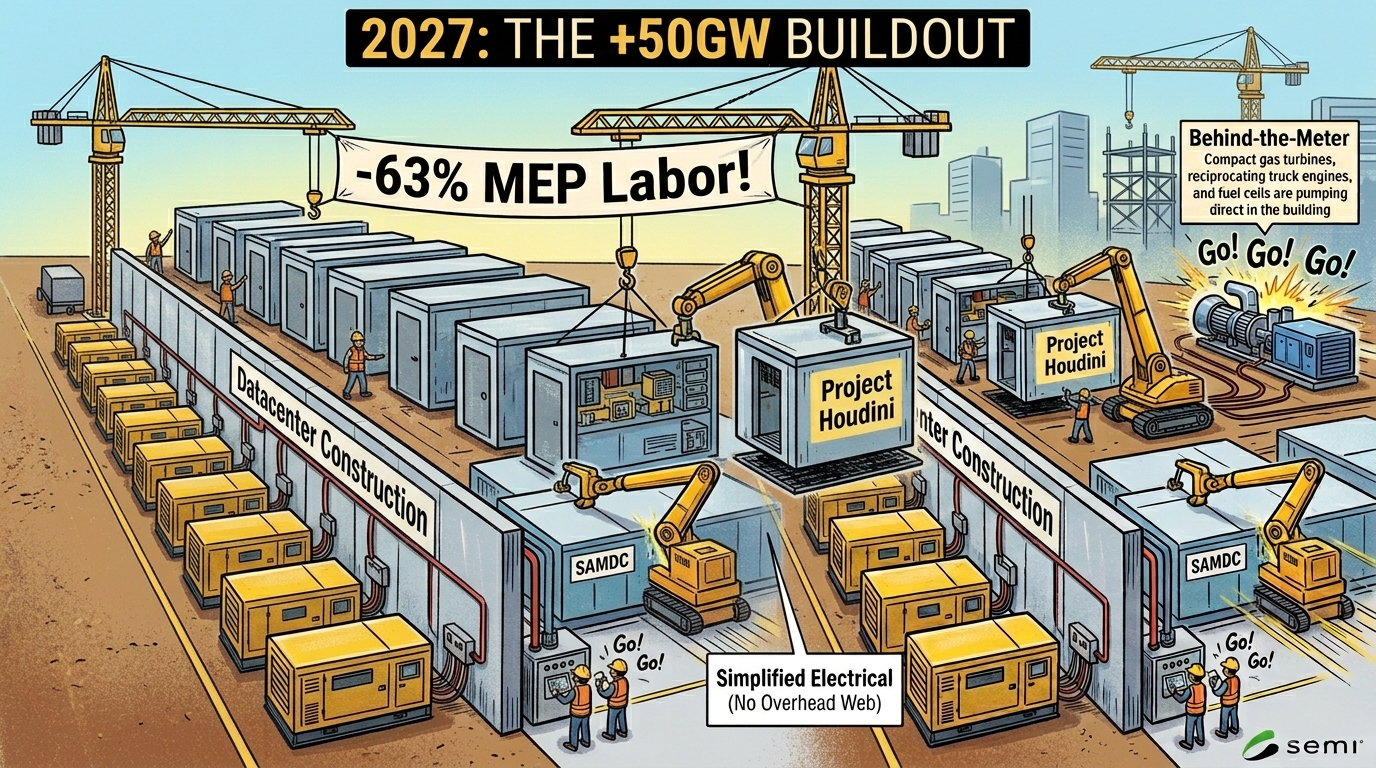
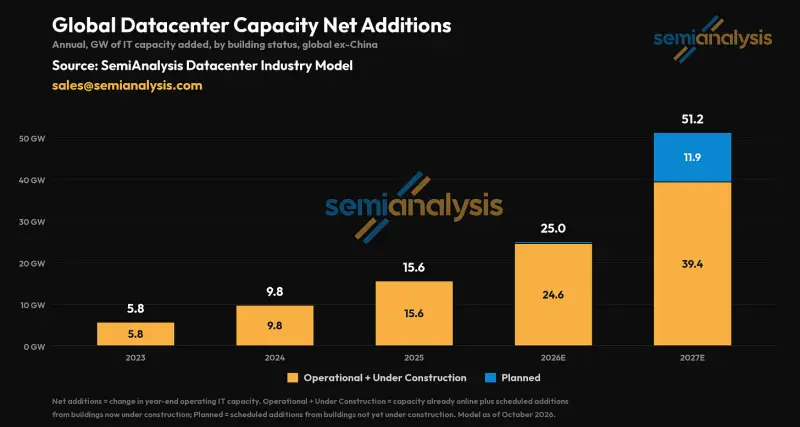
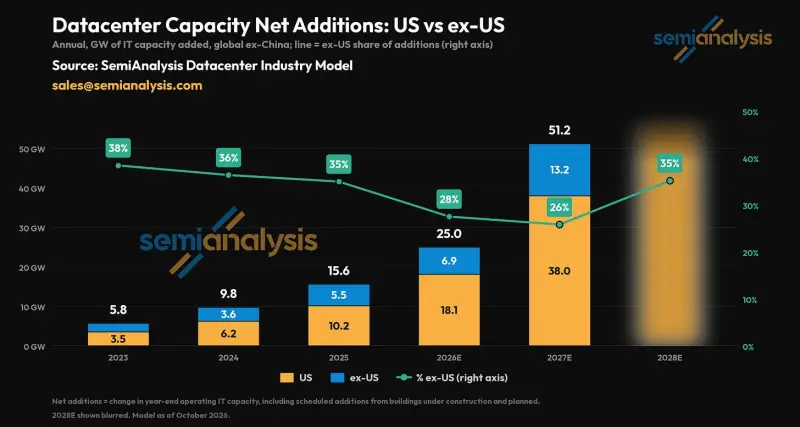
More than 50 GW of datacenter capacity could be built in 2027, according to SemiAnalysis’s forecast, a pace comparable to the cumulative global datacenter market through 2024. The company’s case rests on observable construction progress and signed leases, alongside faster building methods and new power sources. Its estimate remains ambitious: a separate view cited in the report put 2027 additions at about 25 GW.
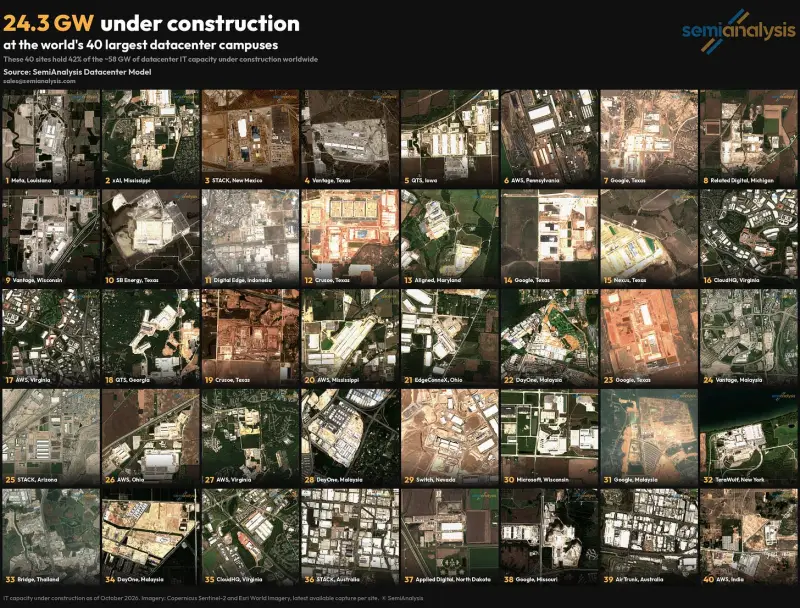
SemiAnalysis reports that more than 24 GW of capacity is already in advanced construction across 40 campuses, with most of those sites expected to deliver in 2027. Many are more than halfway complete, and exterior cooling and electrical equipment is installed. The company says those campuses represent only a small portion of the several hundred sites it tracks at an advanced stage.
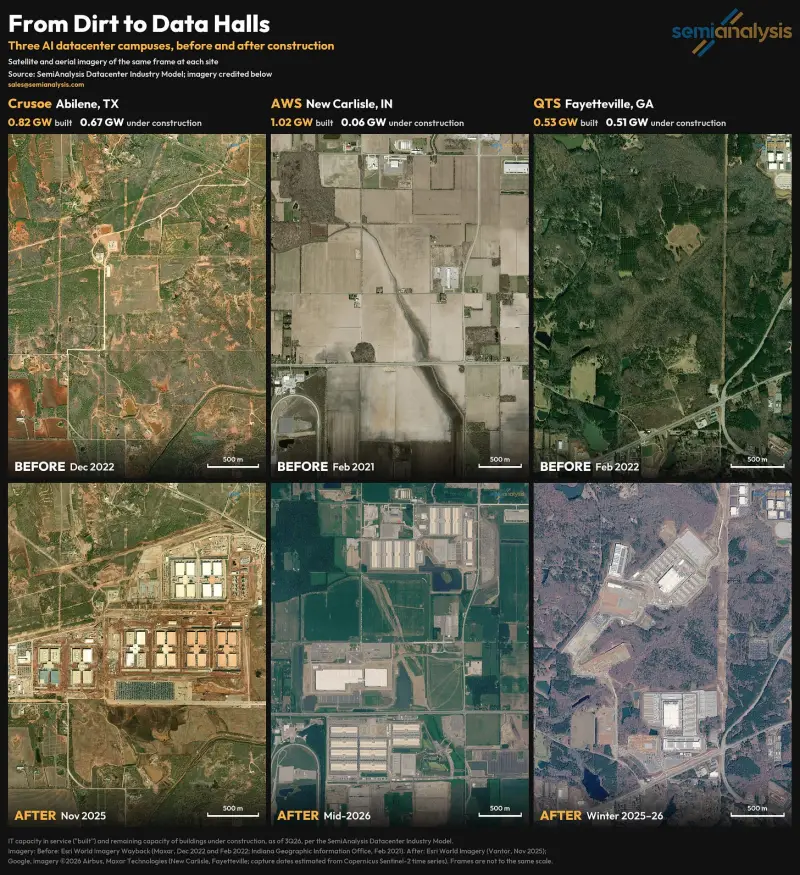
That evidence doesn’t make delivery certain. Builders continue to face labor shortages, delayed equipment, financing challenges and power constraints. SemiAnalysis says its model accounts for delays, pointing to a previously identified schedule slip at an Oracle site in New Mexico in April. Its broader argument is that the scale of construction underway, together with leading indicators, supports a sharp increase in capacity despite project risks.
Construction starts and leases point ahead
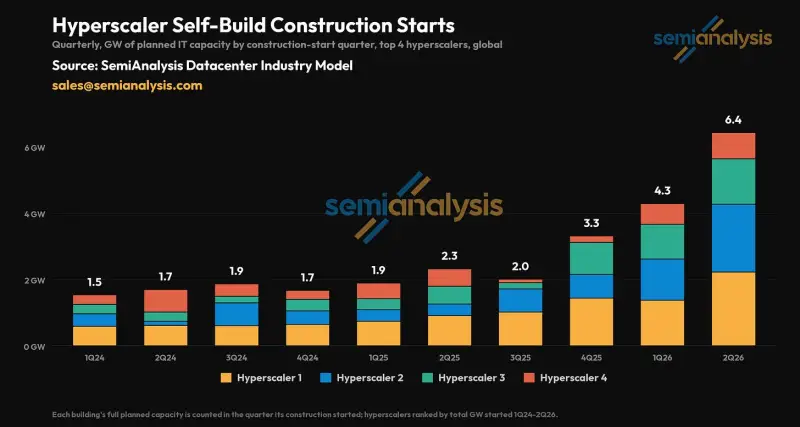
One indicator is the pace of self-build construction starts among US hyperscalers. SemiAnalysis tracks the development of individual buildings and says quarterly megawatts entering construction have reached a record, with two hyperscalers driving much of the increase. Starts are an early signal: they show projects moving into physical work before completed capacity appears in operating totals.
Leasing offers another view of the pipeline. Large datacenter projects are capital-intensive, so developers typically spend only 5–10% of project capital before securing a customer. A pre-lease can support financing and construction; the contracts described by SemiAnalysis typically run 15–20 years and carry total contract value of $30–50 billion per GW.
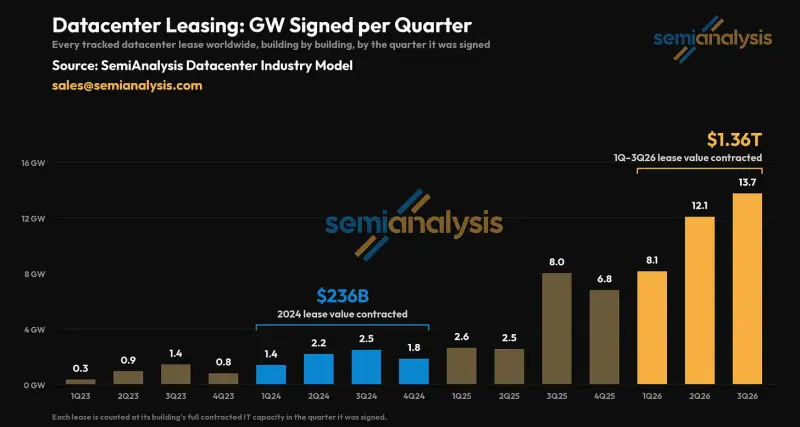
Lease activity stayed relatively steady from the second half of 2023 through the first half of 2025, limiting the projects that could follow. The report attributes that lull in part to Microsoft’s pause in leasing after it had driven much of the market in 2023 and 2024. Activity then shifted: from August to October 2025, Oracle closed leases for about 4.5 GW of datacenter IT capacity across three sites. Meta, AWS, Microsoft, Google, Nvidia, AMD, Anthropic and OpenAI are also seeking leases at gigawatt scale, while smaller cloud providers are signing deals measured in hundreds of megawatts.
SemiAnalysis says that, year to date in 2026, it had identified more than US$1 trillion in signed and closed lease value. The report’s introduction describes the total as slightly under US$1 trillion of binding, non-cancellable leases, while a later section gives the figure as over a trillion dollars. In either description, the central point is that contracted demand can help developers raise debt well before facilities are finished. The company says most of the related debt has already been raised.
Design changes shorten the path from orders to delivery
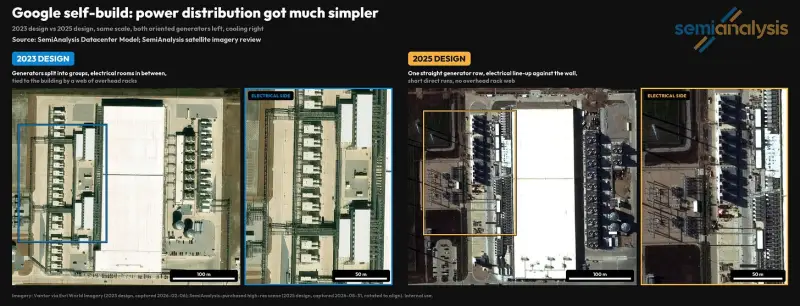
Large orders for electrical and infrastructure equipment still need to become installed, working systems. To ease the burden on site crews, some operators are simplifying designs and shifting assembly off site. Google, for example, has modularized its electrical architecture, replacing some outdoor cabling that would require on-site assembly with prefabricated electrical modules.
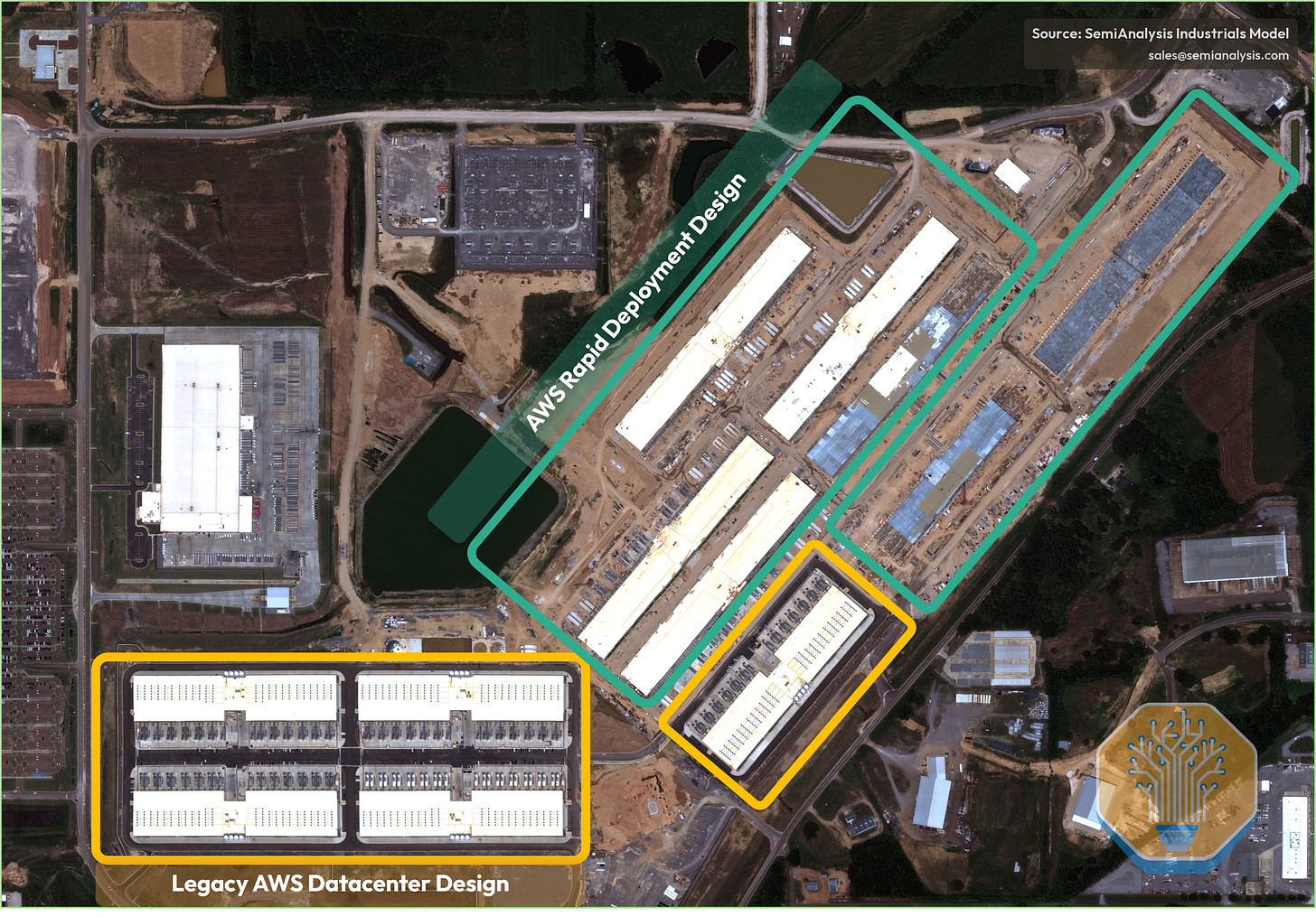
Other operators are changing building layouts. Meta has developed a tent-style design; AWS has simplified its shell design with a format called SAMDC and is prefabricating data halls through Project Houdini. The report puts construction timelines for the newer approaches at under 10 months. It also says modular methods can cut the 7–11 months of mechanical, electrical and plumbing labor by as much as 63%.
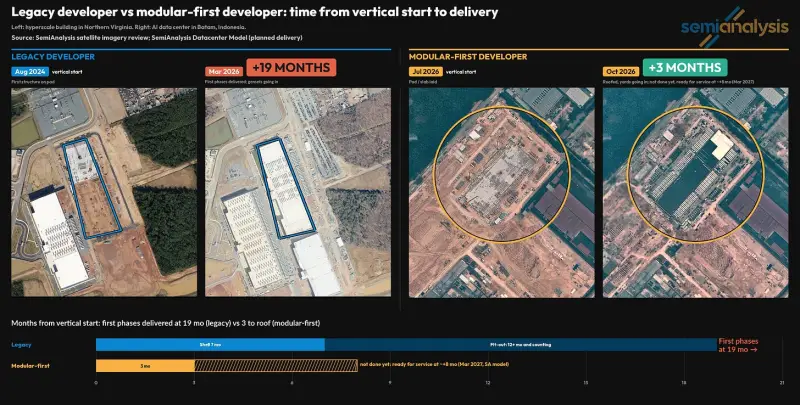
Developer DayOne illustrates how prefabrication can affect delivery speed beyond hyperscaler self-build programs. The Singapore-based company has leased about 3 GW since its first deal in early 2023. SemiAnalysis contrasts its roughly nine-month construction timeline with more than 18 months for traditional developers, and links that pace to large deals with Firmus, OpenAI and Nvidia. The comparison underscores the value of standardizing and assembling components ahead of site installation, though the report doesn’t establish that every project can match those timelines.
Power and geography expand the options
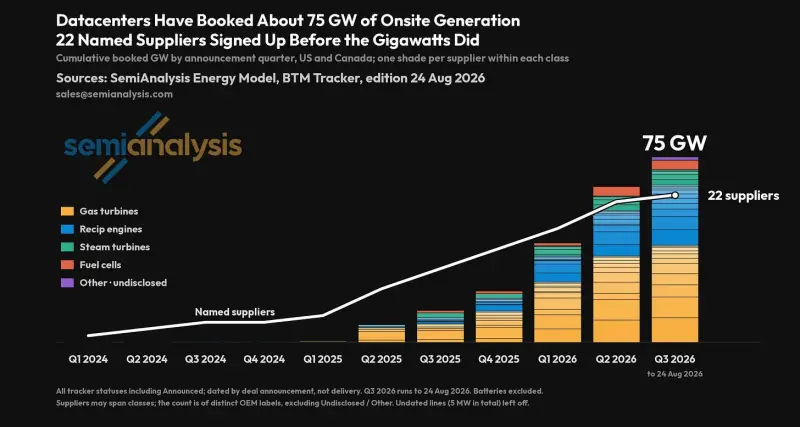
Grid connections remain a constraint, particularly where interconnection queues stretch for years. SemiAnalysis says some AI labs and hyperscalers are responding with behind-the-meter generation: power plants built to serve a site directly, bypassing grid interconnection timelines it describes as 5–10 years. Turbine manufacturers have faced production bottlenecks, but the supply response has broadened to include fuel cells, truck engines and refurbished turbines. The report argues that these options have eased the generation equipment shortage; it doesn’t suggest that every site has secured the power it needs.
Geographic diversification is another part of the buildout. Construction outside the United States is expected to accelerate sharply in 2027 and gain market share in 2028, according to SemiAnalysis. Building in more locations can reduce exposure to US labor and power limits, though each region brings its own development conditions and constraints.
Capacity is only one side of the supply question
If 2027 delivers substantially more datacenter capacity, compute supply should grow, potentially lowering the cost of AI services and supporting further model development and revenue growth for AI labs and other providers selling compute tokens. The same buildout demands very large capital commitments. SemiAnalysis argues that the scale of financing required could put upward pressure on interest rates, though it presents that as an implication rather than a measured outcome.
More buildings and power won’t automatically mean abundant usable compute. The report points to memory and logic chips as possible bottlenecks in 2027–28, following an earlier period of silicon shortages. For operators, the practical question is therefore not just how quickly campuses rise, but whether chips and other equipment arrive in time to fill them. Construction starts, leases and modular methods all support an acceleration case; the next test is how well that pipeline converts into powered capacity and installed computing hardware.
 AMD Venice Uses 2.5D Packaging to Feed More Bandwidth Into EPYC Zen 6
 CNC Controller Board Design: Interfaces, PCB Specs and Assembly Testing
 Stratasys and Nano Dimension End $42.5 Million Markforged Sale Agreement