Sophrosyne Validates Biomedical Sensor Chip for Wearable ECG Monitoring
Sophrosyne has validated silicon that senses and displays ECG readings in real time; performance and power figures remain undisclosed.

Sophrosyne Technologies has verified a key function of its first biomedical sensor chip in silicon: the device can sense and display an electrocardiogram (ECG) reading in real time. That moves the project beyond design work, though it doesn’t yet establish how accurately the chip measures signals, how much energy it uses or how it will perform inside a finished wearable.

The Indian semiconductor startup says it completed post-silicon validation after receiving chips from a tape-out completed in late April 2026. The company has described real-time ECG sensing and display as demonstrated functions. It hasn’t shared measurement results, test conditions, power figures, or details of any other health signals validated so far.

What the silicon has demonstrated
Post-silicon validation means engineers have tested fabricated devices, rather than relying only on design simulations. In this case, Sophrosyne reports that its silicon can acquire an ECG signal and present a reading in real time. That is a meaningful functional checkpoint: it indicates that the sensing and signal path can operate on the fabricated chip for at least the demonstrated use.
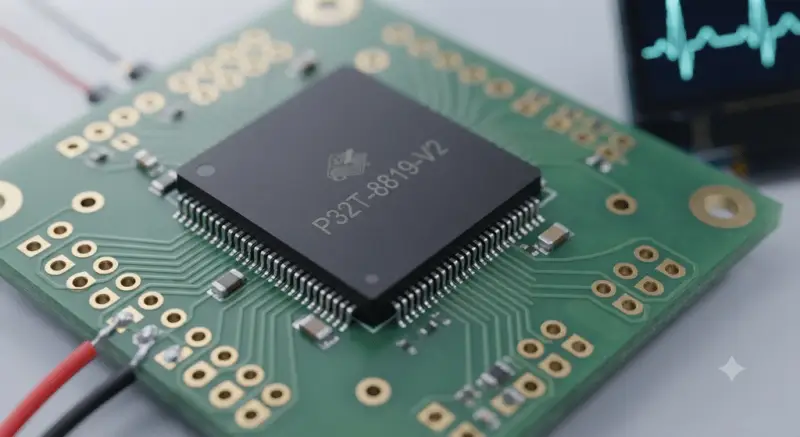
The available details don’t show how the test was set up or what “display” entails in the demonstration. There are no stated accuracy figures, signal-quality results, sampling parameters or comparisons with another measurement system. Nor does the company identify the sensors or disclose which additional health measurements the chip may support. Those omissions make it too early to judge the chip’s suitability for a particular wearable or clinical use.

For engineers assessing the result, the next useful evidence would include performance across operating conditions, power consumption during sensing and display, and the chip’s interfaces to wearable hardware. Those details would help establish what external components a product team might need and how the chip could affect battery life, board area and system design. They haven’t been provided yet.
A purpose-built approach to wearable sensing
Sophrosyne describes the device as a biomedical sensor chipset built around low-power analogue circuitry, high-accuracy sensors and the company’s own intellectual property. The stated goal is to let compact wearable products collect health-related data efficiently. No circuit architecture, process node, sensor specifications or measured energy figures have been disclosed, so the design trade-offs can’t yet be evaluated in detail.

A dedicated sensing chip can give designers a path to integrate functions around the requirements of health measurements, including signal quality and energy use. That can matter in small devices, where sensing, processing and communications all draw on limited board space and battery capacity. But integration alone doesn’t establish an advantage over off-the-shelf components. A comparison would need disclosed measurements and a clear account of which functions the chip includes.

The system boundary will matter as the design develops. A wearable still needs a way to make reliable contact with the body, manage the measured signal, communicate or display results, and operate within its available power budget. The company’s real-time ECG demonstration addresses a central part of that chain, but the reported information doesn’t describe the complete product configuration or how the chip behaves in a wearable during use.
Next steps toward product evaluation
Sophrosyne is working to make the chip commercially viable. It plans to tape out another version within the next 10 months and begin proof-of-concept discussions with wearable device makers in India and elsewhere. The stated plan points to another design iteration before prospective customers assess the silicon in product-specific applications.
That follow-on tape-out will be a chance to see whether the company reports more detailed electrical and sensing results. For device teams, practical evaluation will depend on the available specifications, integration requirements and test evidence, along with the chip’s eventual availability. None of those commercial or technical details has been announced in the information provided.
The development has received support from several named organizations, including C-DAC and Bluehill VC. Sophrosyne presents the chip as an Indian-developed semiconductor option for wearable health products. For now, the clearest engineering milestone is narrower and concrete: fabricated silicon has demonstrated real-time ECG sensing and display. The next evidence to watch is the measured performance of the revised chip and whether wearable makers proceed to proof-of-concept work.
 3DCERAM Employees Set to Take Control as Sinto Transfers Ceramic AM Stake
 ST VL53LB ToF Sensor Combines 8-Metre-Plus Range With a 4 mm Package
 MIT’s 244 mg Flapping-Wing Robot Navigates Without Motion Capture