ST VL53LB ToF Sensor Combines 8-Metre-Plus Range With a 4 mm Package
ST’s VL53LB measures from under 5 mm to beyond 8 m in a 4.0 × 1.8 × 1.0 mm package, with low-power operation and I3C support.
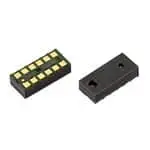
STMicroelectronics’ VL53LB brings a distance range beyond 8 metres into a package measuring just 4.0 × 1.8 × 1.0 mm. The direct time-of-flight (dToF) sensor is intended for designs where longer-range awareness has to fit within tight space and power budgets, including smartphones, robots and industrial equipment.

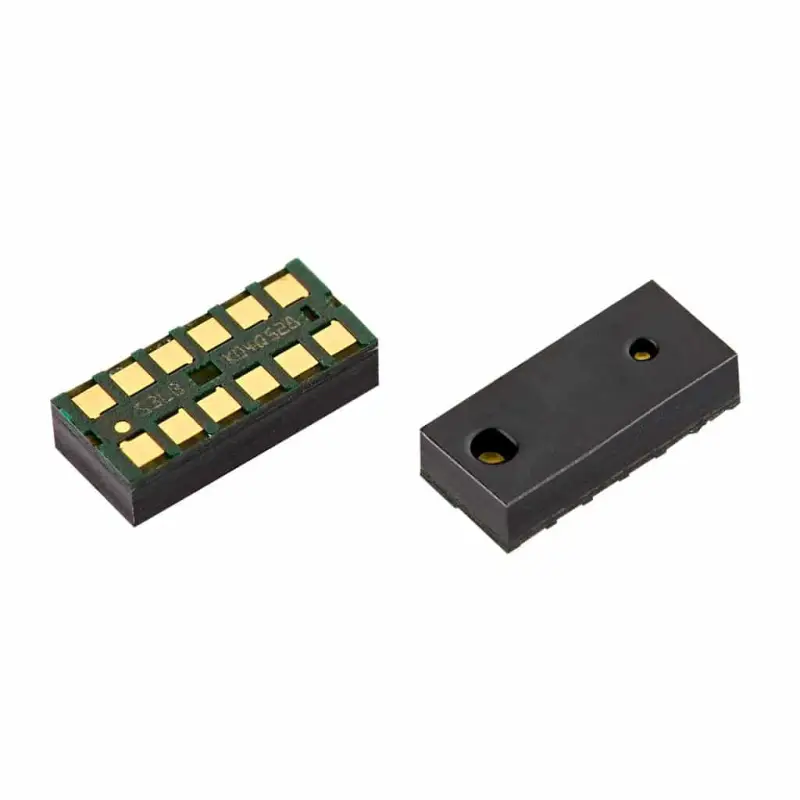
ST specifies a measurement span from less than 5 mm to beyond 8 metres, along with the ability to detect multiple objects within its field of view. That combination gives a host system more than a single near-field threshold to work with: the sensor can provide distance information across a wider scene, while the application determines how to use those readings. The stated range and multi-object detection are manufacturer specifications; the supplied details do not give accuracy, update rate, field-of-view angle or performance by target material.
Optical ranging in a compact module
A dToF sensor sends out light and measures the time taken for reflected light to return. With that timing, the system estimates the distance to objects in view. In the VL53LB, ST packages the CMOS sensing element, 940 nm infrared illumination and on-board intelligence together. Integrating those functions can simplify the component count and optical integration a product team must handle, although the system still needs to accommodate the sensor’s electrical interface, placement and application software.

ST describes the VL53LB as 30 percent smaller than the prior generation. The 4.0 × 1.8 × 1.0 mm dimensions may help where a sensor must fit behind a small opening or alongside other components. That matters in mobile devices, where space competes with cameras, displays and battery volume, and in robots, where multiple sensors may need to be positioned around a constrained enclosure.
The power figures are also relevant to battery-operated designs. ST says active distance measurement uses half the power of the prior generation, and gives an ultra-low-power figure of as little as 50 µW. These are distinct operating claims: the 50 µW figure applies to the sensor’s ultra-low-power mode, while the source does not specify the active measurement conditions or the measurement rate associated with its comparison. Engineers assessing average system draw will need those details alongside their intended duty cycle.
Potential uses and integration details
ST identifies smartphone imaging and autofocus as one use for time-of-flight sensing. Distance readings can also support occupancy detection, collision avoidance, location functions and non-contact user interfaces. For robots and industrial systems, a compact ranging part can add information about nearby objects without requiring a large sensor assembly. The sensor supplies measurements; decisions such as whether to slow a robot or trigger an interface remain functions of the host system.
The VL53LB supports the I3C communication protocol, which can ease integration into platforms designed around that interface. ST also says it can operate in bright conditions up to 120 kLux and in low light. The maximum stated illumination level provides a useful environmental design point, but it does not describe performance across every combination of distance, target reflectivity and ambient light. Those conditions should be checked against the application’s requirements.

ST says the sensor’s design addresses electromagnetic interference (EMI) and electromagnetic compatibility (EMC), and that a metal housing can be omitted. Removing a metal shield may give designers more freedom in packaging, but the statement does not replace system-level EMC evaluation. Nearby electronics, enclosure materials and the final product layout can all affect integration, so the assembled device remains the relevant place to assess interference.
Fourth-generation FlightSense
The VL53LB belongs to ST’s fourth generation of single-zone FlightSense technology and uses the company’s single-photon avalanche diode (SPAD) technology. ST says it has sold more than 3 billion time-of-flight sensors using FlightSense. That installed volume provides context for the platform’s history, while the VL53LB’s practical fit will depend on its specifications, interface and operating modes against each product’s requirements.
Alexandre Balmefrezol, ST’s Executive Vice President and General Manager of the Imaging Sub-Group, described the part as an extension of the company’s optical sensing work. The more actionable engineering details are the combination of range, package size, power modes and interface: together, they make the VL53LB a candidate for designs that need longer-range distance sensing in limited space. ST’s announcement provides the product reference; teams will need the full device documentation to evaluate performance conditions and implementation requirements.
 Sophrosyne Validates Biomedical Sensor Chip for Wearable ECG Monitoring
 MIT’s 244 mg Flapping-Wing Robot Navigates Without Motion Capture
 Nexperia Adds 48 Fast-Recovery Diodes Rated at 400 V and 650 V