Stanford Microchips Track Chemical Reaction Heat Every Half-Second
Light-powered 0.5 mm chips measure temperature inside test tubes, revealing catalyst poisoning and heat changes as reactions unfold.

Temperature measurements taken every half-second can show a chemical reaction changing while it is still underway. Researchers at Stanford University have demonstrated a system that places tiny wireless chips inside test tubes, letting them track heat produced or absorbed during an experiment. That closer view could help researchers spot catalyst failure and excessive heat before a final measurement would reveal either.

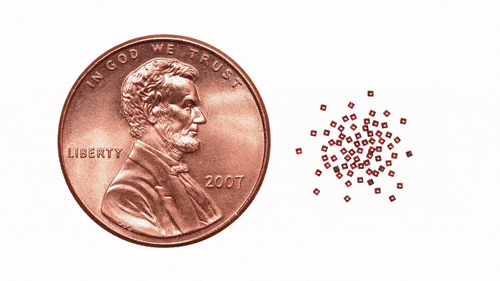
Measurements from inside the test tube
The devices are called Optical Wireless Integrated Circuits, or OWiCs. Each chip measures 0.5 mm, about the size of a grain of rice, and operates using light for power. An onboard laser sends optical signals; the red blinking shown in the image is the visible sign of that communication.
Placed in a test tube, a chip can record temperature changes at half-second intervals. The result is a sequence of measurements from within the reaction vessel rather than a single reading after the chemistry has finished. That timing matters when reaction conditions shift quickly: a final value can show where the process ended, while frequent readings can help indicate when it began to change.

Many conventional approaches either deliver results only after a reaction is complete or depend on equipment that can be expensive or interfere with the experiment. The Stanford team’s setup puts a small sensor in the test tube itself. The reported work focuses on temperature, so the readings provide a way to follow the reaction’s thermal behaviour as it proceeds.
Watching a catalyst lose activity
One use is detecting catalyst poisoning. A catalyst helps a reaction proceed, but other substances can cling to it or react with it, reducing its effectiveness. If that happens during an experiment, the reaction’s progress may change. A stream of temperature readings gives researchers a way to observe that change around the time a suspected poison is introduced.
In the team’s experiments, researchers put a different suspected catalyst poison in each test tube. The chips recorded heat changes every half-second, allowing the team to compare the reaction’s behaviour after each addition. Those observations could then inform adjustments to the chemical mixture or reaction conditions to limit the poison’s effect.
That makes the measurement useful as an experimental feedback signal: researchers can connect a change in the reaction’s heat to a change in what is happening in the vessel, then decide what to examine or adjust. The system does not, on the information reported, identify the poison by itself or explain the chemical pathway. Its contribution is a more frequent record of the reaction’s thermal response.

Heat as a safety signal
The researchers also used the chips to identify reactions that were producing more heat. Excess heat can pose a safety concern, and the small-scale experiments let the team observe when heat generation rose or fell. Continuous measurements make the timing of those changes visible, which is more informative for monitoring than learning only the final outcome.
Temperature is one signal, not a complete account of reaction behaviour. The reported experiments establish the use of the chips for tracking heat; they do not provide measurement accuracy, operating limits, compatibility details for different chemicals, or a comparison of performance against other instruments. Those details would matter when assessing how the approach fits a particular laboratory workflow.
A platform for other measurements
The researchers see potential to adapt the wireless microelectronics to measure other properties, including light transmission, electrical conductivity and acidity. Each would add a different kind of information about a reaction. The team also points to high-throughput analysis, where many experiments generate data that must be collected and processed quickly, as a possible application area.
For engineers and chemists, the practical appeal is the combination of a very small sensor, optical power and communication, and readings taken within the test tube. The next questions are how reliably the devices work across different reaction environments and how their measurements compare with established methods. For now, the demonstrated result is a way to follow temperature changes at half-second intervals and use that timeline to investigate catalyst poisoning and heat production as reactions unfold.
 3DCERAM Employees Set to Take Control as Sinto Transfers Ceramic AM Stake
 ST VL53LB ToF Sensor Combines 8-Metre-Plus Range With a 4 mm Package
 Sophrosyne Validates Biomedical Sensor Chip for Wearable ECG Monitoring