Suri Pro 2.0 Refines Toothbrush Power, Noise and Repairability
Suri and IDC reworked the Pro 2.0’s motor, electronics and damping to deliver 33,000 vibrations per minute at 50 decibels.
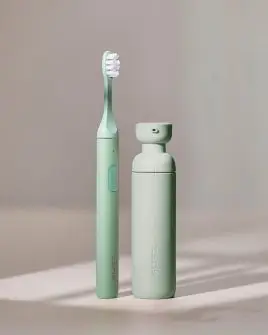
Suri’s Pro 2.0 shows how much engineering can sit behind a product whose outward form barely changes. The London-based toothbrush company kept the original model’s styling and familiar user experience, while working with design consultancy IDC to improve motor performance, reduce noise and vibration, and extend battery life. The finished brush delivers up to 33,000 sonic vibrations per minute at 50 decibels.
That refinement also fits the company’s broader design brief: make a toothbrush people enjoy using, reduce waste from replaceable heads, and build a device that can be taken apart at the end of its life. Those aims pull in different directions. A toothbrush must tolerate water, toothpaste, heat and repeated impacts, yet its parts should remain recoverable. Suri’s second generation is an account of balancing those demands through design and testing.
Keeping the design users already liked
Founders Gyve Safavi and Mark Rushmore, both formerly at Procter & Gamble, started Suri after seeing limited change in oral-care products. They saw an opportunity to apply material choices and product design to a category where electric brushes often depend on consumables that are difficult to recycle.
The scale of brush-head waste was part of that motivation. The figures cited by Suri are around 141 million electric toothbrush heads discarded each year in the UK and roughly 4 billion worldwide. Nylon, a key material in many heads, can take hundreds of years to break down. Suri uses PLA, a plant-based bioplastic made from renewable feedstocks such as corn starch and sugarcane, and offers a free brush-head take-back scheme in the UK and US.
For innovation director Seb Wetherall, the product also had to address how people actually brush. High-end connected brushes may include smartphone apps, but Suri’s research found that many users weren’t engaging with them. Wetherall’s view is that an appealing everyday ritual can do more for sustained use than features that go untouched. If people like handling the brush, he argues, they may be more open to improving their oral-care habits.
That experience gave the company a clear starting point for the Pro 2.0. After the first model launched in 2022, Suri gathered feedback from social media and review platforms. Trustpilot alone provided about 20,000 reviews. The team used AI to analyse sentiment, Wetherall says, and “love” was the word that appeared most often.
Customers praised the brush, its accessories and practical details. A mirror mount keeps the brush off a wet or toothpaste-smeared countertop; USB-C charging and a travel case with a UVC light for sterilising the brush head were also well received. The feedback suggested that the main proposition was working. Suri decided to preserve the core industrial design and take it into the US market, rather than replace a product users already liked.
Improving performance without a new outer form
Keeping the handle shape constrained the redesign. Suri wanted to improve performance without changing the tooling used to manufacture the body, so the engineering work focused on what could be refined within the existing design. Battery life, manufacturing scale and supply-chain readiness also needed attention as the company prepared for growth in the US.
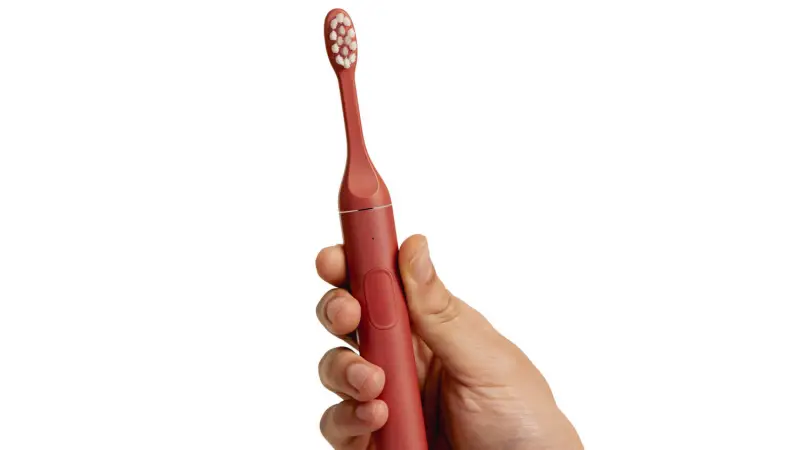
The casing is aluminium. Suri points to its durability, corrosion resistance and recyclability, along with its relatively low weight for both users and shipping. The material also gives the brush a cool, solid feel in the hand. These qualities make it suitable for a bathroom product, but the metal exterior is only part of the design problem: the motor, battery and internal assembly determine whether the brush performs well and remains comfortable to use.
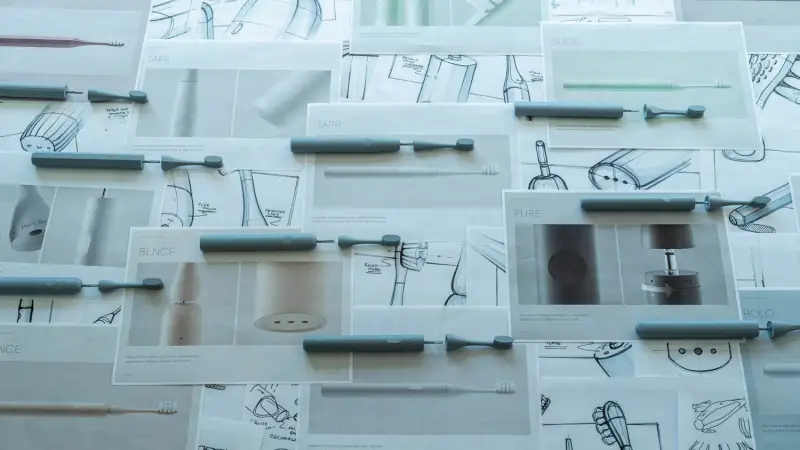
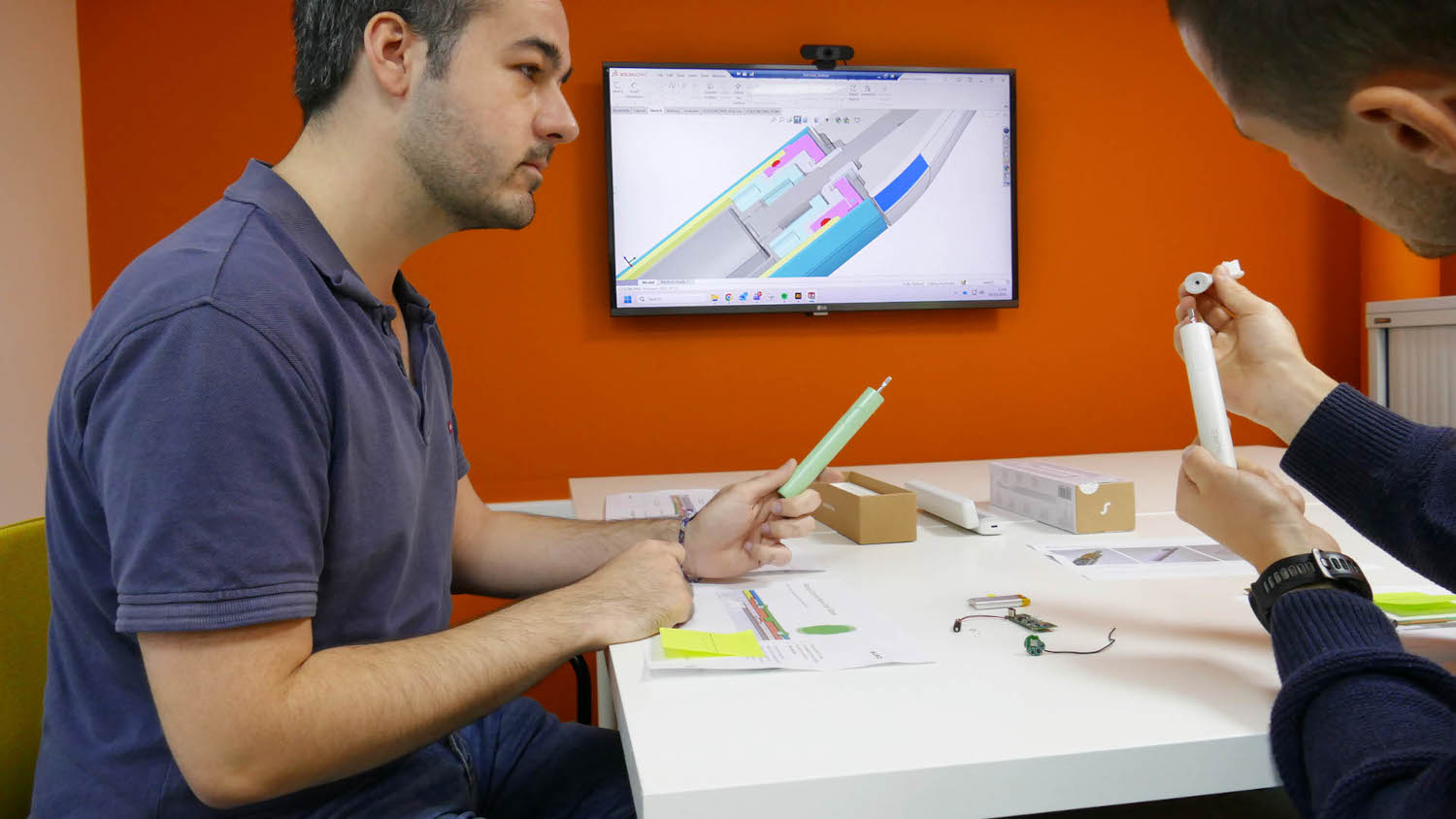
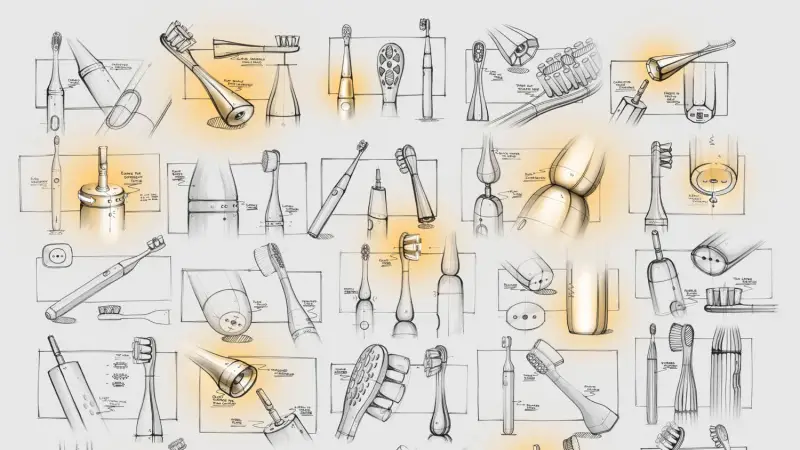
Suri developed the product mainly in Rhino and KeyShot, and used Vizcom for rapid early exploration of the handle form. By the time the company engaged IDC, the project had reached the Engineering Validation Test stage and its manufacturing partner in China was making prototypes. The team still saw room to improve the engineering before launch, particularly in the interaction between the motor, electronics and housing.
IDC was positioned to work across both sides of that process. The consultancy is based in Datchet, Berkshire, and has a 10-person office in Shanghai. That gave Suri’s UK team access to technical work at home and to engineers who could visit suppliers and factories in China. IDC managing director Stephen Knowles says senior design engineer Xiaoya Bao coordinated much of the work there, inspecting components and checking that supplier parts met the design requirements.

Finding the source of wasted power
The first prototypes exposed a linked set of problems. A more powerful motor increased vibration and noise, while battery life still needed to improve. Simply fitting a stronger motor wouldn’t solve the brief: the brush had to deliver useful cleaning action without sounding loud or feeling harsh in the user’s hand.
IDC’s electronics team tested multiple motor and battery samples, measuring the electrical signals sent to the motor, current draw and waveforms. Knowles says the factory’s original electronics drove the motor inefficiently. At the same time, Bao tested alternative motors in China to compare their response and vibration. That combination of electrical measurements and physical trials helped the teams assess the whole drive system, rather than treating the motor as an isolated component.
Bao also visited supplier sites to inspect both standard and customised parts, from electronics to injection-moulded components. The visits let her check parts against the design requirements directly and resolve questions with manufacturers. IDC’s electronics capability was based in the UK, while its China office supplied local engineering and supplier access, so development work moved between the two locations as the team narrowed down the design.
Comfort was harder to reduce to a single measurement. The brush needs enough motion to feel effective, but excess vibration can make it unpleasant to hold. Motor noise also shapes the experience. Knowles describes the task as finding a balance between a clear sense of cleaning action and a sound and feel that don’t make the brush seem aggressive.
Turning feel into testable results
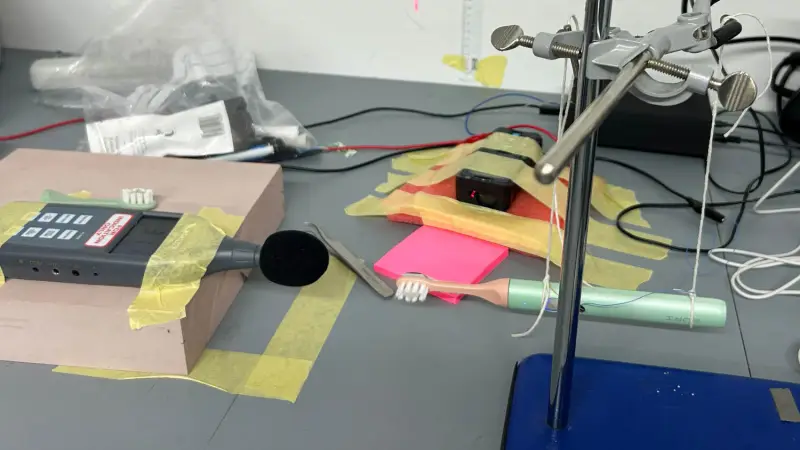
Suri’s focus on user experience meant IDC needed repeatable ways to compare prototypes. Sound could be measured with decibel readings, but the small, fast movements at the brush head required another approach. The team fixed a mirror to the back of the head and aimed a laser at it. As the head moved, the reflected beam shifted across a wall, making the vibration easier to observe and compare between motors and settings.
Knowles says the laser setup amplified the apparent movement enough to reveal differences between configurations. It gave the team a visual reference for changes that would otherwise be difficult to inspect directly. Used alongside electrical measurements and listening tests, the method helped connect the motor’s drive behaviour to the motion delivered at the brush head.
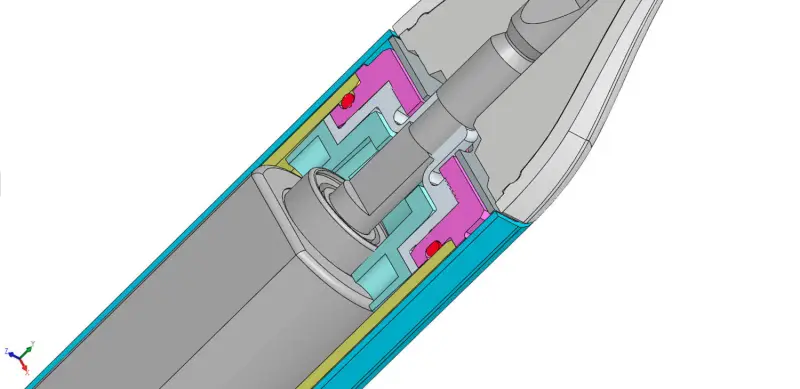
IDC worked from Suri’s original Solidworks CAD model to accommodate new electrical and mechanical elements. The revised power system also required internal damping. The objective was to direct useful energy toward the head while limiting vibration transmitted into the handle. That distinction matters in a handheld device: power at the working end is valuable, while unwanted movement in the grip can undermine comfort.
To compare possible layouts, IDC used in-house SLA 3D printing to make mock-ups and test several alternatives in parallel. Physical prototypes helped the team check how components fitted together and how changes affected the brush, while the CAD model supported the reengineering of the internal architecture. After those iterations, the Pro 2.0 reached its stated output of up to 33,000 sonic vibrations per minute while operating at 50 decibels.
Designing for service and end of life
Suri says future growth requires product architecture that can accommodate new markets and manufacturing demands. Its engineers also consider how the toothbrush can be disassembled after use. Nonpermanent adhesives can make it easier to recover components for recycling, repair or replacement, but the joints still have to survive the product’s working life.
That life can be demanding. A bathroom brush may be dropped onto a hard tiled floor, exposed to water and toothpaste, and warmed internally during use. Those conditions affect material selection, assembly and inspection. Wetherall says the company uses extensive Design Failure Mode and Effects Analysis to work through possible failure points in the compact product.
This is where circular design becomes a practical engineering constraint. A device that comes apart easily but fails after ordinary use won’t meet the user’s needs; a durable product with permanently bonded parts can be difficult to recover. Suri’s stated approach is to use assembly choices that support disassembly while treating impact resistance, water ingress and material performance as design requirements.
The company also plans to increase the use of recycled aluminium in future brush bodies. Recycled material from used brush heads raises a different challenge: some consumers may be uncomfortable with products made from material associated with toothbrushes, even after it has been processed into base material and remoulded. Suri has begun using recovered materials in other products, including a soap dish made with polymer from 18 toothbrush heads, which it says came to market in 2026.
A refill system built around dispensing and waste
Suri’s circularity work extends beyond the toothbrush. Its refillable toothpaste system has a countertop body made from 50% recycled plastic and uses an airless pump. Wetherall says the pump is intended to make dispensing pleasant while pushing as much toothpaste as possible out of the refill, leaving less product behind.
The refill cartridge is designed to be home compostable and biodegradable, rather than returning to a conventional recycling stream or going to landfill. Suri developed it with Shellworks, which makes Vivomer, a PHA-based biopolymer. The material is described as breaking down into water and carbon dioxide over six months.
IDC helped engineer the dispenser so that it delivers a repeatable, pea-sized amount of toothpaste with a consistent force. The team iterated between Solidworks models and physical 3D-printed prototypes to tune the pump action. As with the toothbrush, the job joined mechanical design to a measurable user experience: the pump needed to feel right while producing a predictable dose.
Suri and IDC both use KeyShot during product development, but Suri relies more on conventional photography than rendered imagery when presenting its products. Wetherall says the brush needs to be shown in a person’s hand, a context that can be difficult to represent convincingly with AI-generated images. He also connects the choice to the company’s aim of showing how products are made and building trust through direct, detailed communication.
The Pro 2.0’s main lesson is in the work hidden behind a familiar silhouette. Better motor drive, reduced vibration, sound measurements, supplier checks and prototype iterations all contributed to a product that keeps its original form while refining its performance. The next test for Suri’s design choices will be how well that combination of everyday durability, user comfort and recoverable materials holds up as production expands.
 AMD Venice Uses 2.5D Packaging to Feed More Bandwidth Into EPYC Zen 6
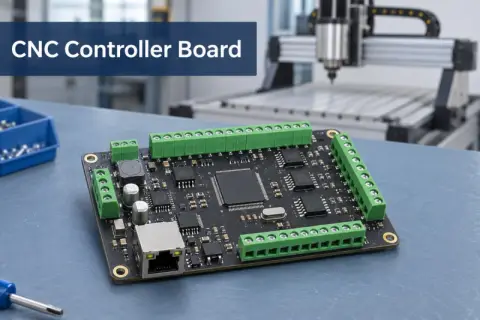 CNC Controller Board Design: Interfaces, PCB Specs and Assembly Testing
 Stratasys and Nano Dimension End $42.5 Million Markforged Sale Agreement