Smarten’s 3kW Grid-Tied Inverter Enters Pilot Production
Smarten’s 3kW inverter combines a 150V–450V MPPT range, HERIC topology and Wi-Fi monitoring as the company prepares its first pilot batch.
Smarten Power Systems has developed a 3kW grid-tied solar inverter in-house and is preparing its first pilot production batch. The move puts the Indian power systems company’s own power conversion design on the path from development into manufacturing, with a stated focus on capturing energy across changing sunlight conditions. Pilot production is a meaningful transition: a design that works in development still has to prove it can be assembled consistently and behave as expected in a broader system.

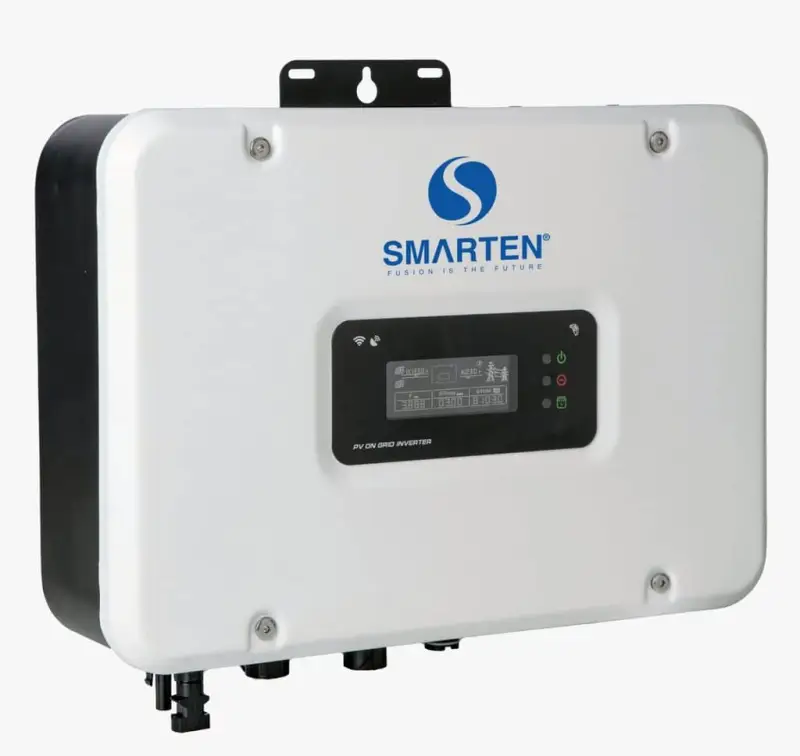
The unit converts the direct current produced by photovoltaic panels into alternating current for connection to the electricity grid. Smarten says it has handled system design, including the power conversion solution, using internal engineering resources. The inverter has completed design, testing and validation, according to the company’s account; the next step is a pilot batch. That sequence gives the company a chance to examine how its design translates into manufacturing, though the announcement doesn’t describe the tests or their conditions.

MPPT range and operating window
The inverter’s maximum power point tracking (MPPT) function is specified to work across an input voltage range of 150V to 450V. MPPT adjusts the electrical operating point of a solar array to draw power as panel output changes with irradiance. The controller’s task is to keep the array operating near the point where it can deliver the most power, even as available sunlight shifts. A broad working range can give the control system room to track the array as sunlight levels vary during the day.

Smarten says this range is intended to let the inverter begin generating earlier and continue later. That’s a design aim, rather than a quantified production result: no daily energy yield, efficiency curve or test conditions are provided. The range alone can’t establish how much additional energy a system would produce, since results also depend on the panel array and site conditions. For system designers, 150V–450V is the concrete specification available for checking compatibility with a panel string; the source gives no further limits for array configuration or grid connection.
HERIC conversion and monitoring
Smarten has used a HERIC (Highly Efficient and Reliable Inverter Concept) inverter configuration. The company says this arrangement is intended to improve efficiency and reduce energy losses associated with switching and leakage. In general, inverter topology shapes how power switches are arranged and controlled, affecting losses and electrical behavior. The announcement provides no efficiency figures or comparative test data, so the practical size of those gains can’t be assessed from the stated information alone.

The inverter also includes Wi-Fi for remote system analysis and diagnostic information. That feature can give operators access to system status without being beside the equipment, while providing a way to review performance. For an installer or operator, remote access may help distinguish a system issue from a change in available sunlight before someone visits the site. Details such as supported monitoring software, data retention, communications range and diagnostic functions haven’t been specified.
Smarten describes the housing as compact and says its design aims to make installation easier, support dependable operation and reduce electromagnetic interference (EMI). Those are product design objectives; enclosure dimensions, ingress protection, cooling method and EMI test results aren’t reported. The enclosure and thermal design affect where equipment can be installed and how it handles its operating environment. Those details will matter to installers and system integrators assessing physical fit and site conditions.
In-house development reaches a production milestone
The project was managed by Sanjay Agrawal, Smarten’s Vice President of R&D, who has more than 30 years of experience in power electronics and product engineering. Agrawal said the team worked through the product’s development and validation before it reached the production stage, and described the design and engineering as developed within the company. Internal development can give a manufacturer closer control over design decisions and later changes, though it also puts responsibility for validating those choices on the team building the product.
For Smarten, the inverter is a step toward greater ownership of its power electronics technology. Developing the power conversion system internally gives the company direct responsibility for the design choices behind the MPPT range, conversion topology, monitoring and enclosure. The first pilot batch will move those choices into manufacturing, though production volume, commercial availability and pricing haven’t been stated. This is more significant than it looks: the transition tests whether an engineering design can be repeated as a manufactured product.
What the pilot will show
The next useful evidence will be the performance and manufacturing data that emerge as the inverter moves beyond pilot production. Pilot output can reveal assembly and integration issues that aren’t visible in a design description, while operating data can show whether stated goals translate into measurable behavior. And yet, the available announcement leaves those results for later.
If you’re working in this space, the clearest engineering markers for now are the 3kW rating, 150V–450V MPPT operating range, HERIC configuration and integrated Wi-Fi monitoring. The practical questions are still open: how the unit performs under defined conditions, what system configurations it supports and how consistently it can be built. The specs are a starting point. The evidence to follow will matter more.
 Stark Future Orders Farsoon FS4X Printers for Titanium Motorcycle Production
 Rolls-Royce and INFINITY Plan Derby Manufacturing Hub for Nuclear Engineering
 L&T Technology Services’ SDVault.ai Targets Traceable Software-Defined Vehicle Development