Rolls-Royce and INFINITY Plan Derby Manufacturing Hub for Nuclear Engineering
A proposed £400 million Derby technology park would bring metal deposition, hot isostatic pressing and beam welding together for large-scale prototyping.

The proposed INFINITY Technology Park in Derby would give Rolls-Royce Submarines access to large-scale prototyping and manufacturing processes in one location. Its planned capabilities include Directed Energy Deposition (DED), hot isostatic pressing (HIP), and electron and laser beam welding—processes that can support the development and validation of components for demanding nuclear engineering work.
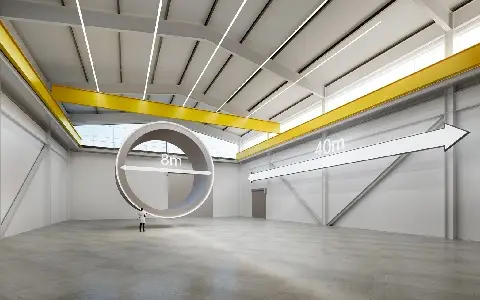
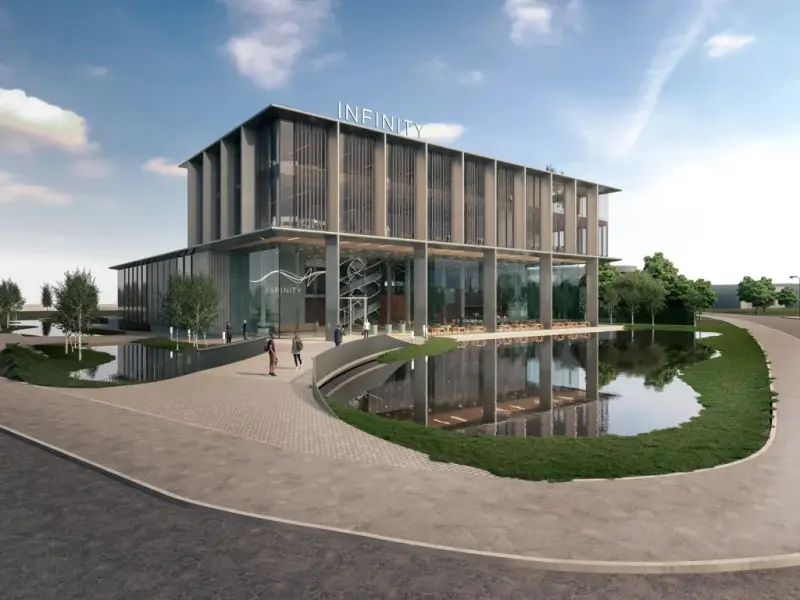
INFINITY is being developed by INFINITY, a Derby-based advanced manufacturing technology park developer. The planned site covers 200 acres and is intended to bring prototyping, digital engineering, testing, validation and supply-chain development together. That concentration of facilities could help engineering teams move manufacturing methods from development toward production-scale use, though the specific equipment, component designs and qualification programmes have not been disclosed.
Three processes, different manufacturing roles
DED builds or repairs metal parts by depositing material while focused thermal energy melts it. For a prototype facility, that process offers a way to investigate metal deposition and repair at a larger scale. The practical result depends on the material, component geometry and process controls; INFINITY has not named the machines or applications planned for the site.
HIP uses elevated temperature and uniform gas pressure to reduce internal porosity and improve material properties. It can be part of a manufacturing route where internal material quality matters, but the source of the component’s porosity and the required final properties determine whether the process is suitable. No HIP operating conditions or specific material grades have been announced.
Electron and laser beam welding provide methods for joining metal assemblies under controlled conditions, including large components. Bringing those joining processes alongside deposition, post-processing and testing could let teams assess a wider portion of a manufacturing route in one place. The park’s planned testing and validation facilities are part of that offer, although their scope and standards have not yet been detailed.

Supporting development alongside existing production
Rolls-Royce Submarines makes nuclear propulsion reactors at its Raynesway facility in Derby. The company’s work is expanding to support its nuclear propulsion programmes, and Engineering & Technology Director Lee Warren said that increasing manufacturing output makes it necessary to explore new technologies. He said the proposed park would allow Raynesway to focus on existing production while separate facilities support manufacturing development.
That division could give engineers room to evaluate processes without tying every development activity to an operating production facility. The benefit will depend on how the park connects prototyping with qualification and production requirements. Those arrangements have not been published, so it is not yet clear how equipment, process data or validation work will be shared with Raynesway.
Rolls-Royce’s Nuclear Skills Academy already operates at Infinity Park. Its presence places skills training alongside the wider development, though no details have been given about courses or how many people the academy will train for the proposed facilities.
Development schedule and funding
The wider development is estimated to cost £400 million, with manufacturing capabilities scheduled to become available in phases from 2028, subject to investment. Development of the technology park is targeted to begin in 2027, and full operations are planned for the 2030s. The £400 million funding has not yet been secured, making financing a key condition for delivering the planned scale and timetable.
An initial £1.5 million Infinity Prototype Centre opened on November 9, 2026, following investment from the East Midlands Combined County Authority. It provides workspaces and teaching facilities for researchers, suppliers and industry teams. This centre is separate from the larger industrial equipment planned for the technology park, so its opening marks an early facility rather than the start of full-scale manufacturing operations.
INFINITY is being developed through a joint venture involving Infinity Technology Group Ltd., Loughborough University, the University of Derby and the Manufacturing Technology Centre. The organisations aim to establish shared research, manufacturing and validation infrastructure for several technically demanding supply chains. INFINITY has also agreed to develop future capabilities with UK Fusion Energy to support the STEP Fusion prototype power plant at West Burton, Nottinghamshire.
Project estimates point to more than 2,500 skilled jobs and 15,000 indirect positions, with training for over 1,500 people annually. Those are projections for the wider development, not confirmed staffing levels. For engineers, the next useful details will be which machines the site will install, what materials and component sizes they can handle, and how its testing facilities will support process validation. Those specifics will show how far the park can take new manufacturing methods from prototype work toward repeatable production.
 Stark Future Orders Farsoon FS4X Printers for Titanium Motorcycle Production
 Smarten’s 3kW Grid-Tied Inverter Enters Pilot Production
 L&T Technology Services’ SDVault.ai Targets Traceable Software-Defined Vehicle Development