SiTime's FemtoClock 4 and VersaClock 8 Target AI Data Centre Timing
SiTime's new FemtoClock 4 and VersaClock 8 families cover Ethernet and PCIe clocking in AI racks, with jitter and density figures the company says double bandwidth.
The clock solutions support connections between processors, memory and storage to meet data demands in AI data centres.

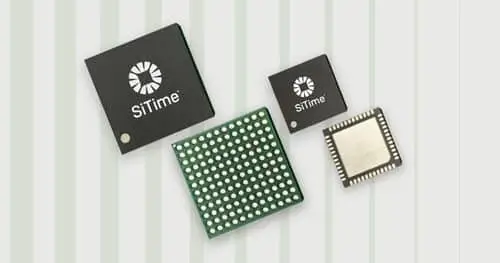
Timing parts rarely make headlines, but in a dense AI rack they set how cleanly data can move between switches, accelerators, memory and storage. SiTime Corporation has introduced two clock families, FemtoClock 4 and VersaClock 8, aimed at the latest connectivity protocols. The company claims both families double the bandwidth of previous generations, and says they suit networking and computing applications in the data centre rack.
Two clocks, two jobs
The split between the two families follows the protocols they serve. FemtoClock 4 is positioned for Ethernet networking in data centres and AI servers. It offers ultra-low-jitter clock signals, supports reliable high-speed data communication and packs a high clock count into a single device. VersaClock 8 targets PCIe interconnect. Its strengths are flexible clock generation and a compact, low-power design, which matter in densely packed computing systems where heat and board space are tight.

Read together, the pairing makes sense. A top-of-rack switch and an accelerator board in the same rack may need different clock trees, different output counts and different jitter budgets. Covering both from one vendor's architecture means the programming model and software can carry over between designs, which is the point SiTime's executive makes later in this piece.
What the FemtoClock 4 figures tell you
The headline specification is phase jitter. SiTime quotes FemtoClock 4 at 19 fs RMS phase jitter at 312.5 MHz in clock generator mode, measured over 12 kHz to 20 MHz with a 4 MHz high-pass filter. Phase jitter is the timing error of edges relative to an ideal clock, and integrating it over a stated band is how you turn a noise spectrum into a single figure. The band and filter matter: changing either can move the number substantially, so the test conditions are as important as the value itself.

Other FemtoClock 4 claims are about structure rather than noise. The device provides up to six frequency domains across 18 outputs. That matters because switch fabrics often need several clock frequencies running at once, and each one that would otherwise need its own generator adds board area, parts count and a supply to manage. SiTime says the device reduces device count for top-of-rack switches, which it notes generally need more than 40 clocks. Consolidating that many clocks into fewer chips is a practical win on a crowded switch board.
VersaClock 8 and the PCIe side
VersaClock 8 carries the PCIe story. SiTime cites about 10 fs of reference clock jitter for PCIe 7, and 30 fs RMS phase jitter at 312.5 MHz over the same 12 kHz to 20 MHz band with a 4 MHz high-pass filter. Those two numbers measure different things. Reference clock jitter describes the clock that feeds the PCIe link, while the phase jitter figure is a generator-level result, so it's worth checking which one a given design's jitter budget actually depends on.
The VersaClock 8 claims that stand out for dense hardware are thermal and mechanical. SiTime says low power limits self-heating and that the part operates at up to 105°C. In a tightly packed accelerator tray, self-heating feeds back into jitter and drift, so a low-power clock is not just an efficiency argument. The family comes in 5-, 9- and 12-output variants in QFN packages ranging from 4×4 mm to 6×6 mm. SiTime states that the 12-output variant is about 40% smaller than a comparable solution. That is the company's comparison, and the baseline part isn't named in the announcement, so treat the figure as a vendor claim until you can compare footprints on your own board.
Why femtoseconds matter at these data rates
Jitter budgets get tighter as data rates rise, for a simple reason. The unit interval, the time one bit occupies on the wire, shrinks as the rate climbs, so a fixed amount of timing noise eats a bigger share of the eye opening at the receiver. Designers respond by pushing jitter down at the clock source and then budgeting what the rest of the chain adds. That's why a figure quoted in femtoseconds, rather than picoseconds, is the relevant unit for these parts. A few tens of femtoseconds sounds negligible in isolation, but it is a meaningful slice of the margin at multi-hundred-megahertz reference frequencies and above.

The practical question for a layout or systems engineer is how much of that budget the clock will consume after the board, the power delivery network and the retimers have taken their share. Vendor figures are a starting point. Verifying them usually means measuring phase noise with the same integration band and filter the datasheet specifies, because a mismatch in those settings is the most common reason two jitter numbers that look similar don't agree.
What the company says about adoption
Piyush Sevalia, executive vice president and chief business officer of SiTime, framed the launch around demand: "Insatiable demand for AI, along with rising performance requirements, is driving the need for greater density and speed." He pointed to the 20-year heritage of the FemtoClock and VersaClock families and said they have "become the default choice for many customer designs." His stated argument for reuse is that engineers already know these architectures and can carry over existing software, which shortens design time for a new board.
That is a credible argument on its face. Teams that have shipped a previous generation of a clock family typically keep the register map, the configuration tooling and the validation flow, and change only what the new silicon requires. Whether that continuity outweighs the attraction of a clean-sheet part depends on the project, and SiTime's claims about market position are the company's own and not independently verified in the announcement.
For the full company announcement and its framing of the data-centre opportunity, see SiTime's original announcement.
My read: the useful test is not the headline doubling of bandwidth but whether these parts hold their jitter once they're on a real board at 105°C with the rest of the rack running. If you're designing Ethernet or PCIe timing for AI hardware, pull the datasheets, match the measurement band and filter to your own budget, and check the output count against your switch or accelerator clock tree before deciding where these parts fit.
 ProMateria Opens Metal Additive Plant, Starting With GMH Spare Parts
 Q.ANT's Photonic NPU Runs Fourier Transforms in Light for AI Workloads
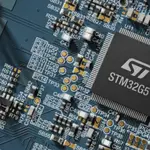 STM32G5 Brings 280 MHz Cortex-M33 Control to AI Power and Humanoid Motors